


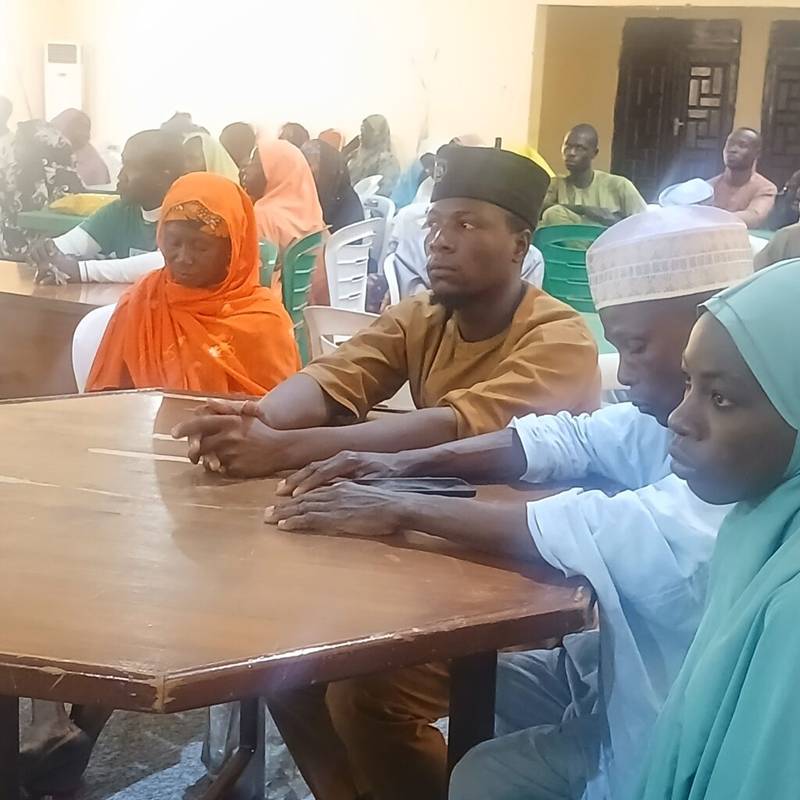
The Alimat Care Foundation (ACF) has trained residents of Gella community in Mubi South Local Government Area, Adamawa, on climate-smart agriculture and erosion control.
Mr. Ibrahim Bello, Executive Director of ACF, announced this at the Knowledge Management and Project Close-Out workshop held on Monday in Mubi South.
Bello explained that the workshop marked the completion of a 12-month pilot project funded by the United Nations Development Programme’s Global Environment Facility Small Grants Programme (UNDP-GEF SGP).
He said the project, titled “Indigenous Erosion Control Through Climate-Smart Agricultural Practices,” was implemented to address soil erosion using nature-based solutions.
He added that the training aimed to improve food production and combat climate change effects through sustainable farming practices.
According to Bello, the intervention introduced vetiver grass to stabilize erosion-prone areas and boost environmental resilience in the community.
He noted that the project also promoted dry-season farming using solar-powered irrigation systems to enhance food production and livelihoods.
The ACF Executive Director said beneficiaries cultivated rice, wheat, cucumber, and soybeans during the irrigation season with solar-powered water pumps provided through the project.
He affirmed that the foundation would continue supporting the community beyond the project duration to sustain the knowledge and skills gained.
“The impact of this intervention cannot be fully realized in just one year; we will keep working with the community to strengthen food security and promote local climate action,” he stated.
Also speaking, Ms. Yanasim Dagal, ACF Programme Lead, said the project was based on climate risk and needs assessments conducted with community members.
She explained that these assessments identified land degradation and soil erosion as major threats to agricultural productivity in Gella.
“Crop yields have declined significantly over the years, leaving many farmers with poor harvests despite cultivating their farms.
“Restoring degraded land and improving soil conservation will enhance food production and bolster community resilience,” she added.
Dagal urged governments, development partners, and civil society organizations to invest more in climate-smart agriculture and community capacity building.
She called on residents to avoid practices that worsen climate risks and environmental degradation.
One of the beneficiaries, Mr. Michael Vandi, expressed gratitude to the foundation for equipping farmers with practical erosion control and dry-season farming skills.
Vandi said participants learned how to plant vetiver grass and grow wheat, rice, and soybeans during the dry season.
Another beneficiary, Mrs. Hauwa Haruna, shared how the project changed her understanding of irrigation farming through solar technology.
“Before now, I thought solar panels were only used on rooftops. I never imagined they could pump water for farm irrigation,” she said.
