


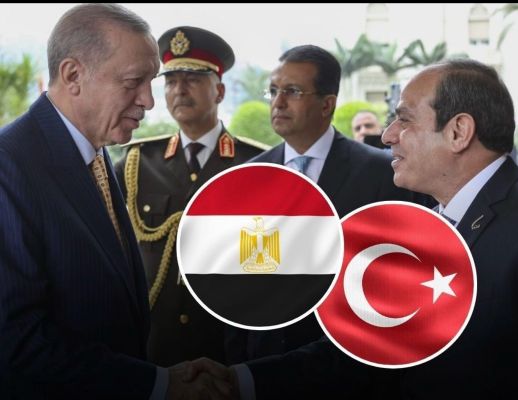
In recent years, Egypt and Turkey have moved from sharp disagreements—particularly over the Muslim Brotherhood and developments in Egypt—to a more pragmatic alignment driven by shared strategic interests, especially in the Horn of Africa.
One of the clearest examples of this convergence is Sudan. Both Cairo and Ankara have backed the Sudanese Armed Forces (SAF) in their conflict with the Rapid Support Forces (RSF). Turkey has reportedly supplied military equipment, including drones, that have contributed significantly to the SAF’s recent battlefield advances. Egypt has also maintained steadfast support for the Sudanese military, partly because of concerns that its regional rival, Ethiopia, may be sympathetic to or supportive of the RSF.
The two countries have also found common ground in Somalia and during the recent tensions sparked by Ethiopia’s efforts to secure long-term access to the Indian Ocean through Somaliland, both Egypt and Turkey reaffirmed their support for Somalia’s sovereignty and territorial integrity. Their position has also been reinforced by concerns over Israel’s engagement with Somaliland, including diplomatic recognition and growing security cooperation.
Sudan, however, presents a far more complex geopolitical landscape. The United Arab Emirates (UAE), a close partner of Israel, has been accused of backing the RSF. At the same time, both Israel and the UAE are widely perceived as being broadly aligned with Ethiopian strategic interests in the region. These overlapping alliances have transformed Sudan into one of the Horn of Africa’s most contested geopolitical theatres.
Although Turkey has sought to mediate the dispute between Ethiopia and Somalia over maritime access and Somaliland, Ankara continues to maintain closer political, economic, and security ties with Mogadishu. So far, its mediation efforts have produced little tangible progress.
Egypt, meanwhile, has deepened its security partnership with Somalia through defence agreements and broader strategic cooperation, effectively positioning itself as an important security partner for the Somali government and strengthening its influence in the Horn of Africa.
The way forward
The Horn of Africa remains one of Africa’s most strategically important yet fragile regions. Pursuing zero-sum competition among regional and external powers risks deepening instability and prolonging conflict. While the interests of the various actors may differ considerably, sustainable peace will require dialogue, diplomacy, and respect for the sovereignty of African states rather than proxy competition.
Africa should not become another arena for competing foreign rivalries. Instead, regional stakeholders and their international partners should prioritise cooperative security arrangements and political solutions that promote long-term stability and development.
Fidel Amakye Owusu is the Chief Executive Officer of DefSEC Analytics Africa Ltd., a consultancy specialising in security risk and defence issues across Africa.
