


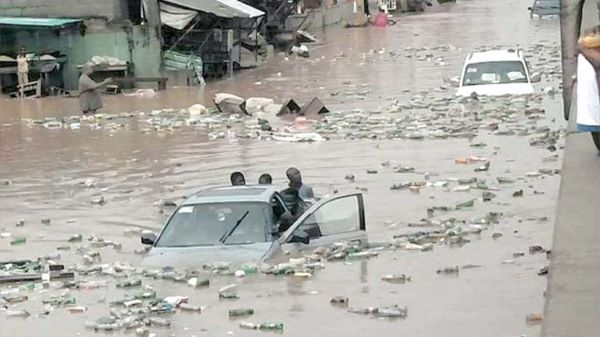
The Lagos State Government has appealed to residents to remain calm following persistent heavy rainfall and flash floods that have affected several parts of the state over the past two weeks, while announcing immediate measures to improve drainage infrastructure.
Governor Babajide Sanwo-Olu has approved the immediate dredging and maintenance of 28 additional primary drainage channels as part of efforts to strengthen flood control across the state.
The Commissioner for the Environment and Water Resources, Tokunbo Wahab, said the recent downpours constituted an extreme weather event that produced an unusually high volume of rainfall within a short period, overwhelming drainage systems and causing temporary flooding in communities including Victoria Island, Lekki, Ikeja, Gbagada, Mushin and Mafoluku.
ALSO READ NEC approves N83.2bn to combat flooding, climate emergencies nationwide
According to Wahab, the flooding was not unique to Lagos, noting that several African countries and parts of North America experienced similar heavy rainfall and flooding during the same period. He explained that Lagos faces greater hydrological challenges because of its extensive network of lagoons, rivers, creeks and tidal water bodies, which can slow the discharge of stormwater into the Atlantic Ocean during high tide.
He assured residents that the government was closely monitoring drainage infrastructure, flood-prone areas and critical water channels, while emergency response agencies remained on the ground to ensure floodwaters recede as quickly as weather conditions permit and provide assistance where necessary.
The commissioner also stressed that while the state continues to invest heavily in drainage construction, desilting and flood-control infrastructure, residents have a responsibility to support these efforts by avoiding indiscriminate dumping of refuse into drains and waterways, illegal reclamation of wetlands and construction on drainage alignments. He warned that such activities worsen flooding during periods of intense rainfall.
Wahab attributed the increasing frequency and intensity of rainfall to the effects of climate change, saying the state remains committed to building a more flood-resilient city through sustained infrastructure development, environmental enforcement and public cooperation.
He advised motorists to avoid driving through flooded roads during heavy rainfall and urged residents, especially those living in flood-prone communities, to follow weather advisories and safety instructions issued by relevant government agencies.
