


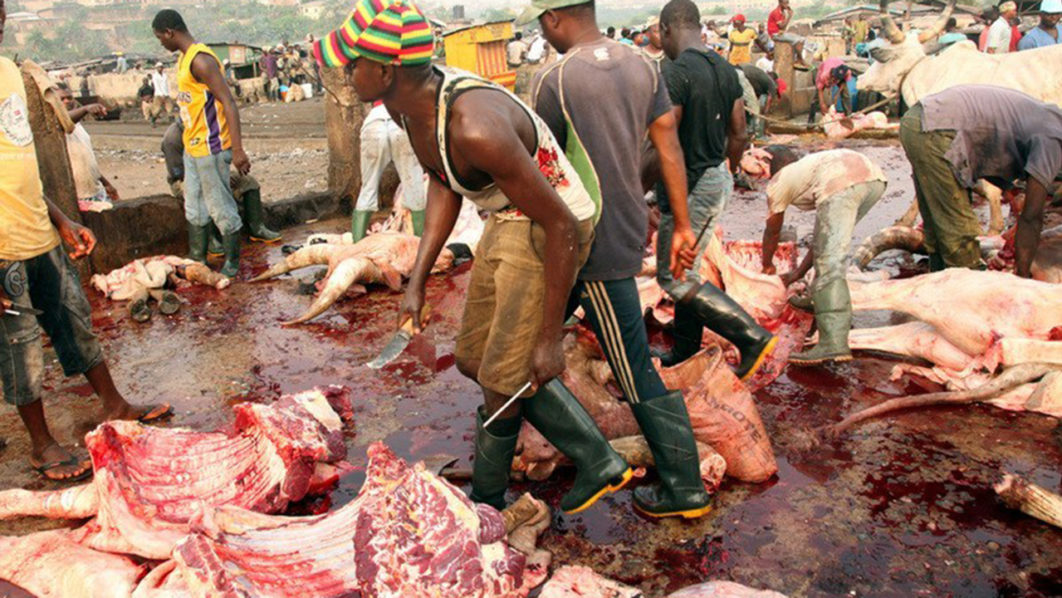
Butchers at the Zango Shanu Modern Abattoir in Sabon Gari Local Government Area have commended the Kaduna State Government for rehabilitating the facility, saying it has reduced meat waste, improved hygiene, and increased their earnings.
They made this known on Monday during a media tour of the facility led by the Kaduna State Commissioner for Information and Culture, Alhaji Ahmed Maiyaki.
One of the butchers, Alkasim Mai-Nama, said the installation of modern equipment, particularly cold rooms, had transformed meat preservation and marketing.
According to him, butchers previously incurred heavy losses because unsold meat could not be stored and often had to be discarded at the end of the day.
“The cold rooms have drastically reduced wastage, improved hygienic meat handling, and allowed us to preserve unsold meat, which has increased our income,” he said.
The Vice Chairman of the Butchers Association of Nigeria, Sabon Gari Branch, Mr. Jamilu Umar, described the project as the most comprehensive upgrade of the abattoir since it was established in the early 1980s.
Umar said butchers had operated for decades without adequate drainage, reliable water supply, or cold storage facilities, exposing meat to unhygienic conditions and causing avoidable losses.
Similarly, Sarkin Fawan Badawa, Mr. Musa Dalhat Abubakar, said the construction of a perimeter fence had improved security, protected investments, and ended years of encroachment and theft at the facility.
Abubakar added that the improved infrastructure had attracted butchers and livestock traders from neighbouring Katsina and Zamfara states, boosting commercial activities and strengthening Kaduna’s position in the regional livestock market.
Earlier, the Kaduna State Commissioner for Agriculture, Mr. Murtala Dabo, said Governor Uba Sani’s administration had made significant investments in livestock development to improve productivity and enhance the livelihoods of pastoralists.
Dabo said the government had established pasture fields and solar-powered boreholes in 19 pastoralist communities to reduce seasonal migration, minimise farmer-herder conflicts, and improve livestock production across the state.
According to him, the intervention has enabled pastoralists to remain in designated settlements, leading to increased meat and dairy production while promoting peaceful coexistence between farming and pastoral communities.
He added that the government had constructed modern abattoirs in Kawo, Kafanchan, and Zango Shanu, as well as 21 slaughterhouses, to strengthen the livestock value chain and improve meat processing standards.
The facilities, he said, are equipped with cold rooms, deep freezers, display refrigerators, meat shops, solar-powered boreholes, and water-heating systems to ensure hygienic meat processing and safe storage.
