


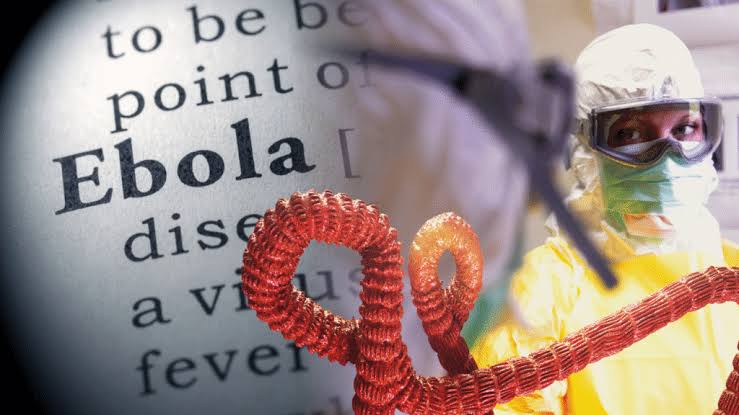
A public health expert has called on the Federal Government to ensure that the N10 billion approved for Ebola preparedness is directed toward critical gaps in Nigeria’s disease response system.
Emeka Oguanuo, Senior Partnership Manager at Nigeria Health Watch, made this statement in an interview with reporters on Sunday in Abuja while assessing Nigeria’s readiness for a potential Ebola outbreak.
Oguanuo noted that President Bola Tinubu’s approval of the intervention fund and the establishment of a Presidential Task Force on Ebola Preparedness have elevated health security to a national priority.
“President Tinubu’s approval of N10 billion and the creation of a Presidential Task Force on Ebola Preparedness are both politically and operationally significant.
They raise Nigeria’s readiness from a technical public health issue to a whole-of-government priority.
As seen during COVID-19, response moves faster when bureaucracies are streamlined, especially in critical response stages,” he said.
However, Oguanuo emphasized that the true value of the intervention depends on whether the resources lead to measurable outcomes.
He urged that funding be directed toward the most vulnerable points in the country’s preparedness chain, rather than being distributed without considering risk levels.
The Nigeria Centre for Disease Control (NCDC) has already categorized states based on their risk exposure, he explained.
Funding should align with these risk assessments to maximize impact.
“The effectiveness of these measures will depend on whether they produce traceable and meaningful results, especially if resources reach the weakest links in Nigeria’s preparedness chain,” he stated.
Oguanuo identified surveillance at points of entry as an immediate priority, along with increasing laboratory capacity and reducing testing turnaround times.
Other key priorities include strengthening health facilities for triage, isolation, and referral services.
He also stressed that frontline health workers need adequate protection and training to effectively respond to outbreaks.
Furthermore, he highlighted the importance of risk communication and community engagement to prevent panic and misinformation.
He emphasized that public accountability mechanisms must accompany the intervention to ensure transparency, with clear deliverables and expenditure tracking systems accessible to citizens.
Oguanuo concluded that investments in preparedness should focus on building resilient systems capable of preventing, detecting, and responding to public health emergencies.
He noted that effective preparedness remains one of the most cost-effective ways to save lives and protect national health security.
It was reported that on June 8, Tinubu approved the establishment of the Presidential Task Force on Ebola Virus Disease Preparedness and Emerging Public Health Threats, and ordered the immediate release of N10 billion to support operational readiness and critical response activities.
