


The Central Bank of Nigeria (CBN) has highlighted significant progress in the country’s financial sector reforms, revealing that Nigerian banks raised more than ₦4.65 trillion through the recently concluded banking-sector recapitalisation programme.
CBN Governor, Olayemi Cardoso, disclosed this on his X handle @olayemicardoso1 on Thursday, in a review of the apex bank’s activities for April and May, noting that the period was dedicated to consolidating ongoing reforms, strengthening institutions, and translating policy achievements into sustainable economic outcomes.
According to him, following the successful completion of the banking recapitalisation exercise in March, attention shifted towards sustaining reform momentum and reinforcing the foundations for long-term macroeconomic stability.
Cardoso described the recapitalisation programme as one of the most significant achievements of the current reform agenda, saying the exercise substantially strengthened the banking sector’s resilience and capacity to support economic growth.
He noted that the over ₦4.65 trillion raised by banks would enhance capital buffers, improve financial stability, and expand the sector’s ability to provide credit and facilitate economic activities.
The CBN Governor further stated that the strong participation of both local and foreign investors in the recapitalisation exercise reflected growing confidence in Nigeria’s financial system and the government’s economic reform direction.
Against this backdrop, Nigeria participated in the recent Spring Meetings of the International Monetary Fund and the World Bank Group in Washington, D.C., at a time when the global economy was grappling with tighter financial conditions, persistent geopolitical tensions, and sluggish growth across several regions.
Cardoso said the meetings provided an important platform for Nigeria to showcase its reform progress, engage development partners, and reinforce investor confidence in the country’s economic outlook.
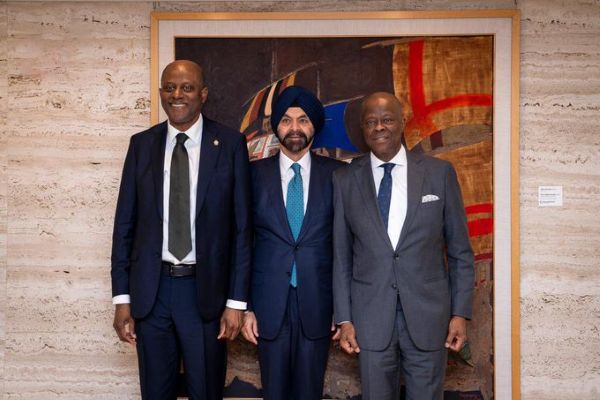
Among the key engagements during the meetings was a discussion with Ajay Banga, President of the World Bank, which focused on institutional reforms, long-term development priorities, and strategic partnerships needed to support sustainable growth.
The CBN Governor also highlighted Nigeria’s leadership role in the international financial community, noting that the country, as Chair of the Intergovernmental Group of Twenty-Four on International Monetary Affairs and Development, helped advance discussions on mobilising development finance, reforming the global financial architecture, and promoting job-rich growth across developing economies.
He reaffirmed the commitment of the Central Bank and other economic managers to deepening reforms aimed at strengthening the economy, enhancing investor confidence, and delivering sustainable growth for Nigerians.
