


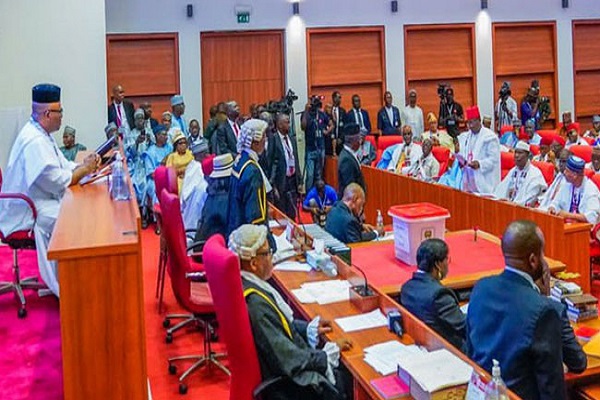
Stakeholders on children’s rights have called on the Senate to urgently fast-track the passage of the Child Online Protection Bill (HB244), warning that Nigerian children are increasingly exposed to harmful online content.
The call was made on Tuesday in Abuja during a press briefing organised by Gatefield, a public strategy and media group, and the Cece Yara Child Advocacy Centre as part of Children’s Day commemoration.
According to data cited by the Nigerian Communications Commission, nine in 10 Nigerian children have experienced at least one form of online risk, while more than half have been directly exposed to cyberbullying, grooming, exploitation, or abuse.
The stakeholders expressed concern that nearly nine in 10 children online had encountered unsolicited sexual content, raising fears about long-term psychological and developmental impacts.
They warned that repeated exposure to harmful digital environments was contributing to what they described as “digital trauma,” with serious implications for children’s mental health, learning, and overall well-being.
Speaking at the event, Ms. Shirley Ewang, Advocacy Lead at Gatefield, said delays in addressing online harm could have lasting consequences for children.
“With millions more children entering digital spaces every year, every second counts. Nigeria cannot afford to ignore the risks children face online,” she said.
Ewang also highlighted weak enforcement mechanisms and poor accountability among digital platforms, noting that harmful content often remained online long enough to spread widely.
Experts at the event further revealed that up to 31 per cent of reported child exploitation material was never removed, underscoring gaps in content moderation and response systems.
They stressed that the Child Online Protection Bill, which was passed by the House of Representatives in December 2025 and is currently before the Senate, would introduce enforceable obligations for digital platforms.
The bill includes provisions for time-bound removal of harmful content, safety-by-design standards for minors, and stronger regulatory oversight.
Ms. Esther Udoh, Chief Operating Officer of the Cece Yara Child Advocacy Centre, described the bill as a critical step toward safeguarding children in Nigeria’s rapidly evolving digital landscape.
“The Child Online Protection Bill will establish clear responsibilities for platforms and ensure swift response to harmful content. Every child deserves a safe digital environment,” she said.
Stakeholders also recommended mandatory 24-hour takedown timelines for child sexual abuse and grooming content, stronger age verification systems, and the establishment of locally based content moderation teams.
They further called for improved digital literacy among parents, teachers, and children, as well as stronger coordination among government agencies.
They urged lawmakers to prioritise the bill’s passage, warning that further delays could expose more children to irreversible harm.
