


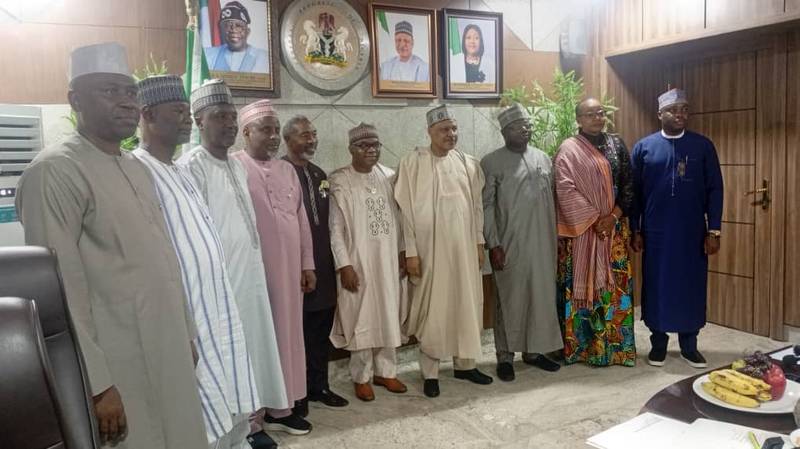
The Minister of Information and National Orientation, Mohammed Idris, has praised President Bola Tinubu for establishing the Presidential Task Force on Ebola Virus Disease Preparedness and Emerging Public Health Threats.
Idris stated that the President’s decision demonstrates the government’s commitment to protecting Nigerians through preparedness, coordination, and swift action in addressing potential health emergencies.
He spoke on Thursday in Abuja at the inaugural meeting of the Communications, Diplomacy, and International Engagement Sub-Committee of the Presidential Task Force on Ebola Virus Disease Preparedness.
It was reported that Tinubu approved the immediate release of N10 billion in emergency funding for the task force, chaired by his Chief of Staff, Femi Gbajabiamila.
As chair of the sub-committee, Idris emphasized that it is better to prepare before a crisis occurs than to respond after one.
“Let me reassure Nigerians that there are no confirmed cases of Ebola in Nigeria. However, recent developments elsewhere in Africa remind us that infectious diseases cross borders.
“Our responsibility is to remain vigilant and provide accurate information that reassures the public without causing fear or panic,” Idris said.
He highlighted communication as a vital tool in managing health emergencies, noting that accurate and timely information saves lives and builds public confidence.
“Science-based, timely communication is crucial. Misinformation and rumors can undermine trust and hinder response efforts.
“Our role is to ensure the government communicates with one clear, coordinated voice, guided by the Nigeria Centre for Disease Control (NCDC), the country’s technical authority on disease prevention and control.
“Nigeria’s successful containment of the 2014 Ebola outbreak gives us confidence,” he added.
The minister credited strong leadership, coordinated action, effective surveillance, and ongoing public communication for Nigeria’s success in 2014.
“The lessons from that time remain relevant. Our task now is to develop a comprehensive national risk communication strategy that is proactive, transparent, and accessible to all Nigerians, regardless of language or location.”
He outlined the committee’s immediate priorities: creating a harmonized communication strategy, producing standard messages and FAQs, and combating misinformation.
“These efforts will include translating materials into major Nigerian languages and maintaining regular media and community engagement.”
Idris said the committee would ensure consistent, clear, and credible health messaging through coordinated efforts among government agencies and stakeholders.
“To support this, we will develop a unified national risk communication plan, harmonize messaging across ministries, coordinate media engagement, and strengthen mechanisms to detect and correct misinformation and fake news.”
He added that building public trust requires regular, transparent, and evidence-based communication validated by the NCDC.
“We will promote trust by sharing clear, factual information and ensuring all messages are validated by NCDC,” Idris said.
He commended the National Orientation Agency (NOA) for starting nationwide awareness campaigns using approved messages from the NCDC.
“With its extensive reach across all 774 local government areas, the NOA is a key platform for grassroots mobilization and public education.
“Moving forward, we must involve diverse channels: TV, radio, newspapers, digital media, community groups, religious institutions, schools, markets, transport unions, women’s and youth groups, and civil society organizations,” he added.
Idris also expressed concern over the Ebola outbreak in the Democratic Republic of the Congo, which he described as a serious regional threat.
He noted that the outbreak has caused about 600 deaths and over 1,700 cases, with investigations extending beyond the initial affected provinces.
While reassuring Nigerians that no cases have been confirmed in Nigeria, he said the NCDC has classified the risk of importation as high.
“Surveillance has been intensified at points of entry, health facilities are on high alert, and preparedness measures are in place nationwide,” Idris stated.
The sub-committee includes representatives from the Nigeria Institute of Public Relations (NIPR), Nigeria Union of Journalists (NUJ), Nigeria Guild of Editors (NGE), NCDC, NOA, and other stakeholders.
