


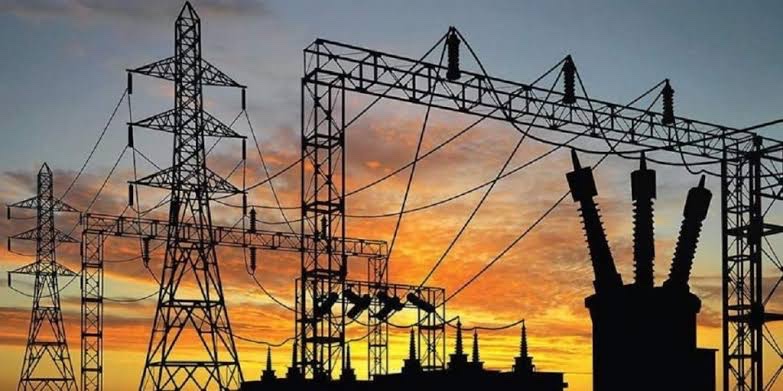
The Lagos State Government says it is targeting an additional 2,000 megawatts of embedded power generation through partnerships with private investors to ensure stable electricity supply across the state.
The Commissioner for Energy and Mineral Resources, Mr. Biodun Ogunleye, disclosed this during a ministerial press briefing marking the second anniversary of Governor Babajide Sanwo-Olu’s second term in office.
He said residents could begin to experience improved electricity supply from embedded power projects within the next six to 12 months.
According to Ogunleye, the government is already engaging energy providers and investors to achieve the target.
“Don’t be surprised if, in the next few days, we announce the deployment of batteries generating power for Lagos,” he said.
The commissioner explained that the state government was focused on creating an enabling environment for private sector participation in electricity generation and distribution rather than directly operating power plants.
“We are working with various providers to ensure embedded power generation within the Lagos environment.
“We cannot continue to depend entirely on the Federal Government. We must have a stable and productive Lagos.
“Without electricity, there will be zero development and our people’s opportunities will not be maximised,” he said.
Ogunleye also disclosed that the state was facilitating the right-of-way for a 132KV bulk power transmission line from Ajah through Eleko Junction to Alaro City to support industrial expansion along the Lekki corridor.
According to him, the project also includes a parallel gas pipeline to create an integrated power and gas infrastructure for industries and residents.
He said the state had rehabilitated 37.7 kilometres of 132KV power lines across Badagry, Epe, and other strategic corridors to improve network reliability and regional connectivity.
The commissioner reaffirmed the government’s commitment to collaboration with the Federal Government, development partners, and private investors to deliver scalable energy solutions.
On renewable energy, Ogunleye clarified that the state had not made permits mandatory for residents installing solar systems.
“Nobody in this administration authorised anyone to say that residents must obtain a Lagos State permit before installing solar systems.
“What we are saying is that installers must be certified to prevent fraud, technical faults, and incidents that could endanger lives and property,” he said.
He linked several recent fire incidents in the state to faulty solar and electrical installations.
“Over the last month, several properties were affected by fire incidents, and some cases were linked to solar and air-conditioning systems.
“It is important for government not to ignore these potential dangers,” he said.
Ogunleye also said implementation of the Lagos Independent System Operator was ongoing in collaboration with the Federal Government and other stakeholders.
According to him, the initiative is expected to strengthen electricity market operations and improve power delivery within the state.
“We are not relenting. In the coming days, there will be further announcements showing that Lagos electricity market reforms are taking shape,” he said.
