


A new scientific briefing has warned that Africa could face a “Year of Reckoning” in 2026 unless governments, donors and researchers mount urgent, coordinated responses to overlapping climate, food security and public-health threats.
The African Science Lab Report (Issue No. 01, May 2026) pulls together recent findings across four interlinked research frontiers — climate‑resilient agriculture, drought‑tolerant crop genetics, integrated healthcare systems and nature‑based climate solutions — and concludes that piecemeal action will be insufficient to avert growing risks to livelihoods and national economies.
Climate stress is already cutting yields
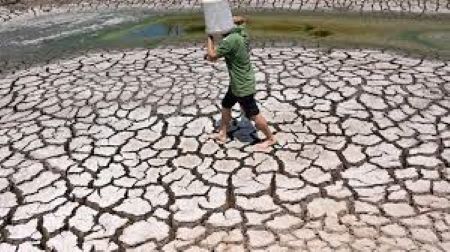
The report highlights an outlook by the African Centre for a Green Economy showing that Southern Africa is experiencing severe agricultural stress. Prolonged drought has contributed to an estimated 20% drop in maize yields in affected areas, the centre says, underscoring how climate shocks are moving from an environmental issue into a macroeconomic threat.
Although renewable energy drives such as “Mission 300” are expanding, the briefing calls for stronger climate adaptation measures and for African states to push for greater control over climate finance. It urges a move toward “financial sovereignty” so countries can design and manage adaptation funding that reflects national priorities.
Genetic advances offer crop resilience
On the science front, researchers publishing in the African Journal of Agricultural Research report promising genetic traits in sorghum varieties grown in Zimbabwe. The team identified “stay‑green” and “leaf‑rolling” traits that help plants survive erratic rainfall and extended dry spells.
Those traits, the report says, could guide breeders to develop climate‑resilient sorghum — a vital staple for food‑insecure communities across East and Southern Africa — potentially reducing vulnerability to future droughts.
Health systems face a double burden
Public health experts contributing to the briefing warn that Africa’s health systems are being stretched by a growing “double burden” of persistent infectious diseases and rising non‑communicable diseases (NCDs). A scoping review in PLOS Global Public Health cited by the report estimates that NCDs now account for roughly 30% of deaths in Nigeria and shows a 50% co‑morbidity rate among people living with HIV and an NCD.
To address this, researchers recommend integrating NCD screening and care into existing HIV and tuberculosis clinic structures to create “one‑stop‑shop” services that lower costs and improve access in low‑resource settings.
Nature‑based solutions, with caution
The Future Ecosystems for Africa programme at the University of the Witwatersrand, working with Conservation International, presents an ecological roadmap suggesting that sustainable rangeland management could sequester up to 11 gigatons of CO2 by 2050 across sub‑Saharan Africa.
However, the authors caution against indiscriminate tree‑planting campaigns. They warn that inappropriate afforestation could harm savanna ecosystems, biodiversity and water cycles, and instead call for restoration strategies tailored to local ecology.
Policy crossroads: integration or fragmentation
Taken together, the report’s findings portray a continent at a policy crossroads: technological innovation will matter, but so will institutional coordination and finance reform capable of matching mounting risks.
“Africa’s resilience will depend less on isolated interventions and more on integrating science, policy and local realities into unified responses,” the briefing concludes, urging governments, donors and the research community to align actions across agriculture, health and ecosystem management before 2026’s forecast pressures deepen.
Experts say the coming months are critical for translating the report’s recommendations into coordinated national and regional strategies that can protect food systems, bolster health services and secure climate‑resilient development.
