


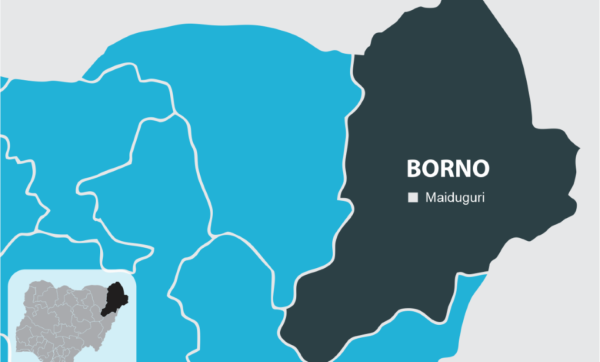
Médecins Sans Frontières (MSF) says recent attacks in Borno State have forced more than 5,000 residents of Ngoshe in Gwoza Local Government Area to flee their homes.
MSF Field Communication Officer, Abdulkareem Yakubu, disclosed this in a statement, warning that the violence has worsened an already fragile humanitarian situation.
He said the displacement followed attacks on March 3, which reportedly left several people dead and others abducted.
“Survivors fled with little warning,” Yakubu said, adding that they sought refuge about 15 kilometres away in Pulka under harsh conditions.
He noted that many displaced persons, mainly women, children, and the elderly, arrived with little or nothing.
“With no formal shelters, families sleep in open spaces and along roadsides, exposed to harsh weather and insecurity,” he said.
Yakubu added that access to essential services is critically limited, with food shortages, unsafe water, and poor sanitation raising fears of disease outbreaks.
MSF launched a four-week emergency response on April 10 to support the displaced population. So far, more than 900 families have received cooking utensils, mats, mosquito nets, jerrycans, and buckets.
In addition, 884 dignity kits containing hygiene supplies have been distributed to those most in need. MSF has also begun rehabilitating sanitation facilities and is supplying about 16,000 litres of safe drinking water daily.
Yakubu said health teams are conducting hygiene campaigns to curb disease spread, but the response remains insufficient.
He noted that Gwoza has long faced conflict, repeated displacement, and chronic humanitarian needs, while overstretched health facilities and declining funding continue to hamper relief efforts.
MSF continues to support Gwoza General Hospital with emergency care and referrals, works with the Ministry of Health on maternal and newborn care in Kushari, and runs nutrition programmes in Maiduguri.
He urged humanitarian organisations and international donors to scale up support, stressing the need for sustained funding to ensure access to life-saving healthcare and essential services.
A displaced resident, Safiya Mohammed-Aga, said: “Our homes were bombed and belongings destroyed. We fled with almost nothing, sometimes without clothes.”
MSF emergency coordinator Abdoulaye Mahmoudoune warned that urgent needs persist.
“People urgently need food and better access to water, sanitation, and hygiene services,” he said.
“While MSF is responding, the needs are overwhelming. One organisation cannot meet them alone. Other humanitarian actors must act immediately,” he added.
