


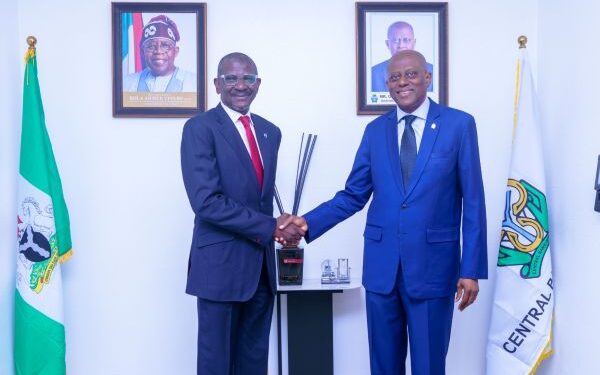
The Managing Director and Chief Executive Officer of the Nigerian Export-Import Bank (NEXIM), Mr. Abba Bello, has held high-level talks with the Governor of the Central Bank of Nigeria, Mr. Olayemi Cardoso, as part of efforts to deepen collaboration aimed at driving Nigeria’s non-oil export sector and strengthening foreign exchange (FX) inflows.
The strategic meeting, which took place on April 22, 2026, at the CBN headquarters in Abuja, centered on aligning monetary and development finance policies to unlock growth opportunities across key sectors of the economy.
Issues discussed could not be far from the need to scale up export financing and improve access to credit for small and medium-sized enterprises (SMEs), particularly those operating in value-added sectors such as agro-processing, solid minerals, and light manufacturing. Both institutions are aware that expanding Nigeria’s export base beyond crude oil remains critical to stabilising the naira and improving external reserves.
NEXIM’s mandate as a development finance institution focuses on promoting export diversification. Therefore, stronger synergy with the apex bank would help address long-standing constraints such as limited access to affordable finance, weak export infrastructure, and low value addition in Nigeria’s export mix.
Based on the recent policy rejig, the CBN is committed to macroeconomic stability and sustainable FX management. Therefore, the importance of boosting non-oil exports as a durable solution to Nigeria’s foreign exchange challenges. The coordinated policy actions between the CBN and institutions like NEXIM are essential to drive inclusive growth, create jobs, and enhance Nigeria’s competitiveness in regional and global markets.
It is expected that the meeting explored opportunities to align ongoing CBN interventions with NEXIM’s export-focused programmes, including support for export-oriented SMEs, capacity building for exporters, and the development of targeted financing instruments to incentivise production for export.
ASHENEWS notes that it is important for the two institutions to strengthen collaboration to ensure that policy measures translate into tangible outcomes, particularly in increasing export volumes, improving FX liquidity, and supporting Nigeria’s broader economic diversification agenda.
