


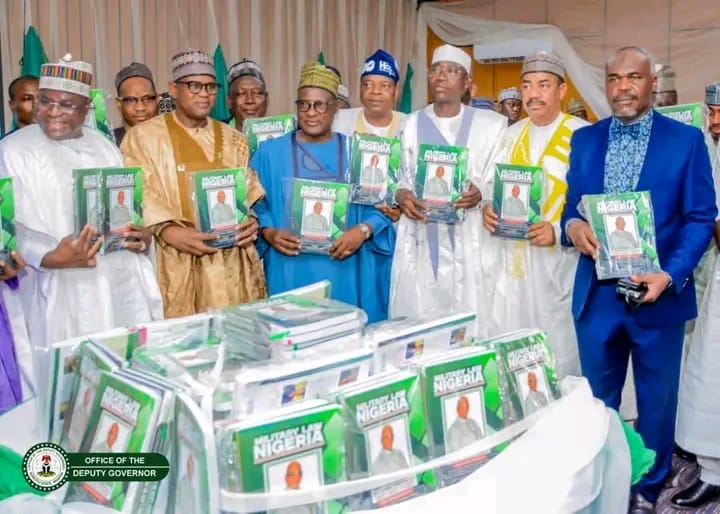
A new publication titled “Military Law in Nigeria: A Quick Reference Guide to Practice and Procedure” has been unveiled, with stakeholders underscoring its importance in deepening understanding of military justice and strengthening accountability within Nigeria’s armed forces.
Speaking on the motivation behind the book, the lead author and senior advocate of Nigeria, Prof. Ibrahim Abdullahi, SAN, explained that the work, which was conceived in honour of the Minister of State for Works, Mohammad Bello Goronyo, is to address widespread gaps in knowledge of military law, particularly as Nigeria’s armed forces continue to operate in increasingly complex security environments.
He noted that, beyond theoretical discourse, the book offers practical guidance on the administration of military justice, drawing on the Constitution, the Armed Forces Act, and judicial precedents.
“The book is not about the theoretical aspect of Military Law in Nigeria. The book provides clear guidance on the principles, practices, and procedures governing the administration of military justice, as established by the Constitution of the Federal Republic of Nigeria, the Armed Forces Act, and judicial pronouncements. It serves as a practical reference for military officers, legal professionals, legislators, policy makers, academics and students who require a clear understanding of their rights, responsibilities, and the procedures of military justice.”
According to him, the publication demystifies court-martial procedures and military tribunals through case law analysis, providing clarity on how these processes align with the principles of a fair hearing and the rule of law.
Through case laws, this book demystifies the procedures of military tribunals and courts-martial, demonstrating how these proceedings are to be conducted and scrutinized by the superior courts of records within the precincts of the principles of fair hearing and established legal frameworks, such as the Constitution and relevant Service Acts.
The author emphasised that evolving security challenges—from counterterrorism operations to peacekeeping missions—have placed military conduct under both national and international scrutiny, making a clear understanding of military legal frameworks more critical than ever.
He added that the traditional notion of unquestioned obedience in the military has given way to a modern system where accountability for actions is paramount, reinforcing the need for a well-defined and accessible legal structure.
The book, he said, is intended as a practical reference for a broad audience, including military personnel, legal practitioners, policymakers, legislators, academics, and students.
Prof. Abdullahi expressed hope that the publication would contribute meaningfully to ongoing conversations around justice, discipline, and accountability within the armed forces, while also promoting adherence to legal standards even in the most challenging operational environments.
Meanwhile, prominent dignitaries at the event, including Senator Aliyu Magatakarda Wamakko, who served as the Chairman of the Occasion, commended the initiative, describing the book as a timely contribution to national development and institutional strengthening.
Wamakko highlighted the importance of the rule of law within the military, noting that a disciplined and law-abiding armed force is essential for national stability and democratic governance.
Similarly, Minister Goronyo praised the intellectual effort behind the publication, stressing that enhancing knowledge of military law would improve operational conduct and reinforce respect for human rights among personnel.
Other speakers at the event echoed the need for continuous engagement on military justice, particularly in light of Nigeria’s security realities, adding that the book would serve as a vital resource in both academic and professional circles.
