


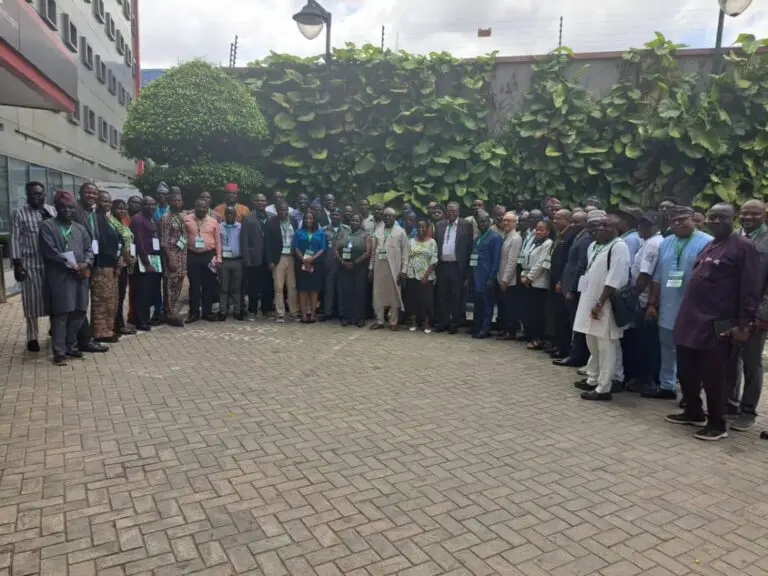
The Standards Organisation of Nigeria (SON), in collaboration with the Sustainable Research and Action for Environmental Development (SRADeV), on Wednesday held an inception/validation workshop on Minimum Energy Performance Standards (MEPS) for electric motors.
It was reported that the workshop, held in Lagos, had the support of CLASP.
Speaking at the event, the Director-General of SON, Dr Ifeanyi Okeke, reaffirmed the agency’s commitment to advancing energy efficiency through new standards for electric motors in Nigeria.
Represented by the Head of the Standards Department, Mr Yunusa Mohammed, Okeke said the initiative was supported by CLASP and SRADeV Nigeria, alongside other development partners.
According to him, the workshop builds on earlier MEPS developed for lighting products in 2021 and 2024.
He noted that energy efficiency remains a cost-effective pathway to achieving Nigeria’s energy transition goals and sustainable economic growth.
Okeke said many industries still rely on outdated equipment, leading to high energy consumption and increased production costs.
He described electric motors as critical to industrial productivity, accounting for a significant share of electricity use in the sector.
He said improving motor efficiency would reduce energy waste, cut costs, and support Nigeria’s climate commitments.
He cited global estimates showing that efficient motors could reduce electricity demand by up to 30 per cent and significantly lower emissions.
Okeke said SON is developing a comprehensive framework for standards, implementation, and compliance.
He added that existing MEPS for appliances would be included in the fourth phase of SON’s energy labelling scheme in 2026.
He said electric motors would be incorporated in subsequent phases to expand efficiency across industrial applications.
Also speaking, the Executive Director of SRADeV, Dr Leslie Adogame, welcomed participants to the workshop.
Adogame said SRADeV has over 15 years of experience promoting environmental sustainability and supporting policy development.
He said the organisation previously supported MEPS for lighting, helping to phase out inefficient technologies and reduce mercury pollution.
According to him, the lighting initiative is projected to save about $2.47 billion in energy costs by 2050.
He said electric motors are projected to consume about 8.6 terawatt-hours of electricity by 2025.
Adogame said efficient motor systems could save 3.34 terawatt-hours and avoid 1.7 million tonnes of emissions by 2050.
He described the workshop as a platform for stakeholder engagement, policy development, and validation of technical findings.
In an interview, CLASP Programme Manager, Ms Angellah Wekongo, highlighted the organisation’s role in advancing MEPS globally.
Wekongo said CLASP provides technical support, including data analysis, modelling, and capacity building for energy policies.
She said MEPS for electric motors would reduce energy use, ease pressure on the national grid, and lower industrial costs.
According to her, the standards would improve competitiveness and support job creation through operational savings.
She added that the initiative would contribute to environmental sustainability and Nigeria’s economic development.
It was reported that the workshop featured goodwill messages from relevant ministries, departments, and agencies of government.
