


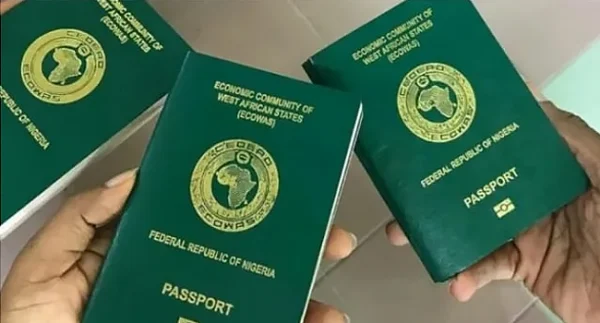
The Federal Government has directed the Nigeria Immigration Service (NIS) to immediately deactivate and withdraw passports issued to individuals who have formally renounced Nigerian citizenship.
The directive was issued by the Minister of Interior, Olubunmi Tunji-Ojo, in a statement released on Saturday by his Special Adviser on Media and Publicity, Babatunde Alao.
According to the minister, the order applies strictly to Nigerians whose renunciation requests have been duly approved by President Bola Ahmed Tinubu. He explained that the move aligns with constitutional provisions governing citizenship status.
“Once a person ceases to be a citizen, they can no longer hold sovereign documents like the Nigerian passport,” Tunji-Ojo stated.
He referenced Section 29(2) of the 1999 Constitution (as amended), which stipulates that declarations of renunciation must be registered by the President. Upon such registration, the individual officially forfeits Nigerian citizenship.
The minister emphasised that the directive is part of broader efforts to strengthen border security and eliminate identity-related irregularities.
“We are committed to securing Nigeria’s borders and ensuring that only eligible citizens hold travel documents,” he added.
Under the Constitution, Nigerians of full age may voluntarily renounce their citizenship by submitting a formal declaration. The process requires completion of Form G, alongside supporting documents such as a birth certificate, a valid passport, and a sworn oath. Applicants must also provide evidence of eligibility for citizenship in another country.
The procedure attracts a processing fee of N20,000 and an additional N50,000 upon approval. Once the President registers the declaration, the applicant ceases to be a Nigerian citizen in the eyes of the law.
The latest directive signals stricter enforcement of citizenship regulations and documentation control, with authorities placing increased emphasis on ensuring that only qualified individuals retain Nigerian travel documents. It is also expected to reduce ambiguities associated with dual-status records and reinforce compliance with nationality laws.
While the government has not disclosed the number of affected individuals, the move underscores ongoing efforts to tighten administrative oversight around identity and migration.
The directive comes amid wider reforms within the NIS, including the introduction of an enhanced passport tracking system following complaints over delays in issuance and collection. The upgrade is designed to improve transparency, streamline service delivery, and address inefficiencies in the passport application process.
Overall, the reforms reflect the government’s broader push to modernise immigration services while strengthening regulatory control.
