


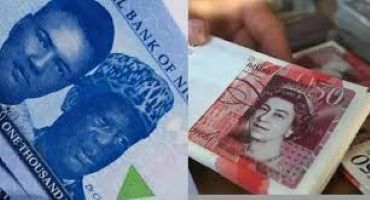
The naira held firm against the British pound at N1,862/£1 in the official market on Thursday, reflecting relative stability in Nigeria’s foreign exchange space despite shifting global currency dynamics.
Market data showed the local currency maintaining its position amid sustained demand for naira-denominated assets and softer sentiment around the UK economy.
Analysts note that the N1,816.7/£1 level remains a key near-term resistance for the naira. A break below this could see the pair test the N1,800/£ psychological threshold, close to the historical low of N1,799/£1. On the upside, N1,854/£1 is seen as an immediate support level, with a move beyond it potentially pushing the rate toward the N1,900/£ band.
So far in 2026, the naira has appreciated by about 7.5 per cent against the pound, with the GBP/NGN pair currently in a consolidation phase after peaking near N1,854/£1 earlier in the week.
Support for the naira has also come from Nigeria’s high interest rate environment, with the Monetary Policy Rate (MPR) hovering between 26 and 27 per cent. This has sustained carry trade inflows and limited the pound’s upside against the local currency.
At the Nigerian Foreign Exchange Market (NFEM), the naira’s break below the N1,900/£ mark has strengthened bullish sentiment, as the currency retains most of its gains recorded this year.
In the parallel market, the naira traded around N1,919/£1, leaving the spread between official and unofficial rates below five per cent—an indication of improving market alignment. Increased access to foreign exchange for Bureau De Change (BDC) operators has helped ease retail demand pressures and enhance liquidity.
The Central Bank of Nigeria (CBN) continues to prioritise exchange rate stability over rapid appreciation, a strategy aimed at reducing volatility and boosting investor confidence.
While the pound remains a major global reserve currency, movements in the naira are still largely driven by domestic fundamentals, including oil output, fiscal policy, FX inflows, and ongoing monetary reforms.
Meanwhile, the British pound traded slightly weaker against the U.S. dollar on Friday, hovering around $1.342 but staying near recent highs. The currency is on track for weekly gains as investors assess U.S. inflation data and evolving geopolitical risks.
Expectations of elevated inflation, partly driven by higher oil prices, could delay interest rate cuts by the U.S. Federal Reserve, lending support to the dollar and capping gains in the GBP/USD pair. Ongoing tensions around the Strait of Hormuz have also underpinned the dollar, adding pressure on the pound.
In the UK, traders have scaled back expectations of aggressive rate hikes by the Bank of England, pricing in modest tightening of about 30–40 basis points by year-end—still a divergence from the Fed’s more cautious policy outlook.
