


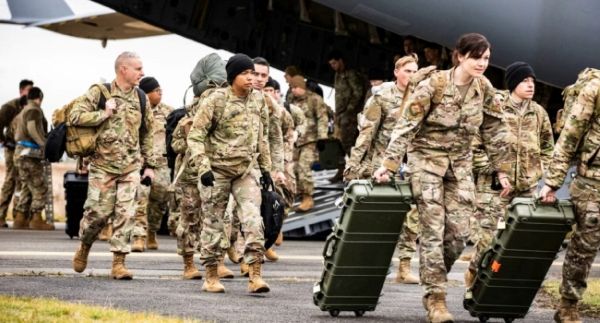
A group of eminent Nigerians has raised strong objections to the presence of foreign military forces on Nigerian soil, warning that any such arrangement must strictly comply with constitutional provisions and uphold the country’s sovereignty.
In a jointly signed statement titled “No to foreign forces in our land: Defend our sovereignty,” Human rights lawyer Femi Falana, political scientist Jibrin Ibrahim, Dr Abubakar Siddique Mohammed, Dr Dauda Garuba, Prof Massaud Omar, Prof Mohammed Kuna, Eng YZ Ya’u, and Dr Usman Bugaje, invoked Nigeria’s historical resistance to foreign military domination and cautioned against what they described as a troubling pattern of opaque military agreements.
Historical precedents recalled
The group referenced the 1960 Anglo-Nigerian Defence Pact, signed shortly after independence between Nigeria and the United Kingdom. The agreement, initially framed as a mutual defence and military training framework, sparked widespread public opposition amid concerns that it represented a neo-colonial arrangement. By January 1962, the administration of Abubakar Tafawa Balewa abolished the pact following sustained national pressure.
ALSO READ Nigeria on the brink as we handover sovereignty to the Americans, By Prof. Jibrin Ibrahim
ALSO READ Nigeria hosts US military advisory team as joint training commences
ALSO READ Terrorism: U.S. deploys special forces in Nigeria — AFRICOM
They also cited Nigeria’s leadership at the 1976 summit of the Organisation of African Unity (OAU), where then Head of State Murtala Mohammed rejected external pressure from the United States over Africa’s position on Angola. According to the statement, Mohammed’s declaration that Africa would no longer operate under the orbit of extra-continental powers marked a defining moment in asserting continental sovereignty.
Past military agreements under scrutiny
The statement further highlighted previous instances where proposed military arrangements with the United States were either withdrawn or nullified.
In 2001, a proposed Military Cooperation Agreement between Nigeria and the United States was reportedly withdrawn after objections from Nigeria’s Ministry of Defence, which had been excluded from negotiations.
Similarly, a 2003 Bilateral Immunity Agreement (BIA) shielding American citizens from surrender to the International Criminal Court was nullified by the Nigerian Senate in 2005 on grounds of constitutional inconsistency and conflict with the Rome Statute.
The signatories argued that these precedents established a consistent national principle that foreign military arrangements must align with Nigeria’s Constitution and must not compromise sovereignty.
Fresh concerns over U.S. military presence
The latest controversy follows a December 25, 2025 announcement by U.S. President Donald Trump that American forces had conducted air strikes against Islamic State militants in Nigeria. Nigeria’s Foreign Minister reportedly confirmed that the operation was coordinated with Nigerian authorities.
Subsequently, on February 4, 2026, reports emerged that the United States had deployed a “small team of troops” to Nigeria, described by Nigerian officials as advisory personnel supporting intelligence and training operations. However, the statement notes that details regarding their mandate, size, location, and duration remain undisclosed, with reports indicating that at least 200 American soldiers may be present.
The development, the signatories said, raises serious constitutional and sovereignty concerns.
Constitutional requirements emphasised
The group cited Section 12(1) of the 1999 Constitution of the Federal Republic of Nigeria, which provides that no treaty between Nigeria and another country shall have the force of law unless enacted by the National Assembly.
They argued that if any mutual defence pact or expanded bilateral agreement exists permitting foreign troop deployment or the establishment of a foreign military base, such an arrangement must be formally presented to and approved by the National Assembly.
“The Nigerian people deserve transparency,” the statement said, adding that at a time when several West African nations are asserting independence from neo-colonial influences, Nigeria must not move in the opposite direction.
Call for strengthening domestic security capacity
The signatories stressed that Nigeria’s Armed Forces have a distinguished record in international peacekeeping under the United Nations and the African Union, including leadership roles in ECOMOG operations in Liberia and Sierra Leone.
Rather than relying on foreign troops, they urged the Federal Government to:
- Fully equip and modernise the Nigeria Police Force and the Armed Forces
- Strengthen intelligence coordination
- Improve troop welfare and morale
- Invest in domestic defence production
- Address socio-economic drivers of insecurity
They also referenced Section 217 of the Constitution, which establishes the Armed Forces for the defence of Nigeria’s territorial integrity and the suppression of insurrection, and insisted that security responsibilities cannot be outsourced indefinitely.
“Sovereignty is not symbolic”
The statement concluded that sovereignty is not merely ceremonial but foundational to statehood. It warned that the stationing of foreign troops without transparent constitutional processes could gradually erode Nigeria’s independence.
“If there is an expanded military agreement permitting foreign troop deployment or the establishment of a foreign base, it must be publicly disclosed, subjected to constitutional scrutiny, and approved by the National Assembly,” the signatories stated.
They maintained that while Nigeria can defeat terrorism, it must do so as a sovereign nation.
