


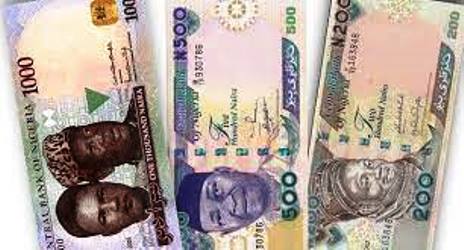
The naira recorded a week-on-week appreciation, closing at ₦1,391 per dollar in the official foreign exchange market, supported by improved liquidity conditions and a rise in Nigeria’s external reserves.
Data from the Central Bank of Nigeria (CBN) showed a mixed but generally positive performance for the local currency over the trading week, with steady gains reversing losses recorded in the previous period.
The naira strengthened consistently in the official market as demand–supply dynamics showed signs of stabilisation. It closed at ₦1,391/$ on Friday, slightly weaker than ₦1,385/$ on Thursday, but significantly stronger every week.
During Friday’s session, the currency traded within a band of ₦1,381/$ to ₦1,392/$, posting a simple average rate of ₦1,387.12/$, according to CBN data.
Earlier in the week, the naira exchanged at ₦1,394/$ on Wednesday, ₦1,409.5/$ on Tuesday, and ₦1,416.5/$ on Monday. On a week-on-week basis, it appreciated from the previous week’s closing rate of ₦1,421.9/$, underscoring a gradual recovery in the official market.
The appreciation was also reflected in the parallel market, where volatility eased markedly. The naira closed at ₦1,453/$ on Friday, strengthening from ₦1,490/$ on Thursday.
As a result, the spread between the official and parallel market rates narrowed sharply to ₦62 on Friday, from ₦105 on Thursday, easing from its widest level since 5 February 2025. The narrowing gap points to improved alignment across FX segments and reduced speculative pressure.
Analysts attribute the naira’s recent rally largely to Nigeria’s rising external reserves, which have continued to provide a buffer against market volatility. External reserves climbed to $46.18 billion during the week.
The CBN has projected a sustained build-up in reserves in 2026, driven by stronger external inflows and ongoing domestic structural reforms. According to the apex bank, reserves are expected to rise to $51.04 billion in 2026, up from an estimated $45.01 billion in 2025.
The CBN noted that continued reforms in the foreign exchange market would enhance efficiency and transparency, while narrowing the premium between the Nigerian Foreign Exchange Market (NFEM) and Bureau De Change (BDC) rates.
These developments reinforce expectations of improved FX market stability and sustained medium-term support for the naira.
