


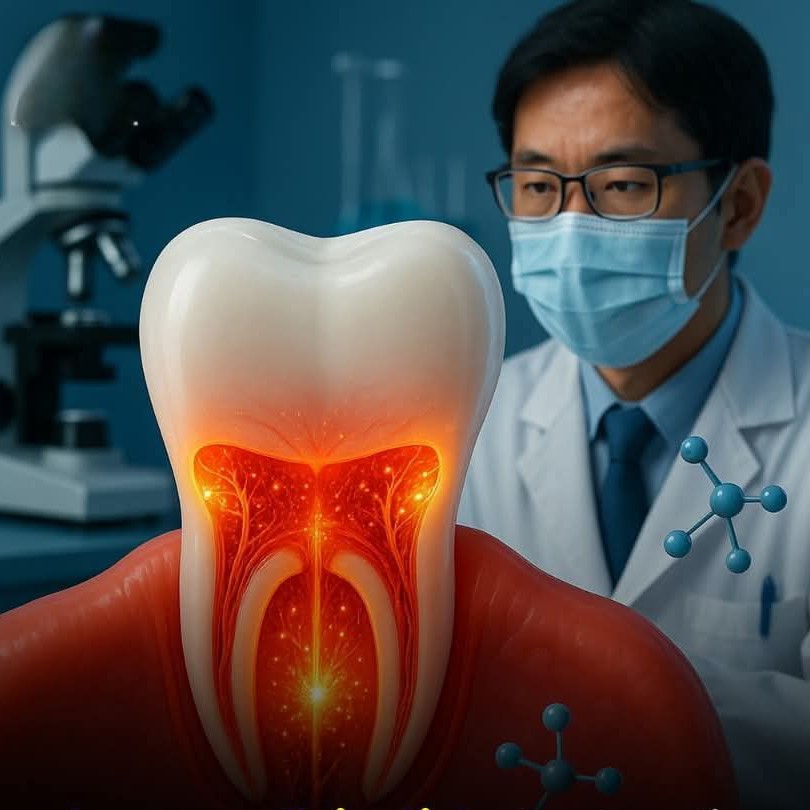
Japanese scientists have launched human clinical trials of a groundbreaking drug that could allow people to naturally regrow missing teeth. This potentially revolutionizes the future of dental care.
The innovative treatment targets and blocks a protein known as USAG-1, which typically suppresses the development of additional teeth. By inhibiting this protein, the drug reactivates dormant “third-generation” tooth buds, natural but inactive structures found in the gums, enabling the growth of new, fully formed teeth.
Prior animal trials involving mice, ferrets, and dogs have shown remarkable results. In these studies, a single dose of the drug successfully triggered the development of new teeth that were anatomically correct and functional.
Encouraged by these outcomes, researchers began the first human trial in October 2024 at Kyoto University Hospital. The initial phase involves 30 adult male participants, each missing at least one permanent molar. The drug is administered via intravenous injection, and the participants will be closely monitored for approximately 11 months to assess safety and the potential for tooth regrowth.
If the adult trials prove safe and effective, researchers plan to expand the study to children aged 2 to 7 who suffer from congenital tooth agenesis, a condition where some teeth never develop. These children currently have limited treatment options, usually involving artificial implants or dentures.
The goal is to make the tooth-regrowth drug available for general use by 2030, offering a natural and permanent alternative to dental implants and prosthetics.
While early results are promising, experts stress that translating results from animals to humans is not always straightforward. Challenges remain in ensuring that newly grown teeth are not only structurally sound but also durable, functional, and properly aligned.
Long-term studies will be critical to determining the drug’s effectiveness, safety, and any potential side effects.
If successful, this treatment could mark a major breakthrough in regenerative medicine and oral health. For millions suffering from tooth loss due to injury, decay, or genetic conditions, the possibility of growing new teeth naturally may no longer be science fiction, but science in action.
