


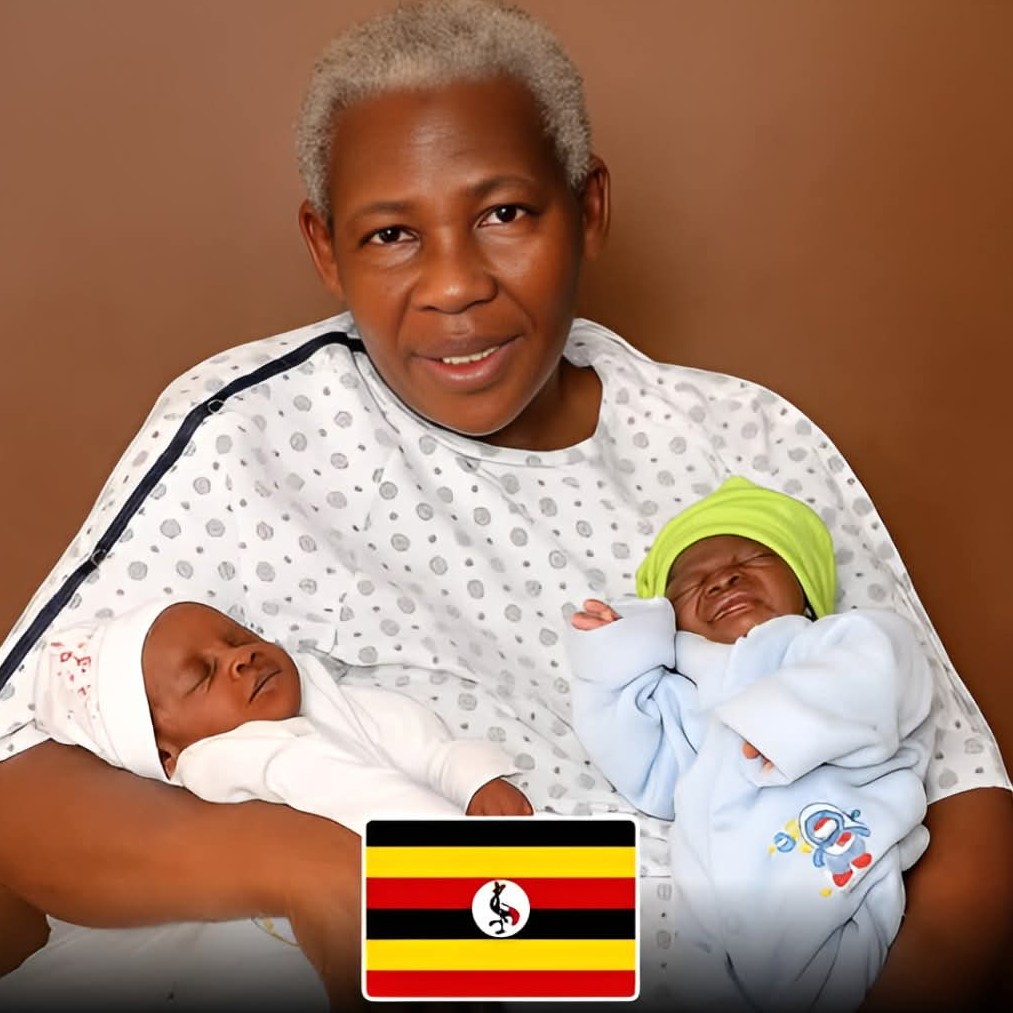
A 70-year-old Safina Namukwaya has delivered healthy twins—a boy and a girl, through In Vitro Fertilization (IVF) at a hospital in Kampala, Uganda. This is in a groundbreaking moment that has captivated the global medical community.
The birth, which occurred in late November 2023 at the Women’s Hospital International and Fertility Centre, marks Namukwaya as one of the oldest women in the world, and the oldest in Africa, to give birth to twins. The procedure was carried out via caesarean section, and both the mother and her babies are reported to be in good health.
This remarkable achievement comes just three years after Namukwaya made headlines in 2020 for delivering her first child at the age of 66, also through IVF.
Her unwavering desire for motherhood, despite immense social and medical odds, has inspired widespread admiration and sparked global discussions about fertility, aging, and reproductive technology.
Doctors at the facility credited the success to advances in assisted reproductive technology. According to medical personnel familiar with the case, donor eggs were used in the IVF process alongside sperm from Namukwaya’s partner. The twins were delivered prematurely at 31 weeks but were stabilized in a neonatal intensive care unit and are said to be thriving.
Namukwaya’s journey has not only rewritten the narrative around late-age pregnancies but also spotlighted the stigma many women face in cultures where childlessness is viewed negatively. She previously shared that she had long been labeled “cursed” for being unable to bear children earlier in life. Her story, however, has now become a beacon of hope for countless women facing similar challenges.
While the birth has been celebrated by many as a triumph of science and human perseverance, it has also reignited ethical debates within the medical field. Fertility specialists are raising questions about the risks involved in advanced-age pregnancies and the long-term well-being of children born to significantly older parents.
Nevertheless, Namukwaya’s case underscores how far reproductive medicine has come and how personal determination can defy even the most daunting odds.
Her story is now being hailed as a symbol of resilience, faith, and the evolving definitions of parenthood in the 21st century.
