


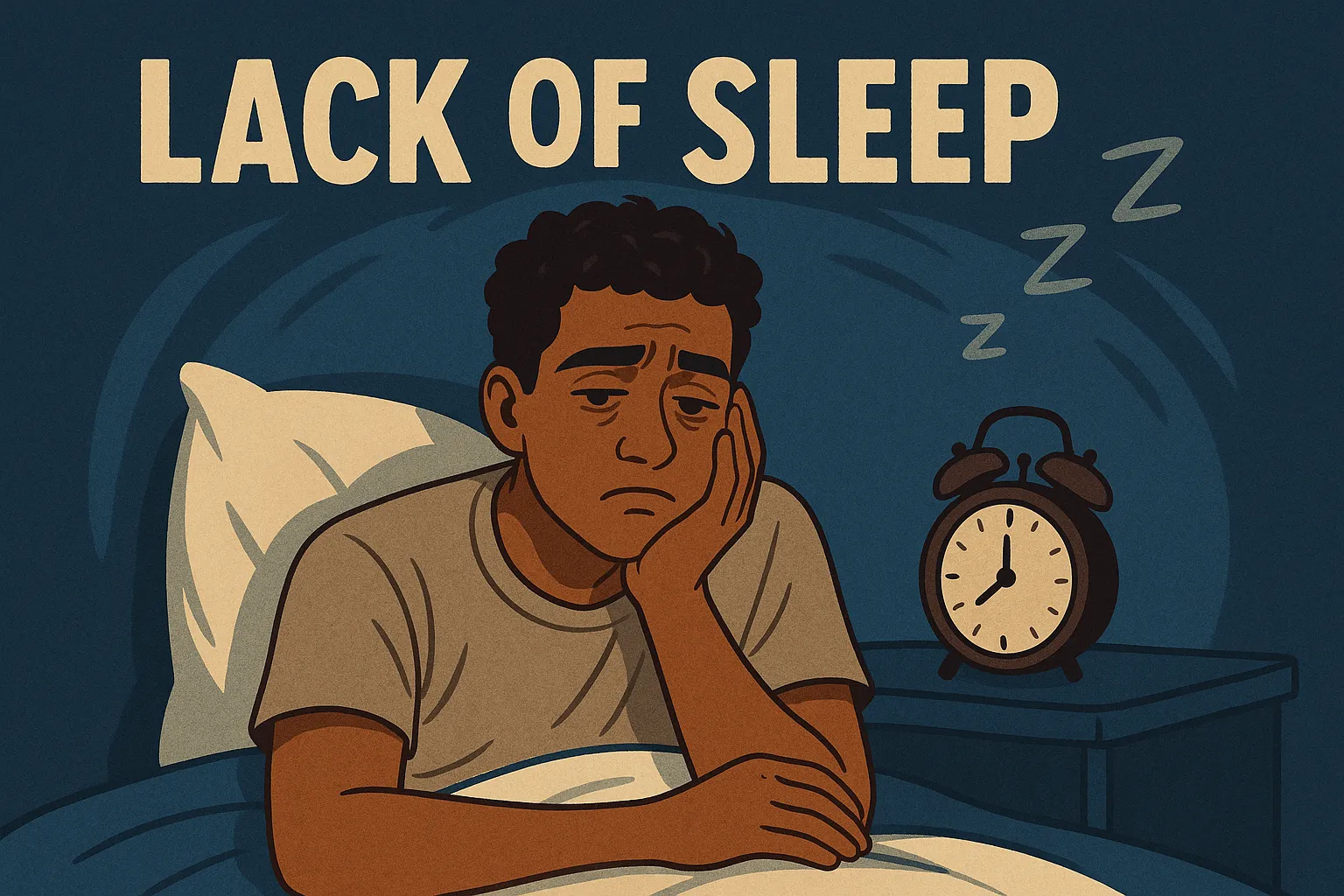
You might think testosterone issues only start showing up in middle age—or that they’re just something gym rats talk about when they’re not lifting. But here’s something most people don’t realize: even young, healthy men can see their testosterone levels drop significantly—just from not getting enough sleep.
And it doesn’t take months of sleepless nights. Just one week of sleeping five hours or less per night can lower your testosterone by up to 15%, according to a study from the University of Chicago.
Let that sink in: your hormones can take a hit in less time than it takes to finish a Netflix series.
The connection between sleep and testosterone
Most of your testosterone is produced while you’re sleeping—especially during REM sleep. That’s the stage when your brain dreams and your body repairs itself. If you’re cutting your nights short or tossing and turning, you’re not just waking up tired. You’re literally waking up with less testosterone in your system.
“Low testosterone levels are associated with reduced well-being and vigor,” said Dr. Eve Van Cauter, one of the researchers behind the Chicago study. “Our study shows that sleep loss is a real risk factor, no matter your age.”
So if you’ve been feeling a bit more sluggish, less motivated to hit the gym, or just… not quite yourself lately, your sleep—or lack of it—could be the quiet culprit.
It’s not just sleep
Let’s be honest—modern life isn’t doing testosterone any favors. We’re stressed, constantly connected, and surrounded by hormone-disrupting chemicals we don’t even think about.
Here are a few other sneaky testosterone saboteurs:
Stress: That never-ending to-do list? It’s pumping out cortisol, a stress hormone that blocks testosterone.
Alcohol: A few drinks here and there are fine, but regular heavy drinking—especially beer—can mess with your hormone balance.
Plastic everywhere: Ever heat up leftovers in a plastic container? Chemicals like BPA can mimic estrogen in your body, and that throws testosterone off balance.
Ultra-low-fat diets: Your body actually needs some fat (especially healthy fats) to make hormones like testosterone.
Dr. Shalender Bhasin, a testosterone researcher at Harvard, puts it simply:
“Testosterone is more than a sex hormone. It’s a mirror of your overall health—and your lifestyle choices are constantly influencing it.”
The fix: Start with sleep
The good news? This isn’t about magic supplements or complicated protocols. One of the most powerful ways to support your testosterone is also one of the simplest: get better sleep.
Here’s how to start:
Aim for 7 to 9 hours of sleep each night—consistently.
Keep your bedtime and wake-up time the same, even on weekends.
Cut back on late-night screen time and caffeine.
Give yourself time to wind down—your brain needs it.
And then layer in the other stuff:
Reduce stress with exercise, journaling, or even just a few deep breaths during the day.
Eat real food—especially good fats like avocado, olive oil, and eggs.
Use less plastic when storing or heating food.
Drink in moderation, and hydrate plenty.
Final thoughts
We often think of testosterone as just a number—or something only older men should worry about. But the truth is, your hormones are always listening to how you live. And sleep is one of their favorite conversations.
So the next time you’re tempted to pull an all-nighter or binge-scroll until 2 a.m., remember: you’re not just losing sleep—you might be losing something far more important.
Sources:
Van Cauter, E., et al. (2011). Reduced Sleep Duration and Testosterone Levels in Young Healthy Men, JAMA.
Walker, M. (2017). Why We Sleep: Unlocking the Power of Sleep and Dreams.
Bhasin, S., et al. (2001). Testosterone Therapy in Men With Androgen Deficiency Syndromes: An Endocrine Society Clinical Practice Guideline.
