


Stakeholders in Nigeria’s higher education sector have issued a rallying call for a shift toward innovation-driven learning, urging institutions to produce graduates who are entrepreneurial, digitally fluent, and capable of transforming the economy in an era defined by artificial intelligence, automation, and global disruption.
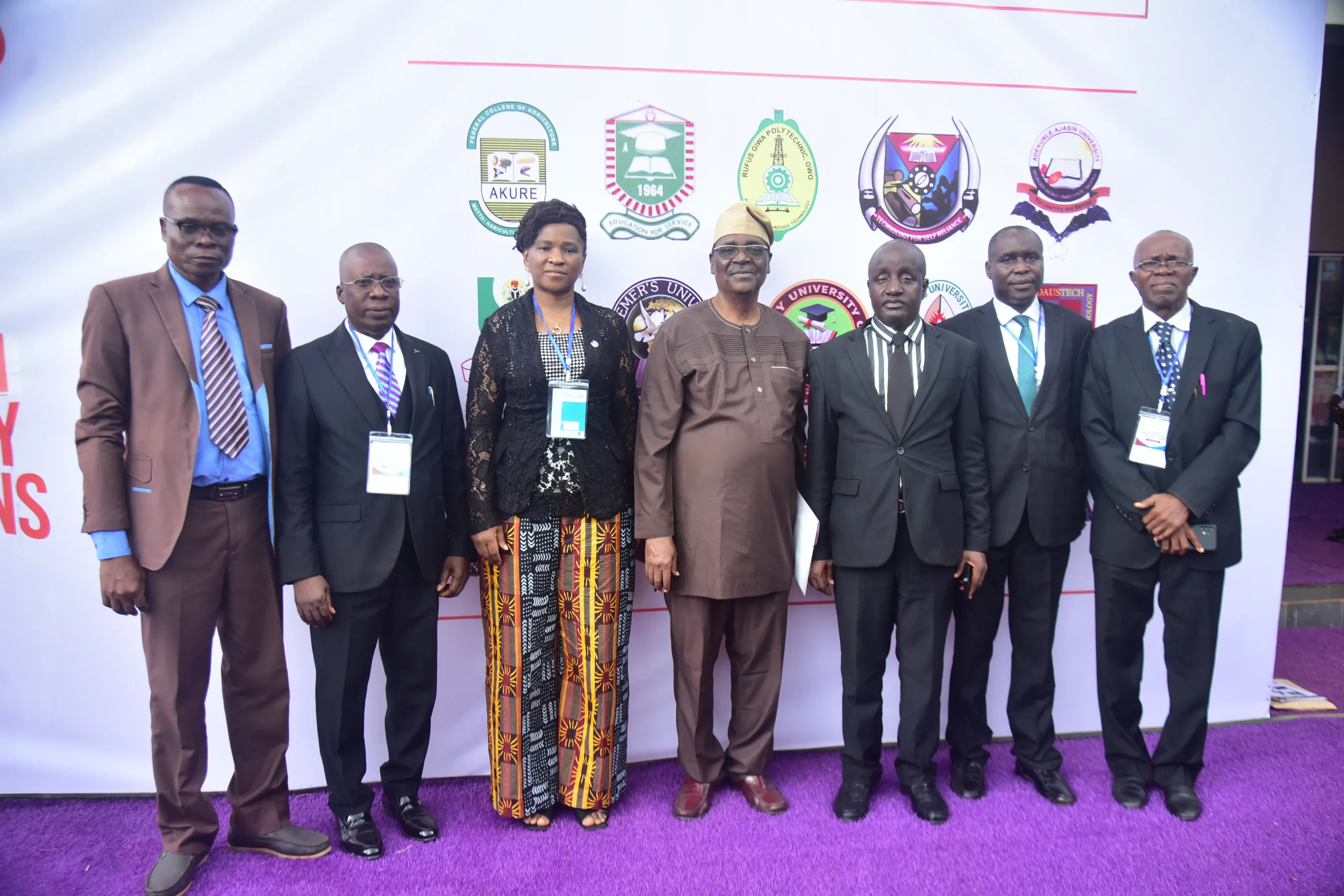
The call came during the maiden edition of the Colloquium of Tertiary Institutions in Ondo State, held at the Federal University of Technology Akure (FUTA) on June 3, 2025, under the theme “Fostering Collaborations and Innovations among Tertiary Institutions for Sustainable Development.”
Delivering the keynote, Professor Olufemi Bamiro, a former Vice Chancellor of the University of Ibadan and expert in mechanical engineering, emphasized that “21st-century wealth will be generated by knowledge economies—driven by research, global partnerships, and skilled knowledge workers.” He described universities as engines of innovation through their triadic mandate: research, teaching, and community service.
“Innovation does not occur in silos,” Bamiro asserted. “To build globally relevant institutions, Nigerian tertiary institutions must forge partnerships across borders and industries, harnessing knowledge to tackle local and global development challenges.”
Highlighting the urgency of aligning academia with market demands, Mr. Muyiwa Akinyemi, Deputy Managing Director of United Bank for Africa, warned that the current educational model risks obsolescence. Represented by Mr. Temitope Ayoko, he cited projections from the World Economic Forum that 85 million jobs could be lost to AI and automation by 2025, stressing the need to redesign curricula for relevance and resilience.
“Nigeria’s education system must stop producing graduates for yesterday’s jobs,” Akinyemi said. “With youth unemployment in Ondo State exceeding the national average of 23.1%, we are staring at an existential economic threat. Our graduates must be innovators, not job seekers.”
He proposed a bold curriculum reform that embeds experiential learning, digital fluency, data analytics, artificial intelligence, green skills, and entrepreneurship into core academic structures. “Entrepreneurship must become mainstream, backed by real-world labs, seed funding, and industry mentorship,” he added.
Governor Lucky Aiyedatiwa, represented by Mr. Ige Akintunde of the State Ministry of Education, Science and Technology, lauded the initiative and urged that the event not end with rhetoric. He proposed a blueprint for education reform anchored in collaboration, timelines, and measurable outcomes.
FUTA Vice Chancellor Professor Adenike Oladiji, who convened the event, emphasized the role of research in unlocking the value of Nigeria’s vast natural resources. “Our mission is to convert raw potential into high-impact innovation through collaboration and strategic thinking,” she said.
Professor Tomola Obamuyi, Chairman of the Planning Committee, echoed this vision, saying the colloquium aims to create a permanent forum where heads of institutions, researchers, and policy experts form a think tank dedicated to economic and technological advancement.
With participants from institutions across Ondo and neighboring states—including the University of Ilesa and Redeemer’s University, Ede—the colloquium is expected to catalyze a new era of academic synergy, innovation, and sustainable development.
As Nigeria prepares for a tech-dominated future, the message from Akure is clear: higher education must lead the way—or risk being left behind.
