

• Home
  • Agric
  • Sci & Tech
  • Health
  • Environment
  • Hausa News
  • More
    • Business/Banking & Finance
    • POLITICS
    • Entertainments & Sports
    • International
    • Investigation
    • Law & Human Rights
    • Africa
    • ACCOUNTABILITY/CORRUPTION
    • Hassan Gimba
    • Column
    • Prof. Jibrin Ibrahim
    • Prof. M.K. Othman
    • Defense/Security
    • Education
    • Energy/Electricity
    • Entertainment/Arts & Sports
    • Society and Lifestyle
    • Food & Agriculture
    • Health & Healthy Living
    • International News
    • Interviews
    • Investigation/Fact-Check
    • LAW & HUMAN RIGHTS
    • Oil & Gas/Mineral Resources
    • PRESS FREEDOM/JOURNALISM/PR
    • General News
    • Presidency
  • About Us
    • Contact Us
    • Board Of Advisory
    • Privacy Policy
    • Ethics Policy
    • Teamwork And Collaboration Policy
    • Fact-Checking Policy
    • Advertising
  • Media OutReach Newswire
    • Wire News
  • The Stories
Facebook Twitter Instagram
Trending
  • WAF urges investment in food security
  • NGO mobilises students for handwashing
  • Kogi assesses climate finance readiness
  • FAAC distributes ₦2.43tn to federal, state, local governments for September
  • NSA seek more staff, better equipment
  • Financial services drive Nigeria’s FX demand to highest level since 2011
  • Nigeria’s $55.1bn reserves provide shield against global shocks — Cardoso
  • IMF backs CBN’s 23% rate reset, says inflation progress justifies move
Facebook Twitter Instagram YouTube
AsheNewsAsheNews
  • Home
  • Agric

    WAF urges investment in food security

    October 15, 2026

    Rural women farmers seek national recognition

    October 15, 2026

    Jigawa to convert irrigation pumps to CNG

    October 15, 2026

    Niger unveils high-yield TELA maize variety

    October 14, 2026

    FG distributes fertilisers to 5,040 Bauchi farmers

    October 14, 2026
  • Sci & Tech

    Cloudvantage launches local cloud platform for banks

    October 15, 2026

    NiRA urges digital literacy in schools

    October 14, 2026

    Lead-acid batteries pose health risks, Expert warns

    October 14, 2026

    Galaxy backbone boss urges universities to prioritise AI research

    October 14, 2026

    REA, NCC plan rural power, telecom projects

    October 14, 2026
  • Health

    NGO mobilises students for handwashing

    October 15, 2026

    NSA seek more staff, better equipment

    October 15, 2026

    Kaduna sensitises adolescents with disabilities on health

    October 15, 2026

    Katsina health workers choose federal jobs over pay gap

    October 15, 2026

    ICRC records 18% rise in malnutrition cases in Northeast

    October 15, 2026
  • Environment

    Kogi assesses climate finance readiness

    October 15, 2026

    Lagos diverts traffic on Independence bridge for repairs

    October 15, 2026

    LASEMA sets Thursday for building demolition

    October 15, 2026

    UNDP seeks disability-inclusive climate action

    October 14, 2026

    NEMA urges staff to show compassion

    October 14, 2026
  • Hausa News

    UNA signs MoU to launch air Bissau in Guinea-Bissau

    June 15, 2026

    Otti plans 250-room 5-star hotel in Umuahia

    April 11, 2026

    Anti-quackery task force seals 4 fake hospitals in Rivers

    August 29, 2025

    [BIDIYO] Yadda na lashe gasa ta duniya a fannin Ingilishi – Rukayya ‘yar shekara 17

    August 6, 2025

    A Saka Baki, A Sasanta Saɓani Tsakanin ‘Yanjarida Da Liman, Daga Muhammad Sajo

    May 21, 2025
  • More
    1. Business/Banking & Finance
    2. POLITICS
    3. Entertainments & Sports
    4. International
    5. Investigation
    6. Law & Human Rights
    7. Africa
    8. ACCOUNTABILITY/CORRUPTION
    9. Hassan Gimba
    10. Column
    11. Prof. Jibrin Ibrahim
    12. Prof. M.K. Othman
    13. Defense/Security
    14. Education
    15. Energy/Electricity
    16. Entertainment/Arts & Sports
    17. Society and Lifestyle
    18. Food & Agriculture
    19. Health & Healthy Living
    20. International News
    21. Interviews
    22. Investigation/Fact-Check
    23. LAW & HUMAN RIGHTS
    24. Oil & Gas/Mineral Resources
    25. PRESS FREEDOM/JOURNALISM/PR
    26. General News
    27. Presidency
    Featured
    Recent

    WAF urges investment in food security

    October 15, 2026

    NGO mobilises students for handwashing

    October 15, 2026

    Kogi assesses climate finance readiness

    October 15, 2026
  • About Us
    1. Contact Us
    2. Board Of Advisory
    3. Privacy Policy
    4. Ethics Policy
    5. Teamwork And Collaboration Policy
    6. Fact-Checking Policy
    7. Advertising
    Featured
    Recent

    WAF urges investment in food security

    October 15, 2026

    NGO mobilises students for handwashing

    October 15, 2026

    Kogi assesses climate finance readiness

    October 15, 2026
  • Media OutReach Newswire
    • Wire News
  • The Stories
AsheNewsAsheNews
Home»Food & Agriculture»Why bananas are nature’s original “engineered” food
Food & Agriculture

Why bananas are nature’s original “engineered” food

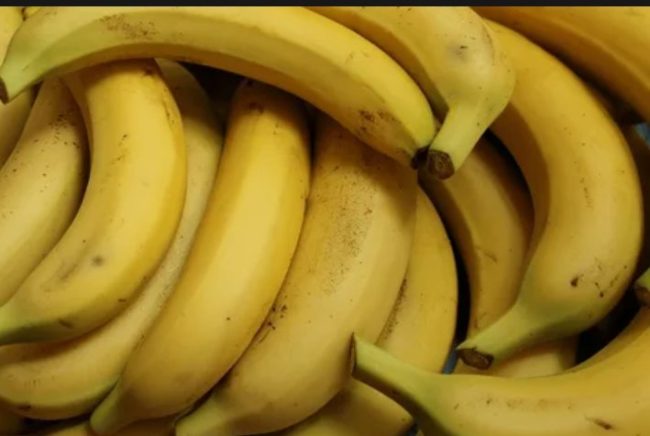
The banana has shaped civilizations and sparked scientific inquiry. From its origins in the lush forests of New Guinea to its global domination as a staple of modern diets, the banana’s journey is now in peril. Beneath its familiar yellow exterior lies a narrative encompassing genetic manipulation, disease, and global commerce.
Abdallah el-KurebeBy Abdallah el-KurebeDecember 25, 2024Updated:December 25, 2024No Comments2 Mins Read
Bananas
Bananas
Share
Facebook Twitter LinkedIn Pinterest Email

“Bananas have gone from being the first cultivated fruit to the most consumed and exported fruit in the world.”

By Chuck Dinerstein 

The relationship between humans and bananas spans thousands of years. Using phytoliths—microscopic silica particles—agroarcheologists traced bananas’ domestication to New Guinea 6,800 years ago. These “phytolith passports” reveal their spread to Sri Lanka, Uganda, and Pakistan over millennia.

The modern banana originated in Mauritius, sharing its birthplace with the dodo. The Cavendish banana, cultivated in England by gardener Joseph Paxton in the greenhouse of the Sixth Duke of Devonshire, became the dominant variety. Named Musa Cavendishii, this banana was part of early globalization, spread to Pacific islands by missionaries like John Williams, who tragically met his end in the New Hebrides. Stuart Thompson notes, “Williams did not see this himself as he was eaten…by islanders who were presumably unenthusiastic about his message.”

Bananas entered the U.S. at the 1876 Centennial Exhibition, but their suggestive shape led to recipes designed to mask it. The domesticated banana, a triploid and thus sterile, is propagated through cuttings. While this cloning allows for large-scale production, Dan Koeppel warns, “Every Cavendish banana…is exactly the same genetically as every other one,” leaving them vulnerable to disease.

Fusarium wilt, or Panama disease, caused by Fusarium oxysporum cubense, threatens banana crops, spreading like COVID-19 with asymptomatic phases. Koeppel explains, “A plant can hide signs of infection for up to a year…disinfecting boots and preventing the movement of plants…is the banana equivalent of COVID-19 prevention measures.”

The earlier Gros Michel banana fell to Panama disease Race 1, with the Cavendish now threatened by Tropical Race 4 (TR4), first identified in the 1980s. TR4 spreads through contaminated water, soil, and equipment. While bioorganic farming and crop rotation offer some relief, genetic modification holds promise. TR4-resistant bananas like QCAV-4 have been developed, but adoption faces challenges, including regulatory and market resistance, particularly in the EU. Professor James Dale notes QCAV-4 is primarily a safeguard for Australia’s $1.3 billion industry, supporting 18,000 jobs.

Bananas, a staple for 400 million people, exemplify the delicate balance between agricultural innovation and environmental vulnerability. Genetic modification, sustainable practices, and global cooperation are critical to securing this essential crop, highlighting our interconnectedness and the necessity of resilience.

GeneticLiteracyProject

Bananas
Share. Facebook Twitter Pinterest LinkedIn WhatsApp Reddit Tumblr Email
Abdallah el-Kurebe
  • Website
  • Facebook
  • Twitter
  • LinkedIn

Related Posts

WAF urges investment in food security

October 15, 2026

Rural women farmers seek national recognition

October 15, 2026

Jigawa to convert irrigation pumps to CNG

October 15, 2026

Leave A Reply Cancel Reply

WAF urges investment in food security

October 15, 2026

NGO mobilises students for handwashing

October 15, 2026

Kogi assesses climate finance readiness

October 15, 2026

FAAC distributes ₦2.43tn to federal, state, local governments for September

October 15, 2026
About Us
About Us

ASHENEWS (AsheNewsDaily.com), published by PenPlus Online Media Publishers, is an independent online newspaper. We report development news, especially on Agriculture, Science, Health and Environment as they affect the under-reported rural and urban poor.

We also conduct investigations, especially in the areas of ASHE, as well as other general interests, including corruption, human rights, illicit financial flows, and politics.

Contact Info:
  • 1st floor, Dogon Daji House, No. 5, Maiduguri Road, Sokoto
  • +234(0)7031140009
  • ashenewsdaily@gmail.com
Facebook Twitter Instagram Pinterest
© 2026 All Rights Reserved. ASHENEWS Daily Designed & Managed By DeedsTech

Type above and press Enter to search. Press Esc to cancel.