

• Home
  • Agric
  • Sci & Tech
  • Health
  • Environment
  • Hausa News
  • More
    • Business/Banking & Finance
    • Politics/Elections
    • Entertainments & Sports
    • International
    • Investigation
    • Law & Human Rights
    • Africa
    • ACCOUNTABILITY/CORRUPTION
    • Hassan Gimba
    • Column
    • Prof. Jibrin Ibrahim
    • Prof. M.K. Othman
    • Defense/Security
    • Education
    • Energy/Electricity
    • Entertainment/Arts & Sports
    • Society and Lifestyle
    • Food & Agriculture
    • Health & Healthy Living
    • International News
    • Interviews
    • Investigation/Fact-Check
    • Judiciary/Legislature/Law & Human Rights
    • Oil & Gas/Mineral Resources
    • Press Freedom/Media/PR/Journalism
    • General News
    • Presidency
  • About Us
    • Contact Us
    • Board Of Advisory
    • Privacy Policy
    • Ethics Policy
    • Teamwork And Collaboration Policy
    • Fact-Checking Policy
    • Advertising
  • Media OutReach Newswire
    • Wire News
  • The Stories
Facebook Twitter Instagram
Trending
  • Naira outperforms African peers despite persistent FX pressures
  • LASU begins indigeneship verification for 2026/2027 admissions
  • Reps approve $516m loan for Sokoto–Badagry superhighway
  • Court affirms FCCPC’s power to probe medical negligence
  • Indigenous, feminist groups push rights-based energy transition at Colombia conference
  • NGX reports smooth start to extended trading hours
  • Reps panel adopts N105.14bn RMAFC 2025 budget
  • China becomes first major economy with full Africa zero-tariff
Facebook Twitter Instagram YouTube
AsheNewsAsheNews
  • Home
  • Agric

    World agriculture forum inaugurates Nigeria Country council

    April 28, 2026

    U.S. revives GSM-102 credit scheme to deepen agricultural trade with Nigeria

    April 27, 2026

    Poultry farmers seek increased financing to boost production

    April 27, 2026

    Malnutrition: FG rolls out community food bank programme in Northeast

    April 27, 2026

    Yam prices surge across Lagos markets

    April 26, 2026
  • Sci & Tech

    Artemis II: Space exploration, and the question of African future, By Prof. M. K. Othman

    April 28, 2026

    Nigeria needs unified cybersecurity – Expert warns

    April 27, 2026

    MTN Nigeria backs youth platform with over N45m

    April 27, 2026

    PalmPay CEO flags trust issues in digital payments

    April 25, 2026

    Meta to cut 10% of workforce amid AI push

    April 25, 2026
  • Health

    Kano commences 2026 Africa vaccination week

    April 28, 2026

    Nigeria faces acute shortage of public health physicians

    April 28, 2026

    Ghana rejects U.S. bilateral health deal

    April 28, 2026

    Social media fuels health misinformation – Expert

    April 28, 2026

    FCT residents express mixed views on childhood immunisation

    April 28, 2026
  • Environment

    CTV audience grows over 300% to 8m viewers on GOtv

    April 27, 2026

    Yobe council approves N59.8bn for project, infrastructure

    April 27, 2026

    Rainstorm damages homes, school in Kaduna

    April 27, 2026

    LASTMA to launch free short code for traffic reports

    April 27, 2026

    LASEMA averts casualties in truck accident at Daleko bridge, Isolo

    April 27, 2026
  • Hausa News

    Otti plans 250-room 5-star hotel in Umuahia

    April 11, 2026

    Anti-quackery task force seals 4 fake hospitals in Rivers

    August 29, 2025

    [BIDIYO] Yadda na lashe gasa ta duniya a fannin Ingilishi – Rukayya ‘yar shekara 17

    August 6, 2025

    A Saka Baki, A Sasanta Saɓani Tsakanin ‘Yanjarida Da Liman, Daga Muhammad Sajo

    May 21, 2025

    Dan majalisa ya raba kayan miliyoyi a Funtuwa da Dandume

    March 18, 2025
  • More
    1. Business/Banking & Finance
    2. Politics/Elections
    3. Entertainments & Sports
    4. International
    5. Investigation
    6. Law & Human Rights
    7. Africa
    8. ACCOUNTABILITY/CORRUPTION
    9. Hassan Gimba
    10. Column
    11. Prof. Jibrin Ibrahim
    12. Prof. M.K. Othman
    13. Defense/Security
    14. Education
    15. Energy/Electricity
    16. Entertainment/Arts & Sports
    17. Society and Lifestyle
    18. Food & Agriculture
    19. Health & Healthy Living
    20. International News
    21. Interviews
    22. Investigation/Fact-Check
    23. Judiciary/Legislature/Law & Human Rights
    24. Oil & Gas/Mineral Resources
    25. Press Freedom/Media/PR/Journalism
    26. General News
    27. Presidency
    Featured
    Recent

    Naira outperforms African peers despite persistent FX pressures

    April 28, 2026

    LASU begins indigeneship verification for 2026/2027 admissions

    April 28, 2026

    Reps approve $516m loan for Sokoto–Badagry superhighway

    April 28, 2026
  • About Us
    1. Contact Us
    2. Board Of Advisory
    3. Privacy Policy
    4. Ethics Policy
    5. Teamwork And Collaboration Policy
    6. Fact-Checking Policy
    7. Advertising
    Featured
    Recent

    Naira outperforms African peers despite persistent FX pressures

    April 28, 2026

    LASU begins indigeneship verification for 2026/2027 admissions

    April 28, 2026

    Reps approve $516m loan for Sokoto–Badagry superhighway

    April 28, 2026
  • Media OutReach Newswire
    • Wire News
  • The Stories
AsheNewsAsheNews
Home»Environment/Climate Change»Air pollution deadlier than smoking, drinking and AIDS – Study
Environment/Climate Change

Air pollution deadlier than smoking, drinking and AIDS – Study

… Reduced global life expectancy by 2 years
Abdallah el-KurebeBy Abdallah el-KurebeAugust 28, 2024Updated:August 28, 2024No Comments6 Mins Read
Pollution
Share
Facebook Twitter LinkedIn Pinterest Email

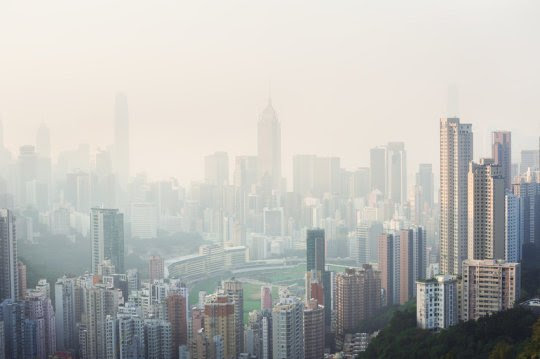
A study report, titled “Air Quality Life Index (AQLI) 2024” by researchers of the Energy Policy Institute at the University of Chicago (EPIC), published on August 28, 2024, has revealed that air pollution is deadlier than smoking, drinking and AIDS.

Air pollution continues to pose the greatest external threat to human life expectancy worldwide and is limiting the global average life span by almost two years, according to a recent study.

The report revealed that if PM2.5 (particulate matter that are 2.5 micrometres or less in diameter) pollution were reduced to meet the guidelines set by the World Health Organization (WHO), the average person could live 1.9 years longer, adding a total of 14.9 billion life years globally.

Deadlier than smoking, drinking & AIDS

The effects of air pollution on life expectancy surpass those of smoking, heavy drinking and are several times greater than other major health risks like HIV/AIDS and malnutrition.

However, the burden of pollution is not evenly distributed. People in the most polluted areas breathe six times more polluted air than those in the cleanest regions, reducing their life expectancy by an average of 2.7 years.

While many countries have established national air quality standards, the report finds that enforcement and compliance remain significant challenges.

According to the report, 94 countries have established PM 2.5 standards, of which 37 fail to meet their own guidelines. Even more concerning is the fact that 158 countries have not set any standards at all.

The potential benefits of meeting these standards are substantial — if all countries achieved their goals, the average person in these regions would gain 1.2 years of life expectancy.

US, China, Europe fare better

Some countries have made notable progress in combating air pollution. The United States, Europe, and China have implemented stringent policies, leading to significant reductions in pollution levels.

The report noted that China’s efforts have been particularly impressive; with air pollution having decreased by 41 per cent after the Asian giant proclaimed its ‘war on pollution’ in 2014.

Chinese residents are now living two years longer due to improved air quality.

In the United States and Europe, decades of stringent pollution control measures have yielded significant improvements.

The US has reduced pollution by 67.2 per cent since 1970, extending the average lifespan by 1.5 years. Europe has seen a 30.2 per cent reduction since 1998, adding 5.6 months to life expectancy.

However, the report noted that even at the relatively low levels of pollution in these regions, health risks persist.

The report also took note of regional variations in pollution trends within countries.

South and Southeast Asia saw notable improvements in 2022, observing a 4 per cent decline in PM2.5 levels compared to the previous decade.

Despite this improvement, South Asia remains the world’s most polluted region, accounting for 45 per cent of global life years lost due to high pollution with Bangladesh, India, Nepal, and Pakistan among the most polluted countries globally.

Situation in Africa and West Asia

Air pollution in Central and West Africa has emerged as a major health threat, with particulate pollution levels remaining largely unchanged in 2022, compared to previous years. The region’s average PM2.5 concentration is 22.2 microgram per cubic metre (μg/m3), 4.4 times higher than the WHO guideline. This pollution level is reducing life expectancy by an average of 1.7 years across the region, with some areas facing even more severe impacts.

However, there are signs of progress in addressing this issue. Several countries, including Nigeria and Rwanda, have recently implemented air quality regulations and standards. Ghana has introduced an Air Quality Management Plan for the Greater Accra Metropolitan Area, while Togo has implemented a National Plan to reduce air pollutants.

The Middle East and North Africa (MENA) region has emerged as a new pollution hotspot, reducing life expectancy by an average of 1.3 years across the region. Qatar stands out as the most polluted country in the region and the fourth most polluted globally, with PM2.5 levels 7.8 times the WHO guideline. Iraq follows closely, with 39 out of the 50 most polluted regions in MENA located within its borders.

West Asian countries generally have higher pollution levels than North African countries. Within countries as well, pollution is often concentrated around national capitals.

Seven out of 19 countries have PM2.5 standards, and five countries have implemented air quality management plans; ranging from stricter penalties for polluters to comprehensive national air quality agendas, signaling a growing awareness of the need to address this critical health issue in the region.

In Southeast Asia, residents are still losing an average of 1.2 years of life expectancy due to air pollution levels that exceed WHO guidelines.

In some countries, the impact is even more severe. In Myanmar, for instance, air pollution is reducing life expectancy by 2.9 years, surpassing other significant health threats such as malnutrition and respiratory diseases. To address these ongoing challenges, the report suggests several strategies such as working together to reduce biomass, farm, forest, and peatland fires and implementing stricter fuel emission standards which could improve air quality standards.

Latin America’s deteriorating record

Air pollution in Latin America has steeply worsened, with average PM2.5 concentrations increasing by 4.8 per cent from 2021 and three per cent from 1998. Bolivia emerges as the most polluted country in Latin America, with an annual average particulate pollution level of 29.6 μg/m³, six times the WHO guideline.

Guatemala also faces significant challenges, with air pollution reducing average life expectancy by 2.1 years nationwide. Even in Brazil, Latin America’s most populous country, residents could collectively gain 151.8 million life years.

The report also highlights that vehicular emissions are a primary contributor to poor air quality in many Latin American cities.

However, it also notes some positive developments, with cities like Bogotá, Mexico City, and Quito implementing measures such as licence plate-based driving restrictions and improved public transportation systems to combat pollution. Brazil’s PROCONVE program, which aims to reduce vehicle emissions, is cited in the report as an example of proactive policymaking.

DownToEarth

Air pollution CSE EPIC WHO
Share. Facebook Twitter Pinterest LinkedIn WhatsApp Reddit Tumblr Email
Abdallah el-Kurebe
  • Website
  • Facebook
  • Twitter
  • LinkedIn

Related Posts

Kano commences 2026 Africa vaccination week

April 28, 2026

Nigeria faces acute shortage of public health physicians

April 28, 2026

Ghana rejects U.S. bilateral health deal

April 28, 2026

Leave A Reply Cancel Reply

Naira outperforms African peers despite persistent FX pressures

April 28, 2026

LASU begins indigeneship verification for 2026/2027 admissions

April 28, 2026

Reps approve $516m loan for Sokoto–Badagry superhighway

April 28, 2026

Court affirms FCCPC’s power to probe medical negligence

April 28, 2026
About Us
About Us

ASHENEWS (AsheNewsDaily.com), published by PenPlus Online Media Publishers, is an independent online newspaper. We report development news, especially on Agriculture, Science, Health and Environment as they affect the under-reported rural and urban poor.

We also conduct investigations, especially in the areas of ASHE, as well as other general interests, including corruption, human rights, illicit financial flows, and politics.

Contact Info:
  • 1st floor, Dogon Daji House, No. 5, Maiduguri Road, Sokoto
  • +234(0)7031140009
  • ashenewsdaily@gmail.com
Facebook Twitter Instagram Pinterest
© 2026 All Rights Reserved. ASHENEWS Daily Designed & Managed By DeedsTech

Type above and press Enter to search. Press Esc to cancel.