


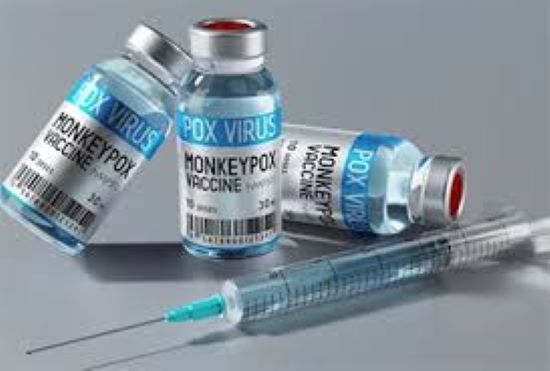
Bavarian Nordic has no plans to sell or manufacture its vaccine directly to African countries, the company’s Vice President of Investor Relations told Health Policy Watch on Thursday, stating that donations from wealthy nations will likely be the primary source of supplies.
The World Health Organization’s (WHO) announcement of a global mpox health emergency may have served as a wake-up call regarding the ‘perfect storm’ of mpox virus transmission brewing in the Democratic Republic of Congo (DRC) and a dozen other neighboring countries in central and southern Africa.
Contrary to the situation in 2022-23, there is now ample production capacity to supply Africa with approximately 2 million mpox doses by the end of this year, and an additional 8 million doses by the end of 2025, Bavarian Nordic’s CEO Paul Chaplin told *Bloomberg News* on Wednesday. “What we are missing are the orders,” Chaplin said.
However, the high costs of the vaccine, estimated at $100 per dose, along with the significant challenges of deploying jabs in conflict-ridden DRC—the country at the epicenter of the crisis—pose formidable obstacles to actually matching supply with need and getting vaccines into arms, observers say.
**‘Vaccines to Africa Will Come from Donations’**
While Africa CDC officials have discussed their aims to deploy millions of mpox vaccine doses to counter the continental health emergency declared on Tuesday, near-term procurement is likely to be far more limited if it relies on third-party donations, as was the case with COVID-19 vaccines.
That scenario seems to be unfolding so far. Shortly after the WHO global health emergency was announced on Wednesday, the United States offered to donate 50,000 doses of the BVN vaccine from its stockpiles, while the European Union announced a donation of 175,000 doses, to be combined with a pledge of 40,000 by Bavarian Nordic itself.
“We have the capacity ready to help. We have donated doses that GAVI [the Global Vaccine Alliance] has not yet used,” said another top Bavarian Nordic official, Rolf Sass Sørensen, in an email to *Health Policy Watch*. However, he dismissed the possibility of the pharmaceutical firm selling vaccines directly to African nations at concessionary prices:
ALSO READ WHO declares Mpox a global health emergency
“It’s very unlikely that any African country will ever be responsible for buying vaccines,” said Sørensen, who is Vice President of Investor Relations. “Vaccines to Africa will come from donations from organizations and countries. Pricing structure is always related to contract volumes and long-term commitments,” he added.
Sørensen also ruled out local African production of the Bavarian Nordic vaccine as technologically unfeasible. “We talk to producers around the world. We are not aware of any producers that can produce with our technology. So your scenario doesn’t seem realistic at all,” he said.
Donation offers made so far remain woefully inadequate to meet the needs, said Professor Piero Olliaro, a researcher at Oxford who studies mpox in the Central African Republic (CAR) as well as Europe.
“It is disturbing that people will feel satisfied and portray that they have provided a solution if they donate 100,000 doses,” he said. “You need enough doses so you can be guided by the needs and not the availability.”
With vaccine costs at around $100 per dose for the two-jab series, deploying a more meaningful quantity—on the order of 1 or 2 million doses—to at-risk people and communities in the 13 African countries where the outbreak is now spreading, would cost $100 to $200 million for donors.
“It’s taxpayers who will foot the bill,” Olliaro said, noting that the dilemma points once more to the need to shift more manufacturing to Africa.
Long before any vaccine deployment, WHO and its partners must first develop a strategy for mounting an effective immunization campaign and engage political leadership in the Democratic Republic of Congo and its neighbors.
The challenges to deployment are formidable, both due to the lack of knowledge about transmission and the conflict setting of the DRC, which is the epicenter for the most deadly variants that are circulating, Clades 1a and Clades 1b.
“Vaccine is one thing,” said Olliaro. “But it is not the ultimate answer. We know how difficult it is to vaccinate people and get acceptance for more vaccines, particularly in countries like the DRC that have been exposed to Ebola.
ALSO READ [EXPLAINER] What Is Mpox and How Does It Spread?
“To deliver vaccines, you need to know who you are going to vaccinate. That decision should be based on what you know about transmission, not on how many doses are available,” he said.
**Clades 1a and 1b Now Pose the Real Threat**
While the 2022-2023 global mpox emergency involved a milder form of mpox, transmitted mainly among men who have sex with men, the two variants circulating most widely in central Africa now include the more deadly Clade 1a and a novel Clade 1b, with a combined case fatality rate of around 3%, according to the latest data from the Africa Centers for Disease Control. Left untreated at the source, the potential for worldwide spread is growing, as the first Clade 1 case was reported outside of Africa, by Sweden’s public health agency, the BBC reported on Thursday.
Mpox in Africa – 2024
“Mpox is almost the archetype of these complex outbreaks that have not been dealt with properly and have the potential for spreading, creating more problems locally and nationally. But they are complex because of the context in which they occur. We need a much more systematic approach.”
The eastern DRC Kivu region, where the Clade 1b variant of the virus has emerged and is now spreading through community as well as heterosexual contact, has been wracked by violent conflict with the M-23 militia forces operating from and along the Rwanda border.
This has led to the forced migration of tens of thousands of people within the region and across borders, exacerbating virus transmission due to malnutrition, unprotected sex, and immune deficiencies from other untreated conditions like HIV/AIDS, Olliaro said.
Illegal mining operations deep in the Congo’s rainforest also contribute to the misery and exploitation of local communities, engaging women and child laborers in conditions where they are chronically exposed to heavy metal contamination.
In that perfect storm of social conditions that exists in the DRC, as well as in neighboring countries such as CAR, malnutrition and immunodeficiencies from other untreated conditions like HIV make people even more vulnerable to the virus.
“Any outbreak happening in that area has the potential to be very difficult to control,” said Olliaro.
Meanwhile, the Equateur region of western DRC is seeing longer transmission chains of the traditional and even more deadly Clade 1a variant, which can be transmitted by close household contact, contact with infected items like linens, as well as sexual contact.
ALSO READ MPox: FG escalates surveillance at entry points for early detection
Researchers are perplexed as to why Clade 1a transmission, which typically occurred from close contact with infected animals or bushmeat but burned out rather quickly, now seems to be more persistent.
“The classical Clade 1a that has been causing a big wave in the northwestern parts of DRC, Equateur province, is showing high morbidity and mortality in parts of that province well above 10%,” said Olliaro.
“But the chains of transmission also seem to be much longer, the spread, and how far it can travel. This is also where you see more kids being infected.
“As for how the infection is transmitted, we don’t know enough about this. And that’s another foundation of a vaccine campaign,” he said, referring to the rapidly spreading variants of the orthopoxvirus, which belongs to the same family as smallpox.
