

• Home
  • Agric
  • Sci & Tech
  • Health
  • Environment
  • Hausa News
  • More
    • Business/Banking & Finance
    • POLITICS
    • Entertainments & Sports
    • International
    • Investigation
    • Law & Human Rights
    • Africa
    • ACCOUNTABILITY/CORRUPTION
    • Hassan Gimba
    • Column
    • Prof. Jibrin Ibrahim
    • Prof. M.K. Othman
    • Defense/Security
    • Education
    • Energy/Electricity
    • Entertainment/Arts & Sports
    • Society and Lifestyle
    • Food & Agriculture
    • Health & Healthy Living
    • International News
    • Interviews
    • Investigation/Fact-Check
    • LAW & HUMAN RIGHTS
    • Oil & Gas/Mineral Resources
    • PRESS FREEDOM/JOURNALISM/PR
    • General News
    • Presidency
  • About Us
    • Contact Us
    • Board Of Advisory
    • Privacy Policy
    • Ethics Policy
    • Teamwork And Collaboration Policy
    • Fact-Checking Policy
    • Advertising
  • Media OutReach Newswire
    • Wire News
  • The Stories
Facebook Twitter Instagram
Trending
  • WHO sets conditions for Nigeria to end Ebola outbreak
  • Kogi journalists hold press week walk
  • COOUTH introduces emergency care pack
  • Enyam urges protection of coastal highway
  • Cross River trains 34 health workers for Ebola preparedness
  • SUBFW 2026: Bunza to deliver public lecture, review book on Sokoto Caliphate
  • Lagos fire documentary calls for better emergency response
  • Nigeria may declare Ebola case over on Dec. 7
Facebook Twitter Instagram YouTube
AsheNewsAsheNews
  • Home
  • Agric

    Hinna farmers appeal for irrigation support after crop losses

    October 26, 2026

    Anambra distributes farm equipment to 500 farmers

    October 26, 2026

    Lagos shoppers get pepper relief, but tomatoes remain costly

    October 25, 2026

    ABU VC urges improved underutilized legume varieties for food security

    October 23, 2026

    Rising feed costs threaten livestock farmers, association warns

    October 23, 2026
  • Sci & Tech

    NASENI calls on youths to lead through innovation

    October 26, 2026

    At 14, Burkina Faso teenager launches FasoNova, an AI built for local needs

    October 25, 2026

    MTN brings data on trial initiative to Abuja

    October 23, 2026

    The 7th Kano Social Influencers Conference, by Prof. Jibrin Ibrahim 

    October 23, 2026

    Sokoto tops Nigeria’s digital literacy rankings with 58,573 beneficiaries

    October 23, 2026
  • Health

    WHO sets conditions for Nigeria to end Ebola outbreak

    October 27, 2026

    Kogi journalists hold press week walk

    October 27, 2026

    COOUTH introduces emergency care pack

    October 27, 2026

    Cross River trains 34 health workers for Ebola preparedness

    October 27, 2026

    Nigeria may declare Ebola case over on Dec. 7

    October 26, 2026
  • Environment

    Enyam urges protection of coastal highway

    October 27, 2026

    Lagos fire documentary calls for better emergency response

    October 26, 2026

    EFCC arrests 14 Chinese, 1 Nigerian over illegal lithium processing plants in Ogun

    October 26, 2026

    Museveni backs wooden utensils to replace plastics, glass, ceramics over cancer concerns

    October 26, 2026

    CONUA demands pay, agreement, warns of action

    October 26, 2026
  • Hausa News

    UNA signs MoU to launch air Bissau in Guinea-Bissau

    June 15, 2026

    Otti plans 250-room 5-star hotel in Umuahia

    April 11, 2026

    Anti-quackery task force seals 4 fake hospitals in Rivers

    August 29, 2025

    [BIDIYO] Yadda na lashe gasa ta duniya a fannin Ingilishi – Rukayya ‘yar shekara 17

    August 6, 2025

    A Saka Baki, A Sasanta Saɓani Tsakanin ‘Yanjarida Da Liman, Daga Muhammad Sajo

    May 21, 2025
  • More
    1. Business/Banking & Finance
    2. POLITICS
    3. Entertainments & Sports
    4. International
    5. Investigation
    6. Law & Human Rights
    7. Africa
    8. ACCOUNTABILITY/CORRUPTION
    9. Hassan Gimba
    10. Column
    11. Prof. Jibrin Ibrahim
    12. Prof. M.K. Othman
    13. Defense/Security
    14. Education
    15. Energy/Electricity
    16. Entertainment/Arts & Sports
    17. Society and Lifestyle
    18. Food & Agriculture
    19. Health & Healthy Living
    20. International News
    21. Interviews
    22. Investigation/Fact-Check
    23. LAW & HUMAN RIGHTS
    24. Oil & Gas/Mineral Resources
    25. PRESS FREEDOM/JOURNALISM/PR
    26. General News
    27. Presidency
    Featured
    Recent

    WHO sets conditions for Nigeria to end Ebola outbreak

    October 27, 2026

    Kogi journalists hold press week walk

    October 27, 2026

    COOUTH introduces emergency care pack

    October 27, 2026
  • About Us
    1. Contact Us
    2. Board Of Advisory
    3. Privacy Policy
    4. Ethics Policy
    5. Teamwork And Collaboration Policy
    6. Fact-Checking Policy
    7. Advertising
    Featured
    Recent

    WHO sets conditions for Nigeria to end Ebola outbreak

    October 27, 2026

    Kogi journalists hold press week walk

    October 27, 2026

    COOUTH introduces emergency care pack

    October 27, 2026
  • Media OutReach Newswire
    • Wire News
  • The Stories
AsheNewsAsheNews
Home»Oil & Gas/Mineral Resources»Dangote’s allegation: Why is Farouk Ahmed silent on corruption claims? By Yushau A. Shuaib
Oil & Gas/Mineral Resources

Dangote’s allegation: Why is Farouk Ahmed silent on corruption claims? By Yushau A. Shuaib

EditorBy EditorDecember 23, 2025Updated:December 23, 2025No Comments4 Mins Read
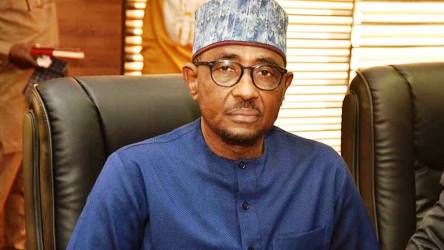
NMDPRA, Farouk-Ahmed
Share
Facebook Twitter LinkedIn Pinterest Email

When a billionaire suddenly becomes an overnight anti-corruption crusader, one should pause. Not because activism is wrong, but because power rarely moves without an agenda. In Nigeria’s oil sector—where money, regulation, and influence intersect—nothing happens in isolation.

I was drawn into this debate long before the current drama peaked. In July 2024, during the first public clash between Alhaji Aliko Dangote and Engr. Farouk Ahmed of the Nigerian Midstream and Downstream Petroleum Regulatory Authority (NMDPRA), I wrote an article titled “Monopolistic Oligarchies: The Tale of Dangote of Nigeria and Ambani of India.” In it, I defended indigenous industrial growth while warning against the dangers of unchecked monopoly, no matter how patriotic its face.

My position, then as now, was about balance.
Dangote is unquestionably a transformational investor. His refinery promises energy security, job creation, and reduced imports. Nigeria needs such bold industrial ambition. However, history also teaches that when one player becomes too dominant, competition suffers, regulation weakens, and markets become tilted dangerously. Indigenous success should be supported—but not worshipped.

On the other side stood Engr. Faruk Ahmed. I was openly critical of his public demarketing of Dangote refinery products, arguing that the regulatory posture was poorly timed and counterproductive. Regulators exist to enforce standards fairly, not to appear hostile to local breakthroughs. Excessive rigidity can sabotage domestic investment just as surely as a monopoly can distort markets.

ALSO READ Why I petitioned ICPC against Farouk — Dangote

That article triggered reactions from all sides—public commentary, private calls, quiet lobbying. It was clear the fault line ran deeper than personalities. What we were witnessing was a struggle over market policy: local refining versus entrenched import interests; regulation versus industrial power; control versus competition.

What Nigerians know about Dangote is largely public. From a young trader to Africa’s richest man, he built an empire that sometimes seems to rival the Nigerian state itself—especially when one remembers that government-owned refineries in Kaduna, Warri, and Port Harcourt have remained largely comatose for years.

What many Nigerians did not know—until I began making inquiries—was the reputation Faruk Ahmed enjoyed among his staff and associates. They described him as humble, soft-spoken, blunt, and deeply professional. An engineer trained abroad, a former Apple Computer engineer in the United States, before returning, where he held some of the most sensitive positions in Nigeria’s oil bureaucracy, including PPMC, PPPRA and NNPC, without scandal. They insisted he was content, incorruptible, and difficult to intimidate. That image made the latest turn of events all the more puzzling.

After months of relative calm following the 2024 dispute, Dangote returned—this time with heavier artillery. He publicly accused Farouk Ahmed of spending between $5 and $7 million on foreign secondary education for his children in Switzerland, petitioned anti-corruption agencies, and pursued legal action that ultimately coincided with Ahmed’s exit from office and the nomination of a successor.

Then came the silence. Faruk Ahmed reportedly declined to engage in a public rebuttal, expressing confidence that investigative institutions would clear his name. In theory, silence can be dignified. In practice—especially in Nigeria—silence in the face of explosive corruption allegations often reads as surrender.

This is where the question becomes unavoidable: if a man is truly incorruptible, why retreat so quietly from the battlefield of public opinion? If he dared to accuse a powerful billionaire of attempting to monopolise Nigeria’s oil sector with inferior products, why did he lack the resolve to defend himself against allegations that ended his career?

Was he fighting someone else’s battle? Was he a pawn in a larger chess game between capital and regulation? Or was his silence a strategic miscalculation in a country where narrative often becomes verdict?

In Nigeria, perception is punishment. To be accused is already to be half-convicted in the court of public opinion. Silence does not buy you time; it cedes the ground entirely. A regulator who leaves such allegations unanswered risks not only his own reputation but the credibility of the institutions he once led.

From all indications, this saga is far bigger than Dangote versus Faruk. It is about who controls Nigeria’s energy future, how regulation is wielded, and whether the state can balance powerful private capital without becoming either captive or combative.

But one lesson is already clear: in a country where corruption allegations are both weapon and verdict, silence is rarely golden—especially if one claims to be innocent. Or is it a case of being used and dumped after satisfying the unseen forces? Time will tell where the truth finally lands.

*Yushau A. Shuaib is the author of “A Dozen Tips for Media Relations”
Email: yashuaib@yashuaib.com

Ahmed Farouk Aliko Dangote NMDPRA
Share. Facebook Twitter Pinterest LinkedIn WhatsApp Reddit Tumblr Email
Editor
  • Website

Related Posts

EFCC arrests 14 Chinese, 1 Nigerian over illegal lithium processing plants in Ogun

October 26, 2026

Dangote Refinery extends ₦525 IPO by 2 weeks as subscriptions hit 3–4 times target

October 13, 2026

Diplomacy of the unheard: The South and unequal architecture of multilateralism, by Dr Mohammed M. Haruna

October 4, 2026

Leave A Reply Cancel Reply

WHO sets conditions for Nigeria to end Ebola outbreak

October 27, 2026

Kogi journalists hold press week walk

October 27, 2026

COOUTH introduces emergency care pack

October 27, 2026

Enyam urges protection of coastal highway

October 27, 2026
About Us
About Us

ASHENEWS (AsheNewsDaily.com), published by PenPlus Online Media Publishers, is an independent online newspaper. We report development news, especially on Agriculture, Science, Health and Environment as they affect the under-reported rural and urban poor.

We also conduct investigations, especially in the areas of ASHE, as well as other general interests, including corruption, human rights, illicit financial flows, and politics.

Contact Info:
  • 1st floor, Dogon Daji House, No. 5, Maiduguri Road, Sokoto
  • +234(0)7031140009
  • ashenewsdaily@gmail.com
Facebook Twitter Instagram Pinterest
© 2026 All Rights Reserved. ASHENEWS Daily Designed & Managed By DeedsTech

Type above and press Enter to search. Press Esc to cancel.