


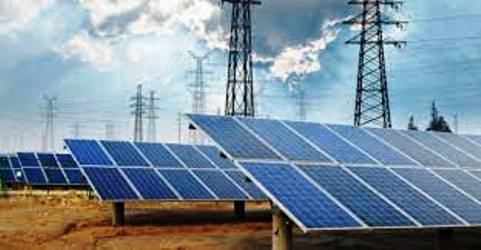
Prof. Azikiwe Onwualu, Vice-Chancellor of the African University of Science and Technology (AUST), says the institution has been selected to host a five-megawatt (5MW) solar power project on its campus.
Onwualu disclosed this at the 43rd National Solar Energy Forum and induction of new fellows, organised by the Solar Energy Society of Nigeria (SESN) on Wednesday in Abuja.
According to him, the project is being funded by the African Development Bank (AfDB) and implemented through the Rural Electrification Agency (REA).
He said energy remained the single biggest challenge facing businesses and academic institutions across the country.
Onwualu highlighted the institution’s efforts to integrate clean energy into its operations, noting that AUST had successfully transitioned its student hostels to solar power.
“Energy is the greatest challenge. Anybody who runs a business in Nigeria will tell you that energy is the biggest challenge we have.
“Today, all our hostels are fully powered by solar energy, and we are still moving to expand our capacity to improve campus services, security and learning.
“This five-megawatt solar project means our entire campus and surrounding communities will be fully powered by a hybrid solar system.
“We commend the Solar Energy Society of Nigeria for promoting the use of solar energy and other renewable energy resources as instruments for sustainable development,” he said.
Dr Mustafa Abdullahi, Director-General of the Energy Commission of Nigeria (ECN), said solar energy would remain a vital component of Nigeria’s pathway to achieving net-zero emissions by 2060.
Abdullahi, represented by Dr Babagana Tela, Director of Renewable Energy at ECN, said the commission was translating energy transition policies into concrete actions through integrated planning instruments, such as the Nigeria Energy and Emission Calculator 2060.
“As Nigeria progresses along its energy transition pathway towards net-zero emissions by 2060, solar energy will remain an important part of our energy future.
“At the Energy Commission of Nigeria, we are translating this transition into concrete action through integrated energy planning, policy development, modelling, research, capacity building and implementation support.
“Our objective is not simply to install more solar systems, but to build a sustainable solar energy ecosystem that can attract investment, create jobs and reduce dependence on fossil fuels.
“Government, professional bodies, academia, industry, investors and development partners must continue to work together if we are to achieve meaningful and lasting progress,” he said.
In her keynote address, Sen. Uche Ekwunife said reliable, affordable and accessible energy was the foundation for national development, industrial growth and job creation.
Ekwunife, represented by Prof. Joseph Dioha, Director of the Renewable Energy Project at Admiralty University of Nigeria, said energy shortages remained one of Nigeria’s most critical systemic challenges.
She said that although Nigeria possessed abundant natural energy resources and the necessary technology, implementing existing policies should take priority over repeated planning.
“Without energy, there is no development. Wherever you have high-grade energy supply that is affordable, reliable, accessible and acceptable, life will not be very hard there.
“Our energy demand is growing faster than generation, and today, only about 4,000 megawatts of green energy generation is available for more than 200 million people.
“Solar energy is appropriate, handy and positions Nigeria at a distinct advantage for decentralised power generation and economic security,” she said.
Ekwunife said decentralising power supply through mini-grids in rural communities could significantly reduce urban migration, improve security and empower small-scale industries.
Dr Sunny Akpoyibo, President of SESN, highlighted the critical relationship between academic research, investor confidence and renewable energy deployment.
Akpoyibo said hosting the forum at a university underscored the importance of science, innovation and local research in harnessing Nigeria’s vast natural resources.
He disclosed that the society would organise free nationwide post-conference training programmes to equip youths with technical skills in solar installation, maintenance and smart energy systems.
He urged stakeholders to leverage ongoing multimillion-dollar renewable energy interventions to build local capacity and drive sustainable economic development.
“The challenge before us is not the availability of resources, but how rapidly and effectively we can deploy those resources to transform lives and grow our economy.
“We must develop technical capacity and skills to meet the fast-growing demands of the renewable energy sector.
“The Solar Energy Society of Nigeria is committed to organising free training programmes nationwide to empower youths and prepare them for opportunities in the green economy,” he said.
