

• Home
  • Agric
  • Sci & Tech
  • Health
  • Environment
  • Hausa News
  • More
    • Business/Banking & Finance
    • Politics/Elections
    • Entertainments & Sports
    • International
    • Investigation
    • Law & Human Rights
    • Africa
    • ACCOUNTABILITY/CORRUPTION
    • Hassan Gimba
    • Column
    • Prof. Jibrin Ibrahim
    • Prof. M.K. Othman
    • Defense/Security
    • Education
    • Energy/Electricity
    • Entertainment/Arts & Sports
    • Society and Lifestyle
    • Food & Agriculture
    • Health & Healthy Living
    • International News
    • Interviews
    • Investigation/Fact-Check
    • Judiciary/Legislature/Law & Human Rights
    • Oil & Gas/Mineral Resources
    • Press Freedom/Media/PR/Journalism
    • General News
    • Presidency
  • About Us
    • Contact Us
    • Board Of Advisory
    • Privacy Policy
    • Ethics Policy
    • Teamwork And Collaboration Policy
    • Fact-Checking Policy
    • Advertising
  • Media OutReach Newswire
    • Wire News
  • The Stories
Facebook Twitter Instagram
Trending
  • Youth protest INEC leadership in Sokoto
  • Breast cancer care training held in Abuja
  • Shettima inaugurates Kano grain facility
  • Lawmakers back post-harvest innovation
  • Free breast cancer screening launched for Abuja female journalists
  • International labour organisation warns rising workplace risks threaten workers lives
  • Experts warn against banning solar imports in Nigeria
  • PDP unveils 2027 election timetable, form fees
Facebook Twitter Instagram YouTube
AsheNewsAsheNews
  • Home
  • Agric

    Shettima inaugurates Kano grain facility

    April 23, 2026

    Lawmakers back post-harvest innovation

    April 23, 2026

    Nigeria’s farms power economy

    April 22, 2026

    Nigeria tops global root, tuber production

    April 22, 2026

    Bauchi warns of dry spell, flood risk in 12 LGAs

    April 22, 2026
  • Sci & Tech

    RMRDC launches data-driven raw materials platform to boost investment, industrial growth

    April 21, 2026

    Apple names John Ternus as new CEO to lead $4trn tech giant

    April 21, 2026

    Tinubu appoints Fatima Zuntu as NBMA Director-General

    April 21, 2026

    LIFE-ND trains Abia workers in ICT, AI

    April 20, 2026

    How Nigeria can turn research into economic growth — Onwualu

    April 20, 2026
  • Health

    Breast cancer care training held in Abuja

    April 23, 2026

    Free breast cancer screening launched for Abuja female journalists

    April 23, 2026

    Nigeria ramps up cancer prevention, education

    April 22, 2026

    Society for Family Health adopts new group structure

    April 22, 2026

    NCDC responds to COVID-19 case in Cross River

    April 22, 2026
  • Environment

    NGE warns NBC over sanction threat

    April 22, 2026

    Don urges geographers to tackle forest crisis

    April 21, 2026

    Ado residents decry poor electricity supply

    April 21, 2026

    ILO certifies 21 new social protection experts in Nigeria

    April 21, 2026

    LAWMA steps up flood prevention ahead of rainy season

    April 21, 2026
  • Hausa News

    Otti plans 250-room 5-star hotel in Umuahia

    April 11, 2026

    Anti-quackery task force seals 4 fake hospitals in Rivers

    August 29, 2025

    [BIDIYO] Yadda na lashe gasa ta duniya a fannin Ingilishi – Rukayya ‘yar shekara 17

    August 6, 2025

    A Saka Baki, A Sasanta Saɓani Tsakanin ‘Yanjarida Da Liman, Daga Muhammad Sajo

    May 21, 2025

    Dan majalisa ya raba kayan miliyoyi a Funtuwa da Dandume

    March 18, 2025
  • More
    1. Business/Banking & Finance
    2. Politics/Elections
    3. Entertainments & Sports
    4. International
    5. Investigation
    6. Law & Human Rights
    7. Africa
    8. ACCOUNTABILITY/CORRUPTION
    9. Hassan Gimba
    10. Column
    11. Prof. Jibrin Ibrahim
    12. Prof. M.K. Othman
    13. Defense/Security
    14. Education
    15. Energy/Electricity
    16. Entertainment/Arts & Sports
    17. Society and Lifestyle
    18. Food & Agriculture
    19. Health & Healthy Living
    20. International News
    21. Interviews
    22. Investigation/Fact-Check
    23. Judiciary/Legislature/Law & Human Rights
    24. Oil & Gas/Mineral Resources
    25. Press Freedom/Media/PR/Journalism
    26. General News
    27. Presidency
    Featured
    Recent

    Youth protest INEC leadership in Sokoto

    April 23, 2026

    Breast cancer care training held in Abuja

    April 23, 2026

    Shettima inaugurates Kano grain facility

    April 23, 2026
  • About Us
    1. Contact Us
    2. Board Of Advisory
    3. Privacy Policy
    4. Ethics Policy
    5. Teamwork And Collaboration Policy
    6. Fact-Checking Policy
    7. Advertising
    Featured
    Recent

    Youth protest INEC leadership in Sokoto

    April 23, 2026

    Breast cancer care training held in Abuja

    April 23, 2026

    Shettima inaugurates Kano grain facility

    April 23, 2026
  • Media OutReach Newswire
    • Wire News
  • The Stories
AsheNewsAsheNews
Home»Science/Tech & Innovation/R&D»Origin of frog-killing chytrid fungus found
Science/Tech & Innovation/R&D

Origin of frog-killing chytrid fungus found

Abdallah el-KurebeBy Abdallah el-KurebeMay 11, 2018No Comments5 Mins Read
Share
Facebook Twitter LinkedIn Pinterest Email

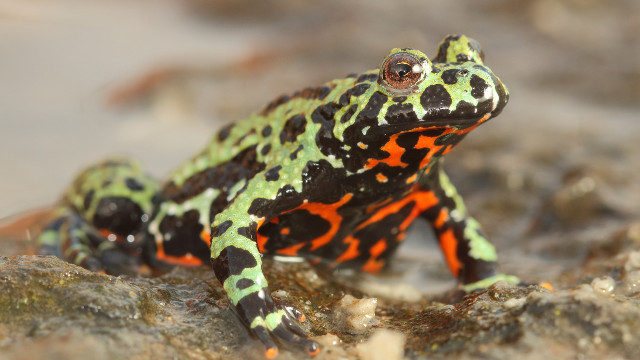
DNA evidence points to Asian amphibians as the source of a fatal disease that has been wiping out frogs across the globe.  

By Ruth Williams

In recent decades, large populations of frogs, toads, and salamanders in disparate regions of the world have been succumbing to the deadly chytridiomycosis disease caused by the fungus Batrachochytrium dendrobatidis. The sudden and dramatic die-offs have prompted a large-scale research effort to pinpoint the source of the deadly fungus, and now the results of that research are in.

After analyzing the genomes of hundreds of B. dendrobatidis samples collected from wild and captive amphibians in Australia, North and South America, Africa, Asia, and Europe, an international team of scientists reports in Science today (May 10) that the pathogen likely emerged from East Asia at the beginning of the 20th century.

“It’s the sort of study that we’ve needed for quite some time in the amphibian-chytrid world,” says ecologist Jason Rohr of the University of South Florida who was not involved with the study. “There’s been a lot of debate regarding the origins of the pathogen and a global analysis of this scope and scale was needed to resolve that.”

“They have done years of work to gather and culture chytrid [specimens] from around the world, and to sequence all of them,” adds biologist Karen Lips of the University of Maryland who also did not participate in the research. “This is a very impressive paper.”

Since 1998, chytridiomycosis—an infection of the skin that can lead to osmotic imbalance, organ failure, and death—has been pinned as the cause of mass die-offs and even extinctions of amphibian species. But there has been a debate, says Rohr, regarding whether the chytrid fungus has become problematic because of changes to the environment (such as climate change or pollution), because novel strains of the fungus have been introduced to populations lacking evolutionary experience with the pathogen, or because of a combination of these two factors.

While this paper doesn’t fully resolve that particular issue, says Rohr, “it does suggest that, at least in certain parts of the world, some [B. dendrobatidis] isolates are completely novel—they have been introduced somewhat recently.”

Tracking down the origin of the fungus should have been a simple case of collecting samples from around the globe and comparing their genomes—in much the same way that genetic studies of HIV-1 revealed the virus’s likely origin as central Africa. But epidemiologists Simon O’Hanlon and Matthew Fisher of Imperial College London who led the B. dendrobatidis research say it wasn’t as straightforward a task as it might seem.

The fungus is “fantastically difficult to culture,” says Fisher. “For instance, we’d go to the French Guiana rainforest and spend a couple of weeks crawling through the undergrowth catching poison dart frogs and taking biopsies [of toe-web skin], and in that particular trip I think we sampled 450 animals and we got three isolates of the fungus.”

“That’s one of the most ironic things,” concurs Lips, “in the wild, [the fungus] takes off like wildfire, but in the lab it’s very delicate.”

Because of the assorted technical challenges of culturing B. dendrobatidis, it’s taken more than a decade to generate the panel of 234 isolates used in this research, 177 of which were newly collected for this paper, says Fisher.

The team sequenced the genomes of the 177 new isolates and, with the 57 previously decoded ones, performed DNA comparisons. These analyses identified known lineages of B. dendrobatidis—including BdGPL the predominant strain found around the globe and responsible for the panzootic disease—as well as two lineages present in new Asian isolates—BdASIA-1 and BdASIA-2. Importantly, the results strongly indicated that BdASIA-1, identified in samples from Korea, is the ancestral population that gave rise to BdGPL.

From assessments of the mutation rates of the pathogen’s nuclear and mitochondrial DNA, the team went on to estimate that it emerged from Asia between 120 and 50 years ago. This time frame, say the authors, coincides with an expansion of the global amphibian trade.

Knowing the origin of B. dendrobatidis is important, says Lips. “If we know it’s probably coming out of Asia in shipments of live animals . . . then that’s where we need to focus our conservation efforts and our policy efforts,” she explains. “If it was flying around by itself in the air, then that would need a whole different set of approaches to try and mitigate the impact.”

The results suggest “we should probably take action to slow or halt the movement of the pathogen around the planet,” says chytridiomycosis researcher Jamie Voyles of the University of Nevada who was not involved in the study. Such action could include “limiting the movement of the animals, or at least having a screening process,” she suggests.

But if the disease is already across the globe, wouldn’t such policies be equivalent to closing the stable door once the horse has bolted? Not entirely, says Lips. Aside from the known lineages, the researchers identified three hybrid strains of the fungus, indicating that different varieties could readily swap genes. They also found representatives of all lineages in samples taken from amphibian species that are known to be traded. “What this paper shows is that [B. dendrobatidis] is not one thing. It’s a whole portfolio of pathogens,” says Lips. “So yeah, maybe one horse got out, but there are other horses in the barn that we want keep there.” The Scientist

S.J. O’Hanlon et al., “Recent Asian origin of chytrid fungi causing global amphibian declines,” Science, 360:621–27, 2018.

Asian amphibians chytrid fungus DNA Frog University of Maryland
Share. Facebook Twitter Pinterest LinkedIn WhatsApp Reddit Tumblr Email
Abdallah el-Kurebe
  • Website
  • Facebook
  • Twitter
  • LinkedIn

Related Posts

RMRDC launches data-driven raw materials platform to boost investment, industrial growth

April 21, 2026

Apple names John Ternus as new CEO to lead $4trn tech giant

April 21, 2026

Tinubu appoints Fatima Zuntu as NBMA Director-General

April 21, 2026

Leave A Reply Cancel Reply

Youth protest INEC leadership in Sokoto

April 23, 2026

Breast cancer care training held in Abuja

April 23, 2026

Shettima inaugurates Kano grain facility

April 23, 2026

Lawmakers back post-harvest innovation

April 23, 2026
About Us
About Us

ASHENEWS (AsheNewsDaily.com), published by PenPlus Online Media Publishers, is an independent online newspaper. We report development news, especially on Agriculture, Science, Health and Environment as they affect the under-reported rural and urban poor.

We also conduct investigations, especially in the areas of ASHE, as well as other general interests, including corruption, human rights, illicit financial flows, and politics.

Contact Info:
  • 1st floor, Dogon Daji House, No. 5, Maiduguri Road, Sokoto
  • +234(0)7031140009
  • ashenewsdaily@gmail.com
Facebook Twitter Instagram Pinterest
© 2026 All Rights Reserved. ASHENEWS Daily Designed & Managed By DeedsTech

Type above and press Enter to search. Press Esc to cancel.