

• Home
  • Agric
  • Sci & Tech
  • Health
  • Environment
  • Hausa News
  • More
    • Business/Banking & Finance
    • Politics/Elections
    • Entertainments & Sports
    • International
    • Investigation
    • Law & Human Rights
    • Africa
    • ACCOUNTABILITY/CORRUPTION
    • Hassan Gimba
    • Column
    • Prof. Jibrin Ibrahim
    • Prof. M.K. Othman
    • Defense/Security
    • Education
    • Energy/Electricity
    • Entertainment/Arts & Sports
    • Society and Lifestyle
    • Food & Agriculture
    • Health & Healthy Living
    • International News
    • Interviews
    • Investigation/Fact-Check
    • Judiciary/Legislature/Law & Human Rights
    • Oil & Gas/Mineral Resources
    • Press Freedom/Media/PR/Journalism
    • General News
    • Presidency
  • About Us
    • Contact Us
    • Board Of Advisory
    • Privacy Policy
    • Ethics Policy
    • Teamwork And Collaboration Policy
    • Fact-Checking Policy
    • Advertising
  • Media OutReach Newswire
    • Wire News
  • The Stories
Facebook Twitter Instagram
Trending
  • IBB varsity promotes 16 academic staff to professors, associate professors
  • Dangote Group denies claims on refinery financing, rift with Elumelu
  • Teen inventor’s surgical idea helps reshape hysterectomy procedure
  • Uganda unveils first homegrown biotech livestock vaccine, targets regional leadership
  • FCT residents lament soaring food prices
  • [VIEWPOINT] Nigeria’s banks get major makeover under CBN, By Olumide Adesina
  • NAF destroys terrorist hideout in Katsina
  • Nigeria reaffirms commitment to OPEC+ after UAE exit
Facebook Twitter Instagram YouTube
AsheNewsAsheNews
  • Home
  • Agric

    FCT residents lament soaring food prices

    May 3, 2026

    Veterinary experts warn of public health risks from poor livestock practices in Nigeria

    May 3, 2026

    Abandon hoes, cutlasses for modern farming – Tinubu’s Wife urges Nigerians

    May 2, 2026

    Over 200 farmers, herders benefit from SPAR project in Katsina

    May 2, 2026

    Community leaders discuss resource conflicts in Sokoto North, South

    May 1, 2026
  • Sci & Tech

    Uganda unveils first homegrown biotech livestock vaccine, targets regional leadership

    May 3, 2026

    Samsung revenue jumps 43% in Q1

    May 1, 2026

    AfricaX summit to support commercialisation of innovations

    April 30, 2026

    FUTA don advocates people-centred engineering for sustainable industrial growth

    April 30, 2026

    Oyedele calls for tech upgrades to boost Nigeria’s growth

    April 29, 2026
  • Health

    Teen inventor’s surgical idea helps reshape hysterectomy procedure

    May 3, 2026

    Uganda unveils first homegrown biotech livestock vaccine, targets regional leadership

    May 3, 2026

    Association postpones youth drug abuse forum in Sokoto

    May 2, 2026

    Association inaugurates motorised borehole in Edo community to combat water scarcity

    May 2, 2026

    Experts call for better hygiene, water, nutrition to reduce child diarrhoea

    May 2, 2026
  • Environment

    Premium Times reaffirms commitment to investigative journalism

    May 3, 2026

    NiMet forecasts 3-day dust haze, thunderstorms across Nigeria

    May 3, 2026

    Bolarinwa vows to tackle Kwara’s security challenges

    May 2, 2026

    COREN intensifies enforcement of engineering standards

    May 2, 2026

    Kwamba residents lament worsening water scarcity in Suleja

    May 2, 2026
  • Hausa News

    Otti plans 250-room 5-star hotel in Umuahia

    April 11, 2026

    Anti-quackery task force seals 4 fake hospitals in Rivers

    August 29, 2025

    [BIDIYO] Yadda na lashe gasa ta duniya a fannin Ingilishi – Rukayya ‘yar shekara 17

    August 6, 2025

    A Saka Baki, A Sasanta Saɓani Tsakanin ‘Yanjarida Da Liman, Daga Muhammad Sajo

    May 21, 2025

    Dan majalisa ya raba kayan miliyoyi a Funtuwa da Dandume

    March 18, 2025
  • More
    1. Business/Banking & Finance
    2. Politics/Elections
    3. Entertainments & Sports
    4. International
    5. Investigation
    6. Law & Human Rights
    7. Africa
    8. ACCOUNTABILITY/CORRUPTION
    9. Hassan Gimba
    10. Column
    11. Prof. Jibrin Ibrahim
    12. Prof. M.K. Othman
    13. Defense/Security
    14. Education
    15. Energy/Electricity
    16. Entertainment/Arts & Sports
    17. Society and Lifestyle
    18. Food & Agriculture
    19. Health & Healthy Living
    20. International News
    21. Interviews
    22. Investigation/Fact-Check
    23. Judiciary/Legislature/Law & Human Rights
    24. Oil & Gas/Mineral Resources
    25. Press Freedom/Media/PR/Journalism
    26. General News
    27. Presidency
    Featured
    Recent

    IBB varsity promotes 16 academic staff to professors, associate professors

    May 3, 2026

    Dangote Group denies claims on refinery financing, rift with Elumelu

    May 3, 2026

    Teen inventor’s surgical idea helps reshape hysterectomy procedure

    May 3, 2026
  • About Us
    1. Contact Us
    2. Board Of Advisory
    3. Privacy Policy
    4. Ethics Policy
    5. Teamwork And Collaboration Policy
    6. Fact-Checking Policy
    7. Advertising
    Featured
    Recent

    IBB varsity promotes 16 academic staff to professors, associate professors

    May 3, 2026

    Dangote Group denies claims on refinery financing, rift with Elumelu

    May 3, 2026

    Teen inventor’s surgical idea helps reshape hysterectomy procedure

    May 3, 2026
  • Media OutReach Newswire
    • Wire News
  • The Stories
AsheNewsAsheNews
Home»Health & Healthy Living»New evidence questions use of saline fluids to resuscitate critically ill children with sepsis
Health & Healthy Living

New evidence questions use of saline fluids to resuscitate critically ill children with sepsis

Abdallah el-KurebeBy Abdallah el-KurebeJune 3, 2019No Comments6 Mins Read
Share
Facebook Twitter LinkedIn Pinterest Email

Doctors have urged hospitals around the world to reconsider the type of fluids used to treat children gravely ill with sepsis.

In a new study, researchers from Imperial College London found saline fluids commonly used to help stabilise critically ill children may trigger the blood to become more acidic, and lead to organ failure.

The team, who published their work in The Lancet Respiratory Medicine, urge hospitals across the UK – and the world – to consider swapping saline fluids for a different type of so-called buffered solution that helps prevent the blood becoming too acidic.

Although the research studied data from over 3000 children with malaria or sepsis (blood poisoning triggered by severe infection) in Africa, the research team say the findings could apply to all critically ill children and adults.

When a critically ill patient is brought into hospital, medical teams often give the patient very large amounts of fluid rapidly into their vein through a drip. This is called a fluid ‘bolus’, and helps increase their blood pressure and heart rate, and ensure blood is still pumped around the body.

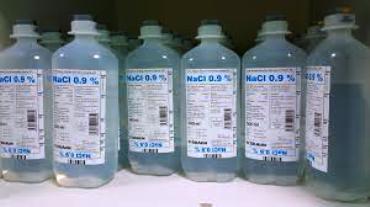
The fluids most commonly used in hospitals around the globe are called saline (a type of salt water), or 5% albumin (a saline solution that contains albumin protein).

These fluids were always assumed to be the most effective at stabilising a patient, until an Imperial College-lead 2011 trial of 3000 children – called the FEAST trial – suggested otherwise. The trial, conducted in Kenya, Uganda and Tanzania, compared rapidly giving a bolus of saline or 5% albumin, to giving much smaller amounts of fluid over a longer period of time.

The research team hoped the trial would reduce the number of the child deaths from infection, but were shocked to find giving a large fluid bolus was associated with a higher death rate. An independent panel decided to stop the trial early, while pointing out that children in the trial still had a better chance of survival than is normally the case in Africa, in part due to extra training given to hospital staff.

In the latest study, the scientists wanted to investigate why the saline fluids were associated with a higher risk of death, and if these findings could apply to other children around the world.

By analysing the data from the FEAST trial, and comparing this with data from over 18,000 children who attended a UK hospital and other hospitals in Malawi and South Africa, the team found that the use of saline or 5% albumin had a number of adverse effects.

The research, funded by the Medical Research Council, Department for International Development, and the National Institute for Health Research Imperial College Biomedical Research Centre, found that although the fluid bolus did improve heart rate and blood pressure, the solution also harmed lung function, and increased brain swelling and acidity of the blood – which together contributed to the increased mortality observed in the FEAST trial.

The researchers stress that fluids are still a vital part of resuscitation, and these findings apply mainly to critically ill patients. They say saline and 5% albumin may have less adverse effects in moderately ill patients, but suggest solutions that contain buffering components, and less chloride (which can cause blood to become acidic), should be used in gravely ill individuals.

The team add that much of the FEAST data came from children who did not have access to an intensive care unit – and therefore the chance of a fluid bolus increasing the chance of death is much smaller in settings with comprehensive medical facilities. But they add that even in these conditions, the use of a bolus of saline or 5% albumin could still worsen a child’s condition.

They say further trials are now urgently needed to investigate the use of alternative fluids that contain buffers and less chloride, as well as how much of the fluid to use.

Professor Michael Levin, from the Department of Medicine at Imperial College London, who led the study, explained: “This study suggests we need a re-think of how we resuscitate patients – what volume of fluid we give to patients, and the type of fluid we give to patients.

“The FEAST trial provided the first clear evidence that administration of a rapid ‘bolus’ of normal saline or albumin to critically ill patients was harmful if advanced intensive care support was not available. Our new analysis has identified the mechanisms through which fluid bolus caused harm. Although the bolus fluids had the desired effect in improving cardiovascular function, this came at the cost of a range of unexpected adverse effects including worsening lung function, increased brain swelling and most importantly the blood becoming more acidic.

“The effect of high chloride fluids like normal saline and 5% albumin on blood acidity can be prevented by using alternative fluids that are lower in chloride concentration. Trials are now needed to establish whether alternative resuscitation fluids, used in smaller amounts, can achieve the beneficial effects on cardiovascular function without the adverse effects on lungs, brain and blood acidity.”

Dr Aubrey Cunnington, a co-author of the study from Imperial’s Department of Medicine, added: “The findings and implications of the FEAST trial have perplexed the medical community. Uncertainty about the mechanisms by which fluid bolus increased mortality in FEAST is probably one of the main reasons why the trial findings have not resulted in as many changes in international guidelines as might be expected. We found evidence that normal saline or 5% albumin fluid boluses worsened the function of multiple organs in the body.”

Professor Simon Nadel, a further co-author from Imperial’s Department of Medicine, and consultant in Paediatric Intensive Care at Imperial College Healthcare NHS trust said: “The FEAST study showed definitively for the first time that rapid fluid administration led to a higher mortality in children who were already seriously ill, than slower fluid administration. It has to be emphasised that this finding occurred in an environment where there was no access to advanced intensive care support.

It is now clear that we have to be aware of the rate and type of fluid resuscitation for critically ill patients, and it is vital that properly conducted studies into the most appropriate fluid resuscitation in the critically ill patient are carried out as soon as possible.”

children with sepsis Imperial College London Saline fluids UNICEF WHO
Share. Facebook Twitter Pinterest LinkedIn WhatsApp Reddit Tumblr Email
Abdallah el-Kurebe
  • Website
  • Facebook
  • Twitter
  • LinkedIn

Related Posts

Teen inventor’s surgical idea helps reshape hysterectomy procedure

May 3, 2026

Uganda unveils first homegrown biotech livestock vaccine, targets regional leadership

May 3, 2026

CISLAC advocates higher tobacco taxes to curb consumption

May 3, 2026

Leave A Reply Cancel Reply

IBB varsity promotes 16 academic staff to professors, associate professors

May 3, 2026

Dangote Group denies claims on refinery financing, rift with Elumelu

May 3, 2026

Teen inventor’s surgical idea helps reshape hysterectomy procedure

May 3, 2026

Uganda unveils first homegrown biotech livestock vaccine, targets regional leadership

May 3, 2026
About Us
About Us

ASHENEWS (AsheNewsDaily.com), published by PenPlus Online Media Publishers, is an independent online newspaper. We report development news, especially on Agriculture, Science, Health and Environment as they affect the under-reported rural and urban poor.

We also conduct investigations, especially in the areas of ASHE, as well as other general interests, including corruption, human rights, illicit financial flows, and politics.

Contact Info:
  • 1st floor, Dogon Daji House, No. 5, Maiduguri Road, Sokoto
  • +234(0)7031140009
  • ashenewsdaily@gmail.com
Facebook Twitter Instagram Pinterest
© 2026 All Rights Reserved. ASHENEWS Daily Designed & Managed By DeedsTech

Type above and press Enter to search. Press Esc to cancel.