


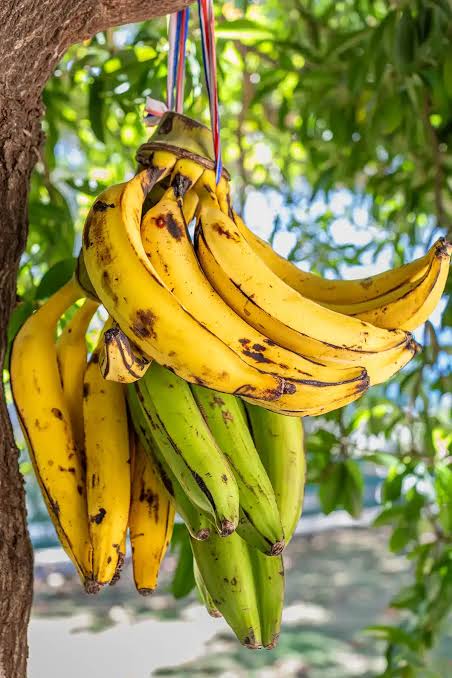
Plantain traders in Lagos have expressed concern over rising logistics costs and post-harvest losses.
The traders shared their concerns in separate interviews with reporters on Tuesday, saying the challenges were affecting their businesses and reducing their earnings.
They said rising transportation costs, fluctuating supply and the produce’s perishable nature were affecting their operations. Price changes were also influencing consumers’ purchasing decisions.
Mrs Bisola Johnson, a plantain trader along the Oyingbo Market axis, said a large bunch currently sold for N30,000, while smaller bunches cost N25,000. In September, prices ranged from N45,000 to N50,000.
Johnson said supply was usually limited in January and February, increased from July and became abundant around September and October.
She expressed concern about the produce ripening quickly, saying some plantains became ripe within hours of purchase. This made it difficult for traders to sell their stock before it spoiled, she said.
Inadequate storage facilities, combined with spoilage, had forced her to buy smaller quantities, even when supply was abundant, to minimise losses.
“I have invested almost N1 million in this business this year, but I am still struggling to recover my capital because of the losses I record when the plantain gets ripe and spoils before I can sell it,” she said.
Johnson said she had recently discarded a full basin of spoiled plantain. She added that traders sometimes reduced prices—from about N3,000 to N2,000, for example—as the produce began to ripen, to attract buyers.
She also roasted some of the plantains for sale alongside the fresh produce to reduce waste.
Johnson said chemicals or excessive fertiliser used during cultivation might contribute to the rapid ripening, though she could not identify the substances involved. She called on the government and relevant authorities to investigate and monitor substances used in plantain cultivation, citing possible health implications for consumers.
Mrs Edla Ehimatmwen, a plantain trader at Alaba Market, said rising transportation and handling expenses had made the business increasingly costly.
Ehimatmwen said she sourced plantain from Idi-Oro, Arena and Mile 12, often buying large quantities directly from trucks for about N600,000 per truckload. She said the purchase cost had fallen by only about N10,000 compared with July and August.
Transportation to the source market cost about N1,500, while the return journey could cost up to N2,000, depending on the means of transport, she said.
“Beyond the money we spend buying the plantain, we also pay for transportation, loading and offloading, and other market services, which further increase our operating costs,” she said.
Ehimatmwen said plantain sold for between N1,000 and N3,000, depending on size, while larger bunches cost between N5,000 and N7,000.
She said August, September and October were usually periods of abundant supply, but the expected abundance had not occurred in 2026.
Mrs Esther Osemwegie, a trader at Suru Market, said she sourced plantain from Mile 12 and Idi-Oro in Mushin through two purchasing arrangements. Some traders bought directly from trucks in bulk, while others bought produce that had been offloaded and arranged in dozens, allowing buyers to negotiate prices.
Osemwegie said plantain arranged in dozens sold for between N50,000 and N150,000, depending on size.
She described the current period as one of the cheapest times to buy plantain, saying prices generally remained low from December to February or March before rising from April. However, prices could fluctuate based on supply and market conditions, she said.
Another trader at Idi-Oro Market, Mrs Iyabo Gbadegeshin, said prices varied according to supply and the size of the produce. Smaller dozens sold for between N20,000 and N25,000, while larger quantities cost between N40,000 and N50,000, she said.
“Whenever plantain is abundant, the price usually comes down, but when supply reduces, the price goes up. Transportation costs also affect what we eventually pay for the produce,” Gbadegeshin said.
She said the plantain sold at Idi-Oro Market came from Bende and that supplies usually increased in December, when farmers brought produce directly to the market ahead of the festive season.
Ms Mmesoma Igwe, a consumer in Ajegunle, said changing prices had affected how much plantain she could afford and how often she bought it. Rising costs had made her more cautious, and she sometimes opted for other food items when plantain became less affordable, she said.
Mrs Adeline Eze, a freight forwarder who lives in Ajegunle, said portions of plantain cut into about four or five pieces sold for between N2,000 and N3,000, depending on their size and the market.
Eze said she last bought N3,000 worth of plantain about three weeks ago. Prices were relatively manageable during the season, though still not entirely affordable, she said. A similar portion that cost N3,000 during the season could cost between N4,000 and N4,500 afterward.
She recalled that in August, N3,000 bought a much smaller quantity, adding that rising prices had reduced her consumption.
“I usually buy more plantain during the season because prices are relatively lower, but outside the season, the same amount of money buys a smaller quantity, so I have to reduce how often I buy it,” she said.
Eze said she preserved unripe plantain by keeping it in water for about two days to delay ripening.
