


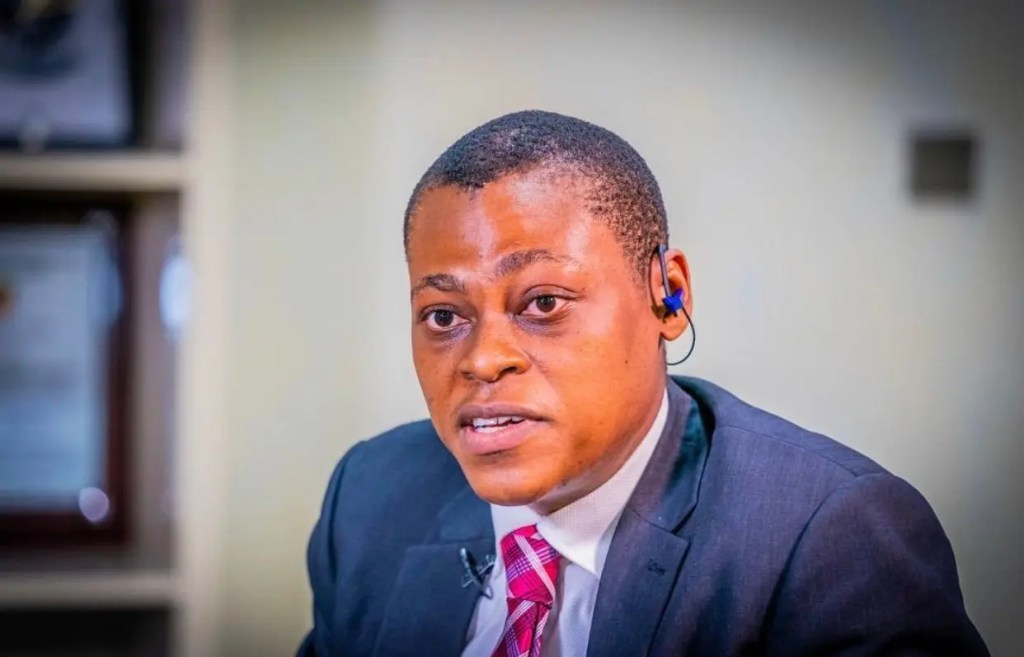
Lately, too many people have been quick to accuse Rufai Oseni of arrogance, of bias, of being untrained and of not being a “real journalist.” They say he lacks decorum, that he is too confrontational, too opinionated, too bold for the comfort of politicians. We can debate about Rufai’s journalism’s approach and how he grills power. But before we rush to crucifer and label Rufai a quack, perhaps we should first ask ourselves whether we, as journalists, have lived up to the very standards we preach.
Because journalism is not about certificates; it is a conscience. It is not a classroom course; it is a calling. And in Nigeria today, too many people with diplomas in journalism have forgotten that. They learned ethics in school but lost their souls in the newsroom. They memorized the codes of conduct but abandoned their courage when power came calling. They know how to quote theory, but they cannot practice truth. Some of us are the most corrupt and horrible people you could find around, defending corrupt political class in the name of journalism. We use our platforms not to expose corruption but to justify it, not to speak to citizens but to serve the powerful.
The real threat to journalism is not Rufai Oseni; it is those who studied journalism and then betrayed it. Those who exchanged integrity for influence. Those who wear the title “journalist” but act as stenographers and spin doctors for corrupt politicians and the state. They attend government dinners, take brown envelopes, and call it access. They defend the indefensible and call it balance. They have turned journalism from a watchdog into a lapdog, and yet they dare to insult those who still bark when it matters.
Rufai may not have studied journalism, but he embodies its spirit more than many of us whether we like his style or not and it’s very shameful. Every morning, he faces the nation and confronts the powerful with questions others are too timid, too docile and too stupid to ask. He does not perform obedience before authority. He insists on clarity, on truth, on accountability. That is journalism. It’s okay to disagree with his method, but the purpose of journalism has never been to make those in government comfortable. It has always been to make them feel uncomfortable to afflict pains on the masses. It’s to make them answerable. A journalist’s job is not to please power but to challenge it, not to flatter leaders but to expose their failures.
We should remember that some of Nigeria’s most remarkable journalists never studied journalism either. Take your time and make a list of them. They are plenty. Some of the finest journalists in Nigeria’s history had no journalism certificate. They needed none. But they risk their lives for the truth. Something we fail to do and foolishly call ourselves “professionals.” Today, my good friend, Fisayo Soyombo, who studied Animal Science, stands among one of Nigeria’s finest investigative journalists. And there are plenty of his likes. He has gone undercover in prisons, police stations, and customs offices to expose rot and injustice. Some of us with our so called “professionalism” failed to do that.
Journalism’s greatness has never depended on degrees. It has always depended on discipline, courage, and integrity. The certificate may teach technique, but it cannot teach courage. The newsroom teaches courage, the street teaches reality, and the truth tests your soul. The idea that one must study journalism to qualify as a journalist is not only wrong, but very dangerous, and naïve. It turns a democratic right into a professional privilege. Journalism is not a licensed craft; it is a civic duty.
Critics who complain about Rufai’s tone forget that journalism was never meant to be polite. It was born to be inconvenient. It exists to disturb the powerful and comfort the powerless. A journalist who never provokes discomfort is not doing his job. In societies where politicians expect journalists to kneel, those who stand upright are easily called rude. But democracy survives precisely because of such people — the ones who refuse to lower their heads when truth demands that they speak up.
Yes, we can have a debate about Rufai’s style. I may disagree with his style and that is okay. But his style springs from conviction. He is firm because too many journalists have become timid. He is uncompromising because too many of us have compromised. He is loud because silence no longer works in a country where power thrives on noise.
The courage to question authority is not arrogance — it is duty. Those of us who call him names should first ask ourselves: when was the last time did we confronted power without fear? When was the last time did we said no to intimidation or walked away from a bribe? When was the last time did we risked our comfort for the truth?
As someone who holds a National Diploma, a Bachelor’s degree and is currently pursuing a second degree in journalism, I can tell you this: education is a blessing, but it is not salvation. The degree gives you structure, but not integrity. It teaches you theory, not courage. It introduces you to ethics, but it cannot make you ethical. What makes a journalist is not the paper from a university — it is the fire in the heart, the refusal to be silent in the face of lies, the discipline to stay factual even when under fire.
Rufai may not have studied journalism, but he practices it every day — perhaps better than most of those who did. His questions may sting, but they come from the right place: a belief that those who hold public office owe the people explanations. And in a democracy, that is not rudeness — that is responsibility.
So before anyone calls Rufai Oseni a quack, let us first remember what it means to be a journalist. To be a journalist is to be a mirror of the society, not a megaphone for power. It is to ask questions others avoid, to chase stories others fear, to speak when others go silent. It is to defend truth, not titles. Journalism is not about who studied what; it is about who stands for what.
If journalism in Nigeria has lost its soul, it is not because outsiders entered the profession. It is because insiders abandoned its purpose. The real quacks are not those who never studied journalism. The real quacks are those who studied it and then betrayed it.
Haruna Mohammed Salisu Publishes WikkiTimes. He is a graduate student at Indiana University, USA. He is reachable at harunababale@wikkitimes.com
