


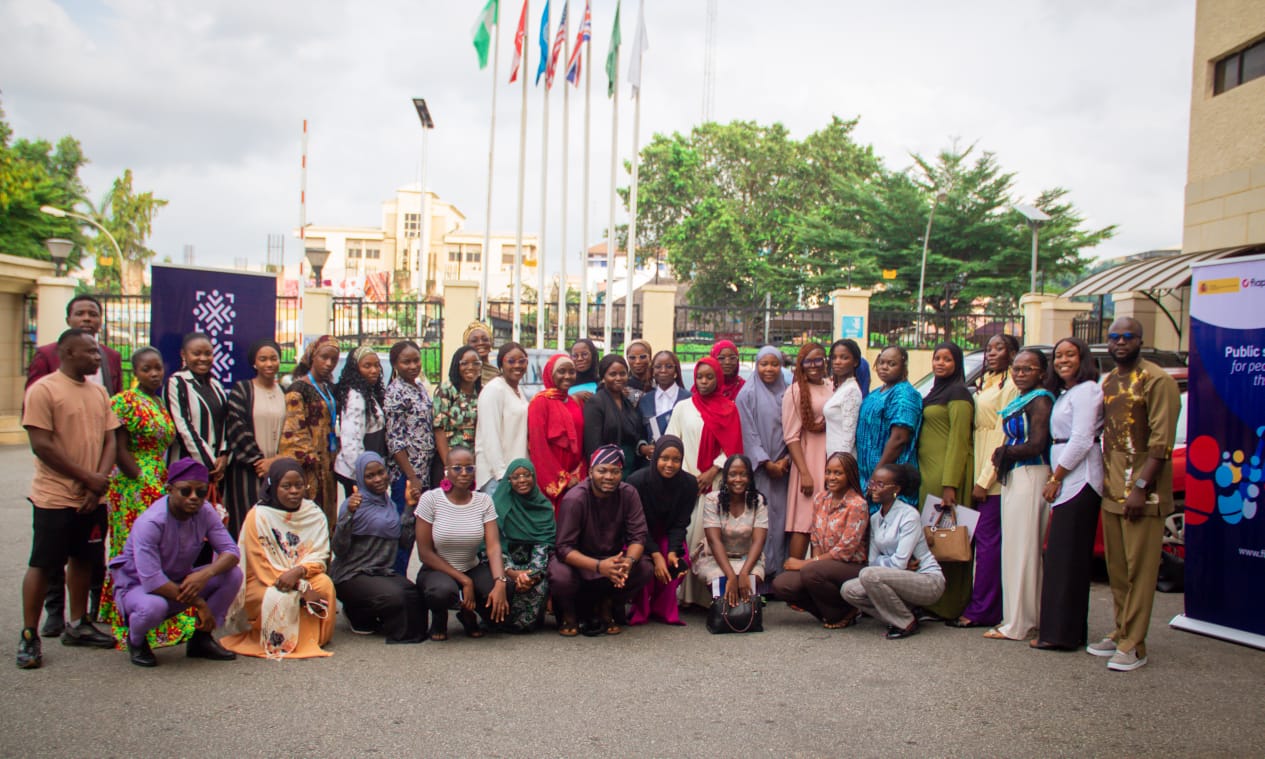
35 young advocates, content creators and civil society actors across the north have been trained to develop practical campaigns capable of amplifying women’s voices and participation ahead of Nigeria’s 2027 general elections.
The participants drawn from the North-west, north-east, north-central zones and the Federal Capital Territory pledged to roll out a coordinated social media campaign aimed at increasing women’s presence on the 2027 election ballots.
The workshop was organised by Fundación para la nternacionalización de las Administraciones Públicas (FIAP) in collaboration with FactCheckAfrica, under the European Union Support to ECOWAS in Peace, Security and Governance (EPSG) Project with the theme “Youth-led social media advocacy campaign focused on women political participation” held in Abuja.
The participants pointed that the gender gap in Nigerian politics is a national problem requiring regionally sensitive solutions noting that Northern women face particular barriers in party structures, campaign funding and visibility that generic approaches from the South cannot fully address.
During the three days intensive training, the participants developep practical skills in campaign design, feminist messaging, audience mapping, platform-native content production, content-calendar development, coalition building and campaign measurement.
The training also addressed the safety challenges that increasingly accompany public-facing advocacy, including online harassment, gendered disinformation, doxxing and other forms of digital intimidation that can discourage women and their allies from participating in political discourse.
Speaking on the initiative, Abideen Olasupo, Founder of FactCheck Africa, said that women’s political participation cannot be strengthened by simply asking women to enter spaces that were not designed to protect or amplify their voices.
He said that the information environment, the narratives and the digital risks that shape how women are perceived and whether they feel safe participating need to be looked into.
“By equipping young advocates with practical campaign, communication and safety skills, this programme gives them the tools to challenge harmful narratives and create digital spaces where women’s political voices can be heard,” he said.
Maria Berlin from the Fundación para la nternacionalización de las Administraciones Públicas (FIAP) said that protecting the information space is as vital as protecting the ballot boxes adding that elections cannot be credible if voters believe that the information surrounding them is manipulated or they are being misinformed.
The participants have pledged to carry out an advocacy drive that would be focused on women’s political participation, and prioritise messaging in Hausa, Fulfulde, Kanuri and other indigenous languages to reach voters beyond English-speaking audiences.
Beyond the campaigns, the participants called on political parties to nominate women for winnable seats rather than symbolic positions, urging traditional and religious leaders to publicly affirm women’s participation.
They also urged social media platforms operating across Nigeria to provide effective moderation in Northern languages.
