


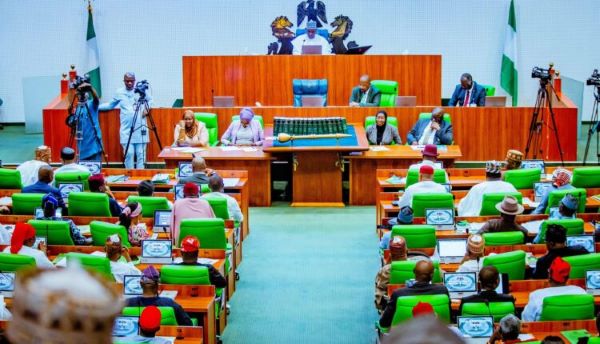
The House of Representatives has urged the Federal Government to rescind its blanket invalidation of university degree certificates obtained from the Republic of Benin and Togo.
The resolution followed the adoption of a report by the House Committee on Public Petitions, which reviewed complaints arising from the Federal Government’s earlier decision to stop recognising degrees from the two West African countries.
Lawmakers recommended that the government adopt a case-by-case verification mechanism to address confirmed cases of academic fraud rather than imposing a sweeping ban that could affect legitimate graduates.
The House also urged the Federal Ministry of Education to strengthen collaboration with education authorities in Benin and Togo to enhance verification processes, prevent academic fraud, and ensure the proper authentication of foreign qualifications.
In addition, the lawmakers called on the Federal Government, through the Ministry of Information and the National Orientation Agency (NOA), to intensify public enlightenment campaigns to educate Nigerians on verifying the accreditation status of foreign institutions and obtaining necessary homologation or equivalence certification where required.
The House further advised that future government actions on foreign academic qualifications should be consistent with Nigeria’s bilateral, regional, and international treaty obligations.
The Federal Government suspended the accreditation and evaluation of degree certificates from institutions in the Benin Republic and Togo in January 2024.
The decision followed an investigative report that exposed how a Nigerian obtained a university degree from an institution in the Benin Republic in less than two months.
Reacting to the development at the time, Augustina Obilor-Duru, spokesperson for the Federal Ministry of Education, said the report reinforced concerns about fraudulent academic practices.
According to her, the ministry suspended the evaluation and accreditation of such certificates from January 2, 2024, pending investigations involving the Ministry of Foreign Affairs, the education authorities in the affected countries, the Department of State Services, and the National Youth Service Corps.
Former Minister of Education Tahir Mamman defended the decision, stating that the proliferation of certificates from unaccredited institutions was damaging Nigeria’s international reputation.
Speaking on Sunday Politics on Channels Television, Mamman said authorities in the neighbouring countries had also identified some of the affected institutions as illegal.
