The Centre for Democracy and Development has just published a major study on social media and the 2023 election campaigns, which I summarise here (click here for the full report). Currently, the number of active social media users in Nigeria has risen from 27 million in 2019 to 36 million ahead of the 2023 elections. Given the challenge of prevailing misinformation and disinformation on social media platforms, and the way such disinformation can permeate into the media more generally, greater access to online information does not necessarily create more informed citizens. In fact, in Nigeria, it has confused the citizenry while entrenching pre-existing divides based on ethnicity and religion, especially as malinformation, the deliberate sharing of genuine information with an intent to cause harm, thrives in this election season.
As the elections approach, we are witnessing renewed sophistication and organisation in the push for disinformation. Key players are focused on glorifying or delegitimising political candidates and undermining the credibility of the Independent National Electoral Commission (INEC). At the same time, the online organisation remains largely informal, in part by design, with political parties driving disinformation behind the scenes through unofficial party accounts or hired influencers. In addition to the use of platforms such as Facebook, Twitter, Instagram, and WhatsApp, TikTok, with its predominantly video content that can bridge educational divides, is playing an increasingly important role. So too are Twitter Spaces, which are recorded and then shared, as a podcast, across social media platforms in ways that increase listenership.
Cross-platform posting remains critical to understanding Nigeria’s digital ecosystem as screen grabs or content from one platform can be shared across all others, broadening the reach beyond the number of direct users. Content also moves from online forums into offline spaces with soldiers of mouth spreading online content through street talks, in motor parks, and at newspaper stands.
This makes curbing disinformation very challenging in Nigeria. But at the same time, these networks for the flow of information can also promote democracy. Civic awareness of the continuous voter registration process and the importance of participating has largely been driven by a sustained online campaign in the run-up to 2023, while the platforms can be used to fact-check and hold elected and aspiring officials to account. Finding a balance that accentuates these positives and diminishes the negative aspects must be a priority as the elections approach.
In the 2019 elections, the Atikulated Youth Force, the social media team of the People’s Democratic Party (PDP)’s presidential candidate, and the Buhari Media Centre (BMC), with links to the All Progressives Congress (APC), dominated the online discourse. Such groups are still present in 2023, although part of the BMC has now evolved to centre around APC presidential candidate Bola Ahmed Tinubu, with his supporters identifying as being ‘BATified’. However, they have been supplanted in 2023 by Obidients – the label used by the supporters of the Labour Party (LP) presidential candidate, Peter Obi. They are the most active online actors in this election. In addition to promoting his candidacy, many have been accused of spreading disinformation. In fact, the candidate himself was compelled to call them to order in September 2022, after his presidential campaign was accused of using overzealous social media supporters to skew the narrative in his favour. Obi also distanced himself from any engagement of his supporters in any malicious campaigns against his opponents in a series of tweets. But such malevolent online campaigns engineered by all leading parties continue to be a prevailing feature of Nigeria’s information ecosystem.
The disinformation ecosystem has created lucrative opportunities, particularly for youth. Some of the most prominent political influencers on social media, who are hired by political parties or individual candidates, earn up to N500,000 (US$1200) a month, whilst those with smaller followings are likely to receive nearer N50,000 (US$110).
In previous elections text and pictures were dominant but, in 2023, the emphasis is more on real-time live streaming of audio and video content on social media platforms. One of the innovations this year is the organisation of political song challenges as the one coordinated by Dauda Rara, a prominent northern political musician, and is called ‘Jagaban Shine Gaba’. The challenge encouraged citizens to mime a song with creative videos and upload it to TikTok. Rara and his team of judges reviewed the entries and awarded 12 cars, and 30 iPhones, and selected a further 50 individuals to receive N100,000 ($220) each. Other political actors have also been promoting challenges that favour their candidates by offering gifts or rewards for those that generate the most viral content. Coupled with TikTok’s fairly lax community guidelines and limited enforcement, these challenges can be used to push disinformation “without those responsible being penalised” in the view of one user. TikTok content also reaches individuals without an account through cross-posting, meaning that it can reach Nigerians with limited literacy when it comes to written text. It is much cheaper to send out jingles on TikTok, which previously had to be placed on radio and TV channels, and with phone sharing and cross-platform posting, the audience reached can still be significant.
WhatsApp remains utilised to coordinate election organisations, circulate audio and visuals, and has the largest reach in terms of direct numbers of users. Voicenotes remain critical, especially in local languages, with content regularly played and replayed to an audience that has no direct online access. Other closed network platforms like Telegram are also increasingly influential. These closed spaces are also used to help organise campaign rallies and other large gatherings both online and offline. The latter is a concern given that separatist groups, such as the Indigenous People of Biafra (IPOB), have Telegram channels where they talk directly to supporters, spread disinformation, recruit adherents, and plan offline activities.
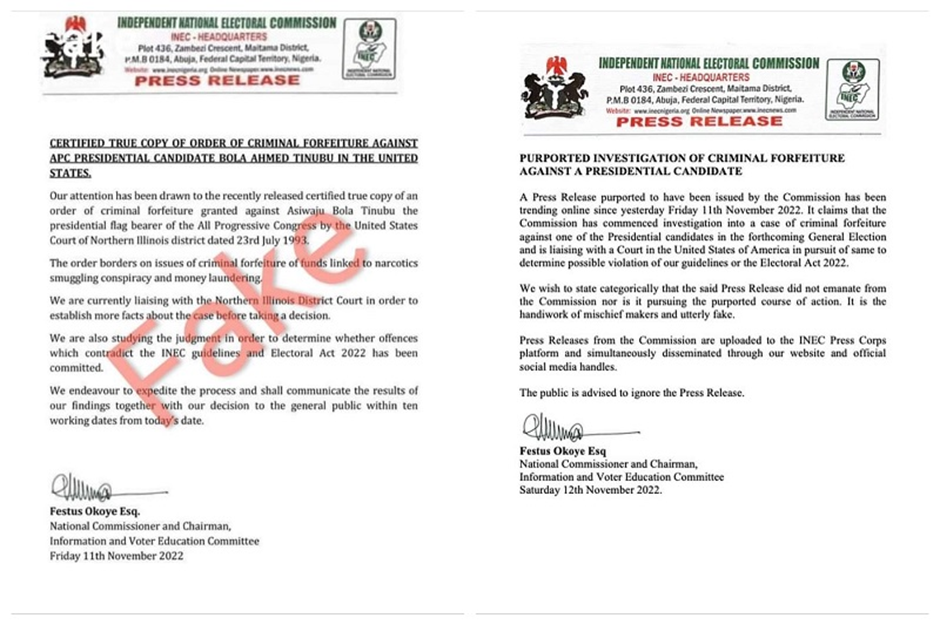
For all social media platforms, the line between online and offline remains blurred. For example, during this election campaign cycle, a letter on the official INEC letterhead, purportedly signed by the INEC spokesperson, was released claiming to commence the investigation of the APC presidential candidate on drug-related charges. However, this letter was a forgery and it originated on WhatsApp, moved quickly across social media, and was read out on national broadcast platforms such as Arise TV. There was never any investigation, nor was the statement issued by INEC, but in a rush to break the news, and possibly influenced by media partisanship, it became a mainstream story. The example given is an outlier, but social media more regularly serves as a source of content inspiration for mainstream media. It is common to find issues trending on Twitter being discussed on morning or evening debate shows as this is what the audience is looking to hear. In that sense, media houses are bringing the online into the conventional media and into peoples’ homes. And when they invite so-called ‘political consultants’ as experts into their studios, they invite disinformation specialists. These individuals are often paid to peddle half-truths, promote conspiracy theories or attempt to legitimise false information flowing online.
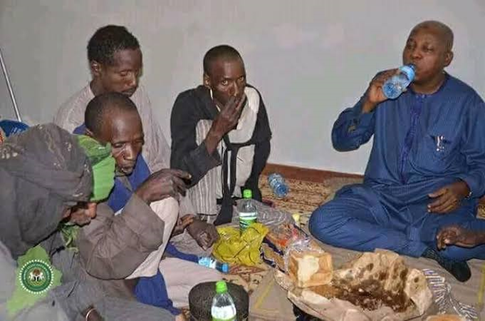
Disinformation is being instrumentalised to entrench pre-existing social cleavages around ethnicity and religion in the 2023 election campaign. This is accentuated by the fact that the three major ethnic groups in Nigeria are fielding presidential candidates – Peter Obi (Igbo), Bola Tinubu (Yoruba), and Atiku Abubakar (Fulani/Hausa). Often, “photoshopped scenes or old images are being recirculated or utilised to cast one ethnicity against the other and delegitimise opposition”. An example was a picture of the APC vice-presidential candidate, Kashim Shettima, showing him with what was claimed to be members of the Islamist militant group Boko Haram. The image was circulated widely on Twitter, and WhatsApp and was even referred to by a television morning show producer. A fact-check eventually revealed that while Shettima was indeed sitting and having a meal with people, they were not Boko Haram members but nomadic Fulani parents whose children he had enrolled in secular schools in 2017. With the APC running a controversial Muslim-Muslim ticket, this falsehood appears to have been designed to appeal to, and prey on the fears of, Christian voters. Clearly, we must all be careful about what we see and hear on social media.