


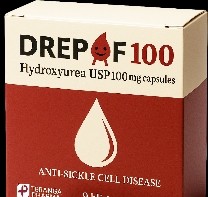
A Senegalese pharmaceutical company has begun producing a locally made generic treatment, DREPAF for sickle-cell disease, offering patients a cheaper alternative to imported medicines and strengthening the country’s drive to develop domestic pharmaceutical manufacturing.
The medicine is produced by Teranga Pharma at its facility in Mbao, near Dakar. The company launched the drug in November 2025 in 500mg and 100mg formulations, respectively intended for adults and children.
DREPAF contains hydroxyurea, a disease-modifying medicine used in the management of sickle-cell disease. According to the WHO, hydroxyurea can reduce the frequency of painful crises and the need for blood transfusions, while its use is strongly recommended for children and adolescents with sickle-cell anaemia.
For families dealing with sickle-cell disease, the significance of local production is not simply where the medicine is made. It is also about whether patients can obtain it consistently and at a price they can afford.
Drep.Afrique, which has partnered with Teranga Pharma, said the price of a 500mg capsule has fallen from 203 CFA francs for the imported product to 98 CFA francs for DREPAF.
AFP, meanwhile, reported that the 500mg and 100mg versions are sold to pharmacies at wholesale prices of 3,000 CFA francs and 1,500 CFA francs, respectively. Imported hydroxyurea brands such as Hydrea and Siklos can cost up to three times more, according to the report.
The development comes against the backdrop of a major sickle-cell burden in Africa. WHO estimates that nearly 80% of the world’s sickle-cell disease cases are found in sub-Saharan Africa, where access to diagnosis and treatment remains a major challenge.
A 2023 study published in Blood also found that 78% of healthcare professionals surveyed across 13 French-speaking sub-Saharan African countries reported frequent disruptions in hydroxyurea supplies, underscoring the difficulties associated with access to the medicine.
Teranga Pharma’s chief executive, Mouhamadou Sow, said the company’s paediatric formulation addresses an important gap because it can be used from nine months of age.
The company’s factory in Mbao covers about 9,000 square metres, according to AFP, and the project has received about 4 billion CFA francs ($7.1 million) in funding.
Teranga Pharma is also seeking to expand beyond Senegal. The company is working with an Indian technical partner to increase production and says it is already working with Burkina Faso, Guinea and Côte d’Ivoire. Requests have also been received from the Democratic Republic of Congo, Gabon and Cameroon.
The company has set a target of meeting demand across sub-Saharan Africa by 2030.
The development is being viewed as part of a broader push for African pharmaceutical self-reliance, although local production alone will not resolve the continent’s wider challenges of diagnosis, healthcare infrastructure, distribution and specialist care.
Importantly, the Senegalese achievement should not be presented as the first production of hydroxyurea anywhere in Africa. WHO reported in 2024 that hydroxyurea was already being manufactured in Nigeria by Bond Chemicals, while a 2023 academic review also identified the Nigerian company as an African manufacturer.
DREPAF therefore represents a significant Senegalese expansion of local sickle-cell drug manufacturing, rather than the beginning of African production of hydroxyurea itself.
For patients, however, the practical measure of the development will ultimately be whether the medicine remains affordable, consistently available and reaches those who need it—particularly children and patients outside major urban centres.
