


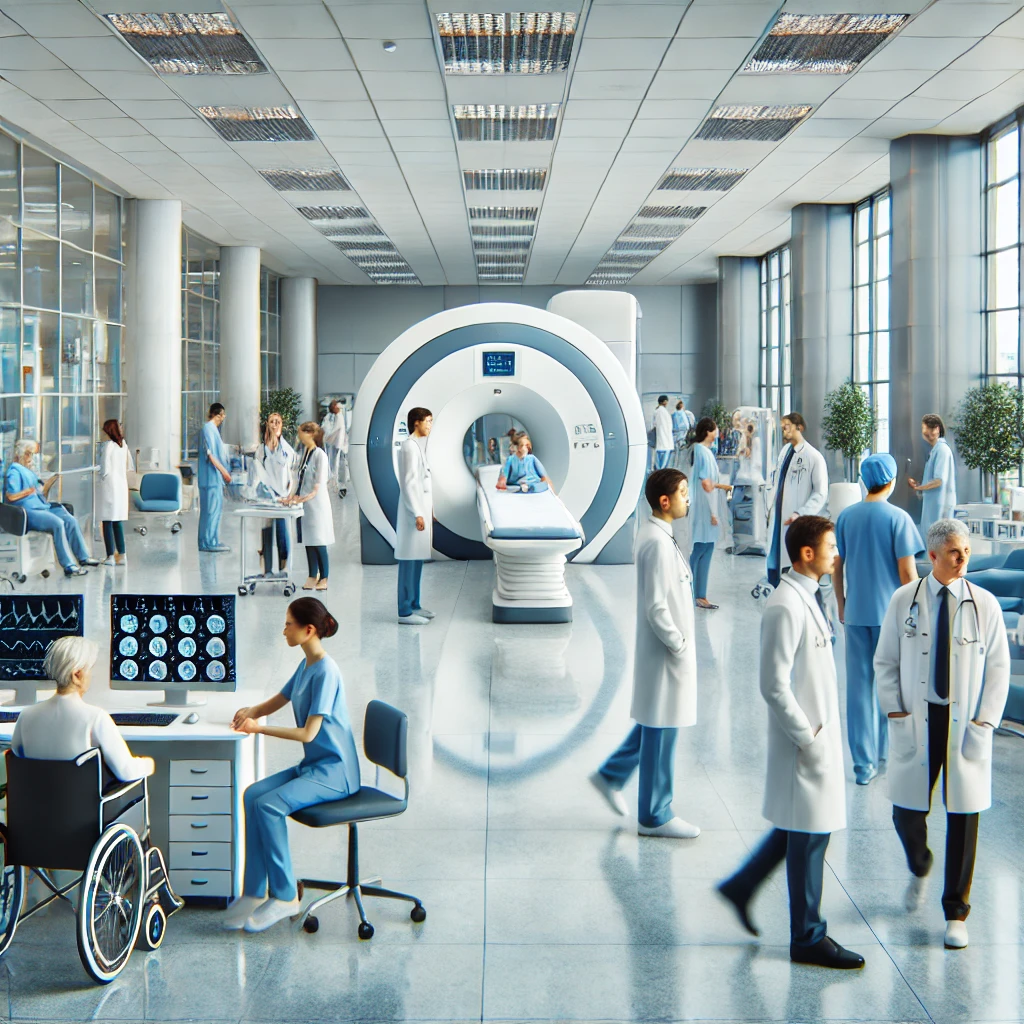
The Redeemer’s Health Village (RHV), a faith-based health facility, has introduced robotic surgery services to enhance healthcare delivery and reduce medical tourism in Nigeria.
RHV launched the service in Lagos on Saturday during a dinner luncheon held in partnership with ROBOMED Global, a U.S.-based medical technology and capacity-building firm.
The event was themed “Partnering to Advance Robotic Surgery in Nigeria.”
Speaking at the event, the Minister of State for Health, Dr. Iziaq Salako, described the initiative as an advancement that offers precision, faster healing, and better health outcomes.
Salako praised the Redeemed Christian Church of God (RCCG) for investing in infrastructure, personnel, and technology to deliver world-class healthcare.
He stated that the program aligns with the government’s health transformation agenda, aimed at improving health outcomes, unlocking the healthcare value chain, and reversing medical tourism from outbound to inbound.
“The realization of robotic surgery in Nigeria will save lives and add value to our healthcare system. The government recognizes private sector participation in delivering high-end medical services and will continue to promote policies and incentives to strengthen domestic capacity, local manufacturing, research, innovation, and healthcare development.
“This service, which includes training for surgeons nationwide, will also provide certification for safe and controlled practice to update clinical skills,” he said.
Salako also commended RHV’s partners, ROBOMED, describing the Nigerian diaspora-led enterprise as an example of professionals bringing expertise home through strategic partnerships to support healthcare growth.
He emphasized that the initiative would boost Nigeria’s capacity to provide precise, minimally invasive surgical care by trained professionals, reducing the need for overseas treatment.
He added that the $4 million investment demonstrated confidence in Nigeria’s economic reforms and urged Nigerians in the diaspora to invest, create jobs, and foster prosperity.
Former Minister of State for Health, Sen. Olorunnimbe Mamora, also spoke, stating that robotic surgery would redefine surgical practice in Nigeria and West Africa through innovation and increased collaboration.
Mamora clarified that robotic surgery is not meant to replace surgeons but to extend their capabilities.
He explained that the robot is a sophisticated instrument that enhances a surgeon’s vision, dexterity, and judgment, improving precision.
Chairing the event, Mamora noted that many Nigerians currently travel abroad for complex surgeries, and this new service would increase the availability of advanced procedures locally.
“Robotic surgery is not here to replace surgeons; they remain in complete control. Technology empowers surgeons, and patients benefit the most.
“Many Nigerians travel abroad for complex surgical care, which is costly and often separates patients from their support systems.
“While some overseas referrals will remain, our goal is to perform more advanced surgeries safely and successfully in Nigeria,” he said.
Mamora emphasized that successful robotic surgery requires trained surgeons, anesthetists, nurses, biomedical engineers, IT specialists, and ongoing professional development, supported by sustainable financing.
He praised RHV and ROBOMED for their focus on training, mentorship, research, and capacity building, stressing that human capacity development is crucial alongside technology.
He urged stakeholders to ensure the procedure is accessible to all Nigerians and to view it as part of a broader national journey toward excellence in surgical training.
Additionally, Pastor Enoch Adeboye, General Overseer of RCCG, expressed that the initiative reflects commitment, vision, and partnership for Nigeria’s healthcare future.
Represented by Pastor Joseph Obayemi, Adeboye said robotic-assisted surgery at RHV would leverage technology to improve outcomes, develop local expertise, promote research, and reduce medical tourism.
“Our interest in healthcare stems from our commitment to human well-being and the divine desire for health and vitality,” Adeboye stated.
RHV CEO Dr. Adedamola Dada highlighted that robotic surgery would improve outcomes, reduce trauma, and enhance patient care.
He noted that $4 million had been allocated for service delivery and training, emphasizing that sustaining the program depends on developing local expertise.
“We aim to build a pipeline of Nigerian professionals capable of performing surgeries locally, monitoring patients, and providing follow-up care,” Dada explained.
He added that the service would cost about 5% of similar procedures in the U.S. and Europe and is intended not only for Nigeria but also for West Africa.
Robom ed Global CEO Prof. Obi Davies-Ekwenna expressed enthusiasm, noting that the partnership with RHV aims to ensure Nigerians have access to safe, high-quality surgical care within the country.
He emphasized that the goal is to eliminate the need for treatment outside Nigeria by increasing access to reliable surgical services and training local surgeons to international standards.
