


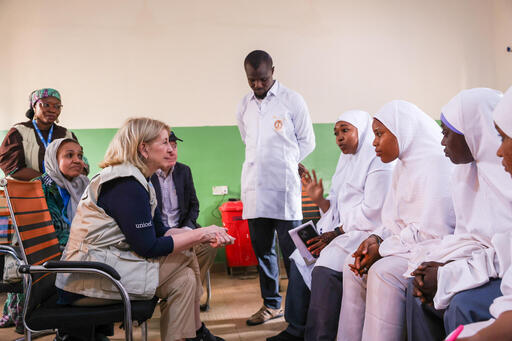
The Executive Director of the United Nations Children’s Fund (UNICEF), Catherine Russell, has called for sustained investment in Nigerian children, describing them as the country’s greatest opportunity for long-term economic growth, innovation and resilience.
Russell made the call at the end of her official visit to Nigeria, where she commended ongoing government efforts to improve the welfare of children while warning that mounting global economic pressures could undermine recent progress.
With nearly 105 million children and adolescents—about half of Nigeria’s population—she said the country possesses one of the world’s largest reservoirs of human potential, which must be nurtured through sustained investments in health, nutrition, education and protection.
ALSO READ UNICEF urges stronger leadership, community action to tackle child health challenges
“Everywhere I went in Nigeria, I saw the strength, ambition and potential of children and young people despite continued challenges,” Russell said.
She noted that although many Nigerian children continue to face significant hardships, she was encouraged by government-led interventions aimed at expanding access to essential services.
During her visit to Sokoto State, Russell toured a UNICEF-supported primary healthcare centre where children suffering from malnutrition were receiving treatment. She also met children benefiting from digital learning initiatives designed to provide a second chance for out-of-school learners.
According to her, Nigeria has recorded notable progress in birth registration, social protection and school enrolment, demonstrating what can be achieved when children are prioritised.
However, she cautioned that the gains remain fragile as global economic headwinds, including the effects of the Middle East crisis, shrinking development funding and other external shocks, continue to put pressure on vulnerable households.
She also pointed to insecurity, displacement and climate-related disasters affecting many communities as additional threats to children’s wellbeing.
Russell stressed the need for continued investment in critical sectors such as healthcare, nutrition, education, safe water and child protection to ensure that no child is left behind.
“The first years of a child’s life are a critical window for a child,” she said. “Good nutrition, healthcare, early learning, and protection help children develop to their full potential, building the foundation for stronger communities and a prosperous economy.”
The UNICEF Executive Director welcomed the commitment demonstrated by federal and state governments toward improving child welfare and reaffirmed the organisation’s readiness to deepen collaboration with government, development partners and the private sector.
She said Nigeria has the potential to become a global example of how strategic investments in children can drive inclusive economic growth and sustainable development.
“Nigeria’s future will be shaped by the choices made for children today,” Russell said. “Nigeria can be a positive example for shaping new models for investment in services and economic growth that benefit all children. UNICEF is committed to supporting the country on this quest.”
