


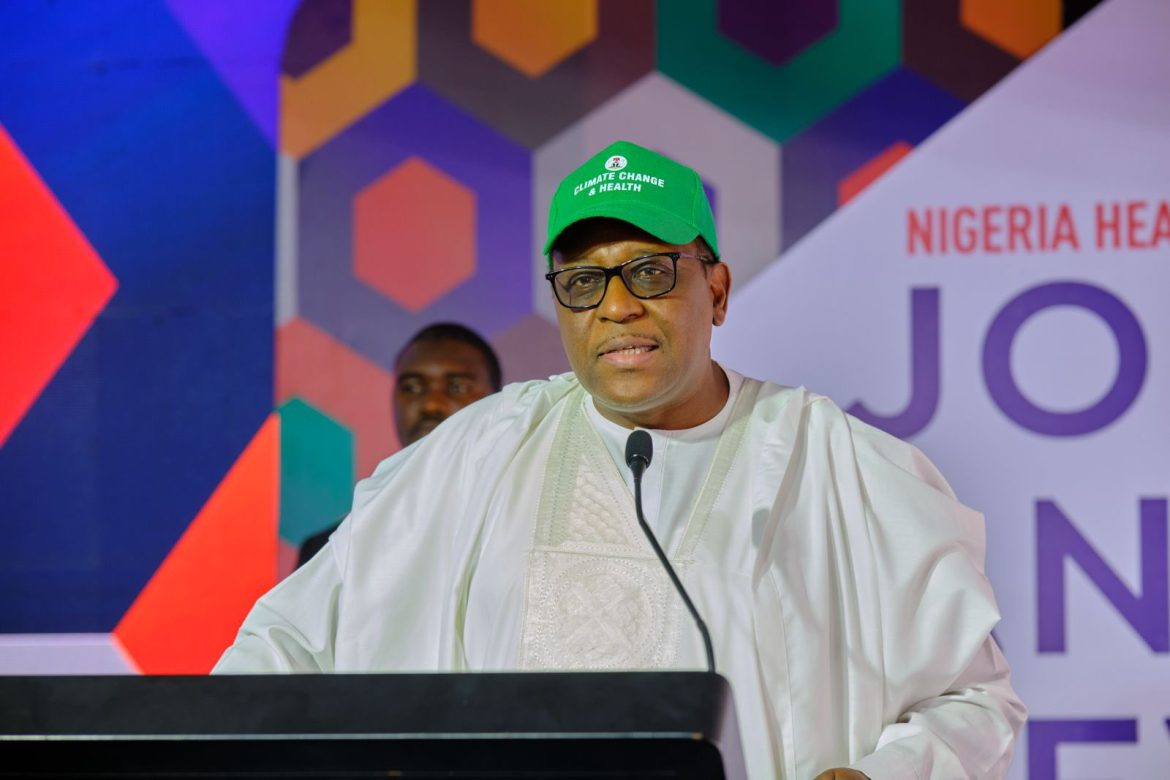
The Federal Government says it is taking deliberate steps to reduce reliance on external health funding, boost domestic investment, and build equitable global partnerships.
Coordinating Minister of Health and Social Welfare, Prof. Muhammed Ali Pate, stated this on Monday in Abuja during a high-level health security dialogue with the People’s Republic of China on pandemic preparedness and response.
Reflecting on decades of global assistance, Pate acknowledged that international support had delivered significant gains but noted that the COVID-19 pandemic exposed vulnerabilities in health systems and the risks of over-dependence.
“You cannot outsource the delivery of your health system or the treatment of diseases like malaria, HIV, and TB to taxpayers in other countries. It is the primary responsibility of national governments to invest in health and equity,” he said.
Pate disclosed that Nigeria aims to exit dependence on external health financing by 2030 through phased increases in domestic funding from both federal and state governments.
“Efficient use of domestic resources can deliver results comparable to external funding, while strengthening national ownership and equity. While we welcome investments and partnerships, the sovereign responsibility rests with Nigeria,” he added.
He emphasised the government’s commitment to engaging international partners who respect Nigeria’s laws, policies, and financial contributions.
“Global health financing has evolved. Nigeria is charting a future where it leads, invests strategically, and engages partners on terms that respect its sovereignty,” Pate said.
The minister welcomed collaborations with countries and institutions across America, Europe, China, and beyond, stressing that partnerships must be anchored on mutual respect and shared benefits.
On global solidarity, he reaffirmed Nigeria’s readiness to work with other nations to strengthen collective health security.
“We are all developing, and rapidly so. Nigeria remains open to partnerships that build bridges of solidarity and support collaborative solutions to shared health challenges,” he said.
In a symbolic gesture, Pate conferred an honorary traditional title on Prof. George Gao, a renowned Chinese virologist and immunologist, in recognition of his contributions to global health.
He explained that such honours, rooted in longstanding cultural traditions in Bauchi State, are reserved for individuals who make meaningful contributions to societal well-being.
Experts note that sustained dialogue on pandemic preparedness and response is critical to strengthening health systems, as countries work to close gaps in resilience and ensure consistent readiness for future health emergencies.
