


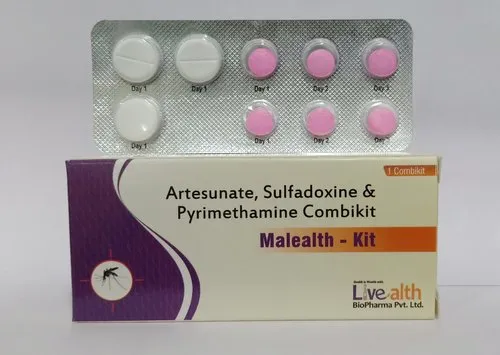
Universal Corporation Ltd (UCL), with support from MMV and Unitaid has become the first African manufacturer to gain the World Health Organization (WHO) prequalification for the production of sulfadoxine-pyrimethamine.
Sulfadoxine/pyrimethamine (SP) is a well-tolerated, effective and affordable medicine used to prevent malaria in pregnant women and infants; nearly all malaria cases and deaths occur in Africa, yet until now, the continent was completely reliant on imported quality-assured SP; this breakthrough responds to the need for local production of quality medicines for use in Africa, a major gap that was critically highlighted when the COVID-19 pandemic left the continent with limited access to vital health products in 2020.
Local supply of a medicine used to prevent malaria across Africa received a boost recently, as the World Health Organization (WHO) issued a quality certification to the first African manufacturer of a key antimalarial drug used to prevent infection in pregnant women and children.
Called pre-qualification, this certification will enable Kenyan manufacturer Universal Corporation Ltd (UCL) to support regional efforts to combat malaria through local production of high-quality sulfadoxine-pyrimethamine (SP). UCL’s pre-qualification was achieved with funding from global health agency Unitaid and support from MMV.
Pre-qualification is a service provided by WHO to assess the quality, safety and efficacy of medicinal products. Quality assurance of UCL’s SP product Wiwal® opens a route for procurement by global scale-up partners that will improve access and help strengthen Africa’s ability to combat endemic diseases.
“Unitaid welcomes the certification of UCL to produce this quality-assured antimalarial medicine in Africa, where about 95% of all illness and death from malaria occurs. Reinforcing local production of medicines where they are needed most is critical to building stronger and more resilient health responses,” said Dr Philippe Duneton, Executive Director of Unitaid.
Young children and pregnant women are among the most vulnerable to the burden of malaria, with children under five accounting for 80% of all malaria deaths in Africa. SP is a generally well-tolerated, effective, and affordable medicine used to prevent malaria, yet adequate delivery and scale-up of these interventions are hampered in part by inadequate and unstable supply and, until now, have completely relied on imported or poor-quality drugs.
“UCL is committed to supplying the African continent with quality medicines that are most needed by the people who live here. We are not only the first pharmaceutical company to receive pre-qualification of sulfadoxine-pyrimethamine in Africa, but one of only five manufacturers in Africa to have received this quality certification for any product. We’re filling a much-needed gap,” said Perviz Dhanani, Founder and Managing Director of UCL.
The lack of pre-qualified manufacturers in Africa raises concerns about the quality of medicines and supply insecurities that compromise the treatment of chronic and infectious diseases – risks that were clearly revealed when COVID-19 disrupted global supply chains and left Africa with limited access to vital products. The production of quality medicines on the African continent is critical not only for the safety of Africa’s people but also for supporting regional supply availability and diversification in global production of medicines.
Increased supply of SP is crucial to the long-term success of Unitaid’s malaria chemoprevention strategy, which includes nearly US$ 160 million invested to date to optimize and scale up delivery of SP through seasonal delivery and intermittent preventive treatment in pregnant women and infants. With Unitaid funding, MMV is working to strengthen global supply chains and support appropriate use of quality medicines critical to the malaria response.
“Researchers and manufacturers from the countries hardest hit by malaria must be at the forefront of efforts to defeat the disease, which is why we welcome this wonderful news,” said David Reddy, MMV’s CEO. “We congratulate Universal Corporation Ltd for becoming the first African manufacturer to receive WHO pre-qualification for SP for the prevention of malaria in pregnant women and infants and are delighted to have partnered with them in this effort.”
By APO Group
Additional quotes
“We at Africa CDC gladly welcome the news of Universal Corporation Ltd receiving a WHO Prequalification for sulfadoxine-pyrimethamine,” said Dr Nicaise Ndembi, Africa CDC’s Chief Science Advisor. “This is the result of a remarkable collaborative effort through UCL, MMV and Unitaid, and aligns with our purpose to support public health initiatives and strengthen the capacity of public health institutions.”
“The news of Universal Corporation Ltd receiving a WHO Prequalification for sulfadoxine-pyrimethamine is incredible news,” said Ms Joy Phumaphi, Executive Secretary of the African Leaders Malaria Alliance and MMV Board member. “Ensuring the availability and accessibility of quality treatment for underserved communities, particularly women, newborns, and children who are disproportionately at high risk of death from malaria is a critical component to the full realization of the right to health.”
Background on the malaria burden
According to the latest World Malaria Report (https://bit.ly/3wsvUv4), released on 6 December 2021, there were an estimated 241 million cases of malaria and 627,000 resulting deaths worldwide in 2020. This represents about 14 million more cases in 2020 compared to 2019, and 69,000 more deaths. Approximately two-thirds of these additional deaths (47,000) were linked to disruptions in the provision of malaria prevention, diagnosis and treatment caused by the COVID-19 pandemic.
The WHO African Region continues to carry a disproportionately high share of the global malaria burden. In 2020, the region was home to 95% of all malaria cases and 96% of all deaths. About 80% of all malaria deaths in the region are among children under five years of age.
In 2020, six countries accounted for just over half of all malaria deaths worldwide: Nigeria (27%), the Democratic Republic of the Congo (12%), Uganda (5%), Mozambique (4%), Angola (3%) and Burkina Faso (3%).
Background on seasonal malaria chemoprevention, perennial malaria chemoprevention and intermittent preventive treatment in pregnancy
There are a number of recommended malaria prevention interventions targeted at those most vulnerable to malaria infection and adverse effects (pregnant women, infants, children) that depend on the accessibility of SP. Adequate supply of SP is crucial to achieving scale up of these interventions to benefit all those at risk across the African continent.
Seasonal Malaria Chemoprevention (SMC) is a preventive treatment strategy for children under five living in areas of the Sahel and sub-Sahel at greatest risk of seasonal malaria. It involves administering monthly doses of SP to children during peak malaria season. Unitaid invested US$ 68 million in the first evaluation to determine the effectiveness of SMC on a large scale, a strategy which contributed to a reduction in malaria infections in children of more than 85%. According to the latest World Malaria Report, in 2020, 33 million children were reached with SMC.
Perennial malaria chemoprevention (PMC) is another strategy for preventing malaria in infants and children, in areas where malaria transmission is not seasonal. Those belonging to age groups at high risk of severe malaria are recommended to receive antimalarial medicines at predefined intervals to reduce disease burden.
Intermittent preventive treatment in pregnancy (IPTp) is recommended by WHO in malaria-endemic areas to reduce disease burden in pregnant women. This intervention relies on administration of at least three doses of SP, starting as early as possible in the second trimester and spaced at least one month apart.
Unitaid is currently funding a large-scale project to generate operational evidence that will help implementers scale-up PMC in higher burden areas. This project is building on the success of the recent TIPTOP project, a Unitaid investment that demonstrated innovative ways to reach more women with IPTp across Africa.
Background on strengthening local production of medicines and other health technologies to improve access
Attaining the highest standard of health is a fundamental right for all. Access to quality‐assured, safe, effective, and affordable medicines and other health technologies for all is a specific component of the Sustainable Development Goals target 3.81 and in achieving Universal health coverage.
