


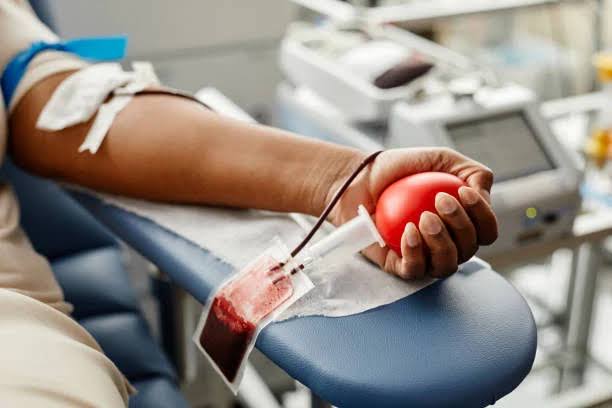
A Consultant Haematologist, Dr. Lucky Okpetu, has urged Nigerians to embrace voluntary blood donation and reject misconceptions that continue to discourage many eligible donors in the country.
Okpetu made the call in an interview with reporters on Monday in Lagos, in commemoration of the 2026 World Blood Donor Day (WBDD), observed annually on June 14 worldwide.
It was reported that the theme for this year’s WBDD is “One Drop of Humanity. Give Blood. Save Lives,” a global tribute to millions of voluntary, unpaid blood donors whose generosity saves lives every day.
Speaking on the 2026 WBDD, he emphasized that voluntary donation remains a critical act of humanity that saves countless lives.
The haematologist, who heads the Blood Transfusion Department at the Federal Medical Centre, Ebute Meta, said inadequate public awareness remains one of the major barriers to voluntary blood donation.
“One of the major challenges is the lack of adequate information about the importance of blood donation. Many people still hold unfounded beliefs, including fears that donated blood could be used for rituals.
“These beliefs are completely baseless because blood collected in hospitals is used strictly for medical purposes to save lives.
“We notice that in this part of the world, it’s not common for people to donate blood and walk away; they want to donate blood and get something in return,” he said.
He stated that the country still falls short of its annual blood needs, adding that Nigeria, with an estimated population of over 200 million, requires at least one percent of its population to donate blood annually.
Okpetu explained that more Nigerians must donate blood voluntarily to meet the World Health Organization guidelines for blood availability.
The haematologist noted that only healthy individuals between the ages of 18 and 65 are eligible to donate blood, subject to medical screening.
“Before anyone donates blood, their blood pressure, haemoglobin level, and general health status are assessed. If a person is not fit, blood will not be collected,” he explained.
He urged the media and other stakeholders to intensify awareness campaigns on the benefits of blood donation and the need for a sustainable supply of safe blood.
Regarding concerns that hospitals sell blood, the haematologist clarified that patients are not charged for the blood itself but for the costs associated with screening, processing, storage, and transfusion.
“If blood is donated freely, extensive laboratory tests must be carried out to screen for infections such as HIV and hepatitis, and the blood bags and storage facilities also cost money.
“What patients pay for are these services and consumables, not the blood itself,” he said.
He also addressed concerns about adverse reactions following blood transfusion, explaining that while such reactions can occur, strict safety protocols are in place to minimize risks.
“Blood transfusion reactions may result from immune responses or, in rare cases, documentation errors.
“There are several layers of checks and balances involving laboratory scientists, nurses, and doctors before blood is transfused.
“The rate of serious transfusion reactions has reduced significantly due to improved safety procedures,” he added.
Okpetu noted that donated blood has a limited shelf life and is discarded once it reaches its expiry date.
“Depending on the type of anticoagulant and storage conditions, blood can be stored for about 35 days.
“Every blood bag carries both collection and expiry dates, and expired blood is never supposed to be used,” he concluded.
