


As the world commemorates the 2026 World Glaucoma Week, the physical and socio-economic burden of glaucoma continues to significantly affect patients and their immediate families.
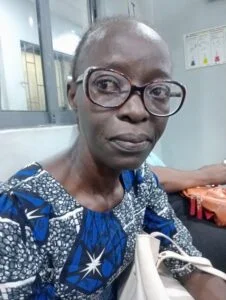
Ms. Celestina Oahimin, 49, who lost her sight to glaucoma, recounted her ordeal and the impact of living with blindness after discovering the disease had affected her left eye in 2013.
Oahimin, who attended the week-long free glaucoma screening organized by Orile Agege General Hospital for 2,500 residents, told reporters that financial constraints worsened her situation.
Oahimin, who lives in Ogun State, said she had been at the mercy of her brother who has personally cared for her since she lost her sight and became unable to continue her business.
“I went for an eye check at Ayinke House (LASUTH) in 2013; that was when I discovered that glaucoma had affected one of my eyes before it eventually went blind. Presently, I can’t see with both eyes.
“I was given medications and asked to use them daily, but due to my financial situation, I was unable to get the drugs regularly, and it affected my second eye,” she said.
She appealed for more support for glaucoma patients through various intervention programmes, noting that this would help prevent more people from going blind.
Oahimin also urged Nigerians to go for regular eye checks to prevent sudden blindness.
“I have not given up, and that is why I came all the way from Ogun State to check my eyes. Government should do more and organise programmes like this to help prevent more Nigerians from going blind.
“People should always take advantage of programmes like this to know their eye status,” she said.
Mrs. Oyeleke Adeyanju, 76, who also came for the free screening, told reporters that she was diagnosed with glaucoma in 2023 and had since commenced treatment to halt the progression of the disease.
Adeyanju said her mother had glaucoma, which eventually led to blindness before her death years ago, a situation that motivated her to seek early medical intervention and care.
She also urged general hospitals to shorten appointment waiting periods to help prevent the progression of eye diseases.
She commended Orile Agege General Hospital for the free screening and medications and urged residents to take advantage of the programme.
World Glaucoma Week is a global initiative organized by the World Glaucoma Association to raise awareness and mobilize action against preventable blindness. The theme of the 2026 observance is “Uniting for a Glaucoma-Free World.”
Dr. Oluyemi Taiwo, the Medical Director/Chief Executive Officer of the hospital, said the free screening was organized to create awareness about glaucoma, describing it as a painless blinding disease.
Taiwo, a Consultant Ophthalmologist, noted that the progression of the disease could be halted through early detection and prompt medical intervention.
“It is important for everyone to go for eye checks or screening yearly for early detection of glaucoma and commence treatment immediately to reduce the prevalence of blindness caused by glaucoma.
“We do not want to manage the late stage of this disease but detect it early so that we can reduce blindness in our communities, the state, and Nigeria at large,” she said.
Also speaking, Dr. Sheidu Nasiru, Head of the Eye Clinic at Orile Agege General Hospital, said the week-long programme was designed to sensitize the public and provide free eye screening for residents.
Nasiru, a Consultant Ophthalmologist, said the disease often developed silently without early signs or symptoms and could progress to irreversible blindness if not detected early.
He said about 50 per cent of people living with glaucoma were unaware they had the condition.
The ophthalmologist identified high pressure in the eye as one of the major risk factors for glaucoma, adding that normal eye pressure usually ranged between 10 and 21 millimeters of mercury.
According to him, glaucoma primarily damages the optic nerve, which connects the eye to the brain and enables vision.
Nasiru identified other risk factors as family history, African descent, short-sightedness, and chronic medical conditions such as diabetes and hypertension.
“Someone with glaucoma may still see clearly when looking straight ahead but gradually lose peripheral (side) vision, which often makes the disease difficult to detect early.
“Members of the public should seek medical attention if they notice unusual signs such as seeing rainbow-like halos, which may indicate high eye pressure. Individuals with a family history should undergo eye examinations once or twice a year,” he said.
He noted that treatment options included eye drops, oral medications, laser therapy, and surgery, depending on the patient’s condition.
He emphasized that patients placed on medication must use them consistently for life to prevent further damage to the optic nerve.
