


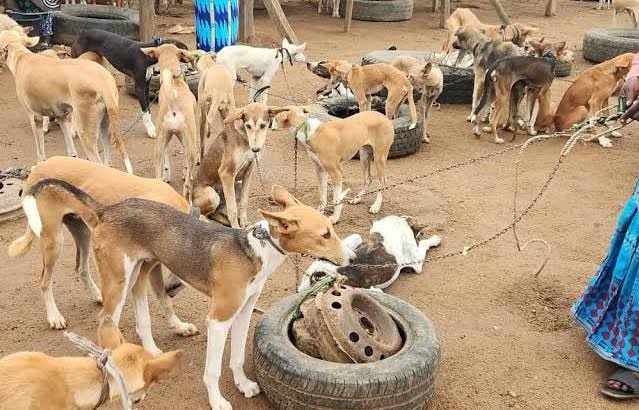
Dr. Sati Ngulukun, Director of Research at the National Veterinary Research Institute in Vom, Plateau, has expressed concern over the growing threat posed by unvaccinated stray dogs roaming Nigerian communities. He warned that this trend could facilitate the spread of rabies and other zoonotic diseases.
Ngulukun, also a veterinary expert, told reporters on Sunday in Abuja that the presence of unvaccinated dogs in public spaces remains a major public health risk requiring urgent action.
He emphasized that dogs are responsible for the majority of human rabies cases. Although preventable, rabies remains almost always fatal once clinical symptoms appear.
He explained that stray dogs, especially those without vaccination or proper care, can serve as reservoirs for the rabies virus, transmitting it to humans through bites, scratches, or contact with infected saliva.
“The continuous presence of unvaccinated stray dogs within communities creates a silent but dangerous pathway for rabies transmission. This is a preventable tragedy if appropriate measures are taken,” he said.
Ngulukun warned that children are particularly vulnerable due to their frequent interactions with animals and their lack of awareness about the risks of dog bites.
He noted that the increasing number of free-roaming dogs also raises the likelihood of attacks, as such animals may become aggressive in search of food or when threatened.
He stressed that poor control of stray dog populations hampers national and global efforts to eliminate rabies.
Ngulukun called for coordinated action involving veterinary authorities, public health institutions, and community stakeholders to address the issue.
On preventive measures, he urged pet owners to adopt responsible animal husbandry practices, including routine rabies vaccinations for dogs.
He also recommended that households ensure proper confinement of pets within fenced areas or controlled environments to prevent roaming.
“Keeping dogs within secure environments and ensuring they receive regular veterinary care are critical steps in protecting both animal and human health,” he said.
He highlighted the importance of proper identification and monitoring of domestic animals to aid disease surveillance and outbreak response.
Ngulukun further cautioned against abandoning pets, describing it as a key driver of the growing stray dog population.
He advised the public to promptly report dog bites or unusual animal behavior, such as aggression or excessive salivation, to veterinary or health authorities.
He reiterated that rabies requires a “One Health” approach, integrating efforts across human, animal, and environmental health sectors.
The expert called for increased awareness campaigns, mass dog vaccination programs, and stronger enforcement of animal control regulations to safeguard communities.
“Rabies is entirely preventable, and no one should die from it. With collective responsibility and sustained action, we can eliminate this threat,” he concluded.
Rabies is a deadly viral disease affecting the brain and nervous system of humans and animals. It is primarily spread through bites or saliva from infected animals, especially dogs. Once symptoms like fever, aggression, confusion, or difficulty swallowing appear, the disease is almost always fatal. However, rabies is preventable through dog vaccination, avoiding stray animal bites, and immediate medical treatment after exposure.
