


Burkina Faso has signed onto US President Donald Trump’s controversial global health funding programme, marking a notable diplomatic development for a country that has increasingly distanced itself from Western powers in recent years.
Under the agreement, the United States will provide $147m in funding, while Burkina Faso will contribute $107m over five years, according to information released by the US Department of State. The pact forms part of Trump’s America First Global Health Strategy, an initiative reshaping Washington’s engagement with African governments through health financing tied more closely to strategic interests.
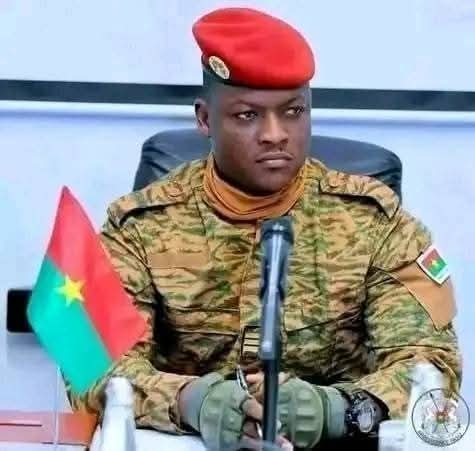
The decision has sparked debate among analysts, given the Burkinabè government’s strong rhetoric against Western influence since Captain Ibrahim Traoré seized power in 2022 following a military takeover.
Since assuming leadership, Traoré has pledged to protect national resources from what he has described as ‘unfair’ foreign exploitation, while strengthening alternative alliances beyond traditional Western partners. Signing a US-backed funding agreement therefore suggests a pragmatic recalibration rather than a reversal of political posture.
Analysts say growing security pressures and strained public health systems may be encouraging Sahel governments to diversify partnerships regardless of ideological positioning.
The US State Department said the deal aims to strengthen disease surveillance systems, enhance coordination between health institutions, and ‘improve and digitise data reporting’ to detect infectious diseases before they spread regionally or reach the United States.
Burkina Faso’s authorities have not yet publicly clarified the full scope of the agreement or addressed concerns raised about similar arrangements elsewhere.
Trump’s health funding packages have attracted scrutiny across Africa amid reports that some agreements could involve expanded US access to mineral resources or large-scale health data sharing. Critics warn that linking public health cooperation with strategic economic interests risks transforming aid into transactional diplomacy.
It remains unclear whether provisions related to mineral access or personal health data are included in Burkina Faso’s agreement.
The issue carries particular weight for Burkina Faso, one of Africa’s leading gold producers with additional deposits of copper, diamonds and bauxite. These resources have become increasingly significant amid global competition for critical minerals tied to energy transition technologies.
Observers argue the programme reflects a broader shift in US foreign policy under Trump, prioritising reciprocal benefits and measurable national interests over traditional aid models.
Burkina Faso joins a growing group of African countries participating in the initiative. The Democratic Republic of the Congo, another resource-rich state, has signed a significantly larger agreement valued at $1.2bn.
According to the US State Department, 18 African nations have accepted the ‘America First’ health packages, collectively worth about $18bn. Participating countries include Botswana, Burundi, Cameroon, Cote d’Ivoire, Eswatini, Ethiopia, Kenya, Lesotho, Liberia, Madagascar, Malawi, Mozambique, Nigeria, Rwanda, Sierra Leone, Uganda, Burkina Faso and the DRC.
Not all governments have agreed to participate. Zambia and Zimbabwe reportedly rejected the packages over concerns about sharing sensitive health data and granting access to strategic resources.
Jean Kaseya, Director-General of the Africa Centres for Disease Control and Prevention, has expressed ‘huge concerns’ regarding pathogen-sharing provisions associated with the deals, warning that African health security must not undermine national sovereignty over sensitive biological information.
The agreements underscore a wider transformation in Washington’s engagement with Africa. Trump administration officials have repeatedly stated that US foreign funding should not be viewed as charity but as partnerships aligned with American national interests.
For African governments, the arrangements present a complex calculation: access to urgently needed health financing alongside potential geopolitical trade-offs involving data governance, sovereignty and resource diplomacy.
Burkina Faso’s participation highlights how even governments pursuing sovereignty-focused agendas may engage with major powers when domestic priorities — particularly health system resilience and economic stability — require external support.
As additional countries consider participation, the long-term implications of linking global health cooperation to strategic competition could reshape both development financing and Africa’s evolving role in global power politics.
