


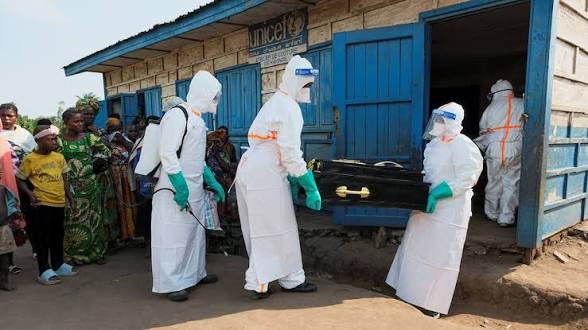
The Federal Government says the woman diagnosed with an imported case of Bundibugyo Ebola virus disease in Nigeria is recovering, with laboratory results showing significant improvement.
The Coordinating Minister of Health and Social Welfare, Prof. Muhammad Pate, said this at a news conference in Abuja on Thursday, outlining measures to prevent further transmission.
Pate said clinicians treating the patient had reported encouraging laboratory results.
“Today, I spoke to the clinicians, and I understand that lab results are showing great improvement, and there’s a possibility that she would recover from this.
“However, we cannot hold our breath. We have to continue to pray and work hard to ensure that she survives it,” he said.
The minister said the government began contact tracing immediately after confirming the case. The exercise covered contacts at the hospital, in domestic settings and at the private clinic the patient had visited.
He said the patient was asymptomatic when she arrived in Nigeria but developed symptoms a few days later.
According to Pate, identified contacts have been categorised as high or low risk. High-risk contacts have been quarantined at a facility, while others are being monitored under public health guidelines.
“We’ve traced the contacts, identified the contacts in the hospital, the domestic contacts, and the private clinic that she had attended.
“All those contacts have been categorised by risk level, high risk and low risk. The high-risk contacts have been quarantined fully in a facility,” he said.
Pate said the Nigeria Centre for Disease Control and Prevention (NCDC) was coordinating the operational response with the Federal Capital Territory (FCT), where the case was identified.
He said the Federal Government had activated the incident management system and briefed the Presidential Task Force, Nigeria Governors’ Forum and National Economic Council on the situation.
According to him, all state governments had been informed, while states with incomplete response plans had been directed to finalise them urgently.
He said the President had released additional resources to the NCDC, while the government had mobilised other domestic resources to strengthen the response.
Pate said the Federal Government was also adopting a whole-of-government approach, involving relevant ministries, agencies and state authorities.
He said health facilities had been directed to prepare isolation beds and strengthen infection-prevention measures. Health workers had also been advised to take precautions when treating patients.
The minister said the government was working with the World Health Organization (WHO), Africa Centres for Disease Control and Prevention (Africa CDC) and other technical partners to contain the outbreak.
He said arrangements were being made to sequence the virus’s genome to improve understanding of the pathogen, with support from Prof. Christian Happi of Redeemer’s University, Ede.
Pate said the government was strengthening screening at points of entry, including ensuring thermal imaging equipment remained functional and assessing travellers according to risk.
He urged Nigerians to cooperate with contact-tracing teams, comply with isolation and quarantine requirements, and follow basic preventive measures, including frequent handwashing.
“People who may have a fever, headaches, muscle aches or a travel history should quickly self-isolate and inform public health authorities,” he said.
Pate said there was no evidence at the time of the briefing that the case had spread into communities. He added that the government would adjust its response as new evidence emerged.
He urged Nigerians to avoid panic and rely on information from public health experts while authorities continued to monitor the situation.
The minister said the NCDC would continue its regular briefings, while he would also provide updates to keep Nigerians informed.
