


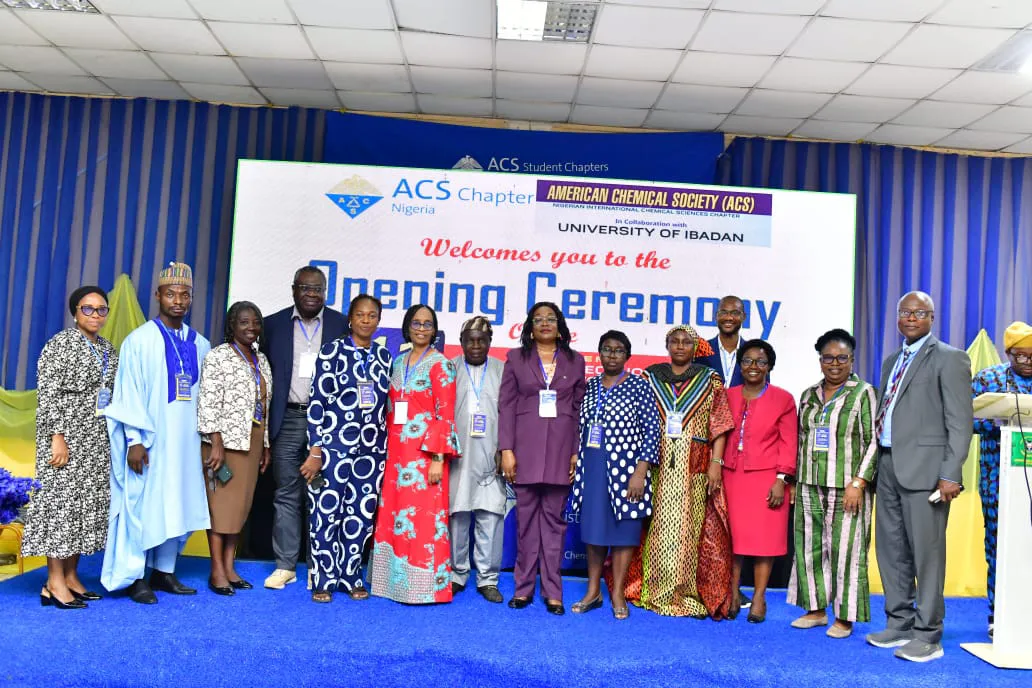
The American Chemical Society (ACS) Nigeria International Chemical Sciences Chapter has called for the adoption of green chemistry and sustainable practices as strategic pathways to accelerate national development and innovation.
The Society made the call during its 11th Annual Symposium held at the International Conference Centre of the University of Ibadan in Ibadan, Oyo State. The gathering, themed “Emerging Technologies in Chemistry for Sustainable Development,” brought together academics, industry experts, policymakers, and researchers from across the globe to examine the role of chemistry in advancing sustainable growth.
According to the Society, participants collectively underscored the critical role of chemistry in tackling pressing global challenges and emphasized interdisciplinary collaboration as essential for translating scientific knowledge into actionable solutions.
Chair of the Local Organising Committee, Prof. Ganiyat Oloyede, welcomed attendees and highlighted the significance of hosting the event in Ibadan, commending the ACS Nigeria Chapter for fostering collaboration and innovation. The Society noted that such engagements reinforce its commitment to strengthening research partnerships and capacity building across Nigeria’s scientific community.
Speaking at the symposium, ACS Nigeria Chair, Prof. Edu J. Inam, stressed that the theme reflects the Society’s mission to leverage chemistry to address climate change, environmental sustainability, energy security, and public health. She reiterated the Chapter’s focus on expanding student participation, enhancing research visibility, and supporting early-career chemists to transform scientific ideas into practical innovations.
Declaring the symposium open, Nigeria’s Minister of Innovation, Science and Technology, representing the Federal Ministry of Innovation, Science and Technology, emphasized the importance of chemistry-driven value addition in national development. He outlined policy priorities including strengthening local content, increasing investment in research, and promoting green chemistry adoption, while acknowledging ACS Nigeria’s technical advisory role in shaping science policy and validating emerging technologies.
The symposium featured keynote and plenary sessions showcasing developments in translational chemistry, including advances in radiopharmaceuticals for disease detection, interdisciplinary approaches to malaria research, and sustainable practices such as renewable energy integration and waste valorisation. Industry and academic experts also presented on photocatalysis, catalyst innovation, and environmental technologies balancing profitability with ecological impact.
The Society reported that capacity-building sessions formed a key component of the programme. A workshop on academic publishing addressed research writing, peer review, and ethics, while student-focused activities strengthened communication and collaboration skills among emerging scientists. A dedicated student symposium further highlighted innovation and entrepreneurship in sustainable chemical technology.
In recognition of contributions to science, ACS Nigeria honoured distinguished professionals with fellowships and awards in STEM research, education, and sustainable chemistry. The Society said the recognitions reflect its commitment to celebrating leadership and service within the scientific community.
At the close of the event, participants issued recommendations urging enhanced research infrastructure, stronger industry–academy collaboration, and accelerated renewable energy adoption. The Society concluded that sustained collaborative action and translation of research outcomes into practical solutions remain central to achieving a sustainable Nigeria.
