

• Home
  • Agric
  • Sci & Tech
  • Health
  • Environment
  • Hausa News
  • More
    • Business/Banking & Finance
    • POLITICS
    • Entertainments & Sports
    • International
    • Investigation
    • Law & Human Rights
    • Africa
    • ACCOUNTABILITY/CORRUPTION
    • Hassan Gimba
    • Column
    • Prof. Jibrin Ibrahim
    • Prof. M.K. Othman
    • Defense/Security
    • Education
    • Energy/Electricity
    • Entertainment/Arts & Sports
    • Society and Lifestyle
    • Food & Agriculture
    • Health & Healthy Living
    • International News
    • Interviews
    • Investigation/Fact-Check
    • LAW & HUMAN RIGHTS
    • Oil & Gas/Mineral Resources
    • PRESS FREEDOM/JOURNALISM/PR
    • General News
    • Presidency
  • About Us
    • Contact Us
    • Board Of Advisory
    • Privacy Policy
    • Ethics Policy
    • Teamwork And Collaboration Policy
    • Fact-Checking Policy
    • Advertising
  • Media OutReach Newswire
    • Wire News
  • The Stories
Facebook Twitter Instagram
Trending
  • DRC Ebola outbreak surpasses 1,000 cases, spreads to 3rd camp
  • Lagos joins global under2 climate coalition
  • FAAN considers extending airport taxi upgrade deadline to October
  • RCCG freedom court parish holds community cleanup for 18th anniversary
  • Nigeria’s neem advantage: Unlocking a strategic bioeconomy industry for climate, agriculture and industrial growth, Dr Fakunle Aremu
  • NAFDAC holds workshop on medicine safety in Karu
  • AFAN predicts drop in food prices after fertiliser distribution
  • IBB university secures ABU approval for medical students clinical training
Facebook Twitter Instagram YouTube
AsheNewsAsheNews
  • Home
  • Agric

    Nigeria’s neem advantage: Unlocking a strategic bioeconomy industry for climate, agriculture and industrial growth, Dr Fakunle Aremu

    June 22, 2026

    AFAN predicts drop in food prices after fertiliser distribution

    June 22, 2026

    Northern Nigeria’s poultry economy: Unlocking a multi-billion dollar investment opportunity across the value chain, By Dr. Fakunle Aremu

    June 19, 2026

    Association trains farmers on agroforestry, carbon opportunities

    June 18, 2026

    IWMI, IFPRI link Kano farmers to solar irrigation support

    June 17, 2026
  • Sci & Tech

    ALTON supports CBN’s local data hosting mandate

    June 20, 2026

    NDPC seeks INEC data records over breach allegations

    June 20, 2026

    SGF urges Galaxy Backbone to boost cybersecurity, broadband

    June 20, 2026

    Experts urge AI, satellite data to build safer, more sustainable cities at FUTA symposium

    June 19, 2026

    Anambra disburses N80m to 80 startups for tech growth

    June 19, 2026
  • Health

    RCCG freedom court parish holds community cleanup for 18th anniversary

    June 23, 2026

    NAFDAC holds workshop on medicine safety in Karu

    June 22, 2026

    Expert urges focused use of N10bn for Ebola preparedness

    June 22, 2026

    From Sokoto to Bulgaria: Dr. Dange’s mission to transform pediatric care

    June 21, 2026

    Nigeria’s Fathers face silent mental health crisis

    June 21, 2026
  • Environment

    Lagos joins global under2 climate coalition

    June 23, 2026

    FAAN considers extending airport taxi upgrade deadline to October

    June 23, 2026

    Floods, Windstorm devastate Ebonyi farmlands, shops

    June 22, 2026

    Progress on Lagos-Calabar road celebrated

    June 22, 2026

    Sanitation concerns at Lagos market

    June 21, 2026
  • Hausa News

    UNA signs MoU to launch air Bissau in Guinea-Bissau

    June 15, 2026

    Otti plans 250-room 5-star hotel in Umuahia

    April 11, 2026

    Anti-quackery task force seals 4 fake hospitals in Rivers

    August 29, 2025

    [BIDIYO] Yadda na lashe gasa ta duniya a fannin Ingilishi – Rukayya ‘yar shekara 17

    August 6, 2025

    A Saka Baki, A Sasanta Saɓani Tsakanin ‘Yanjarida Da Liman, Daga Muhammad Sajo

    May 21, 2025
  • More
    1. Business/Banking & Finance
    2. POLITICS
    3. Entertainments & Sports
    4. International
    5. Investigation
    6. Law & Human Rights
    7. Africa
    8. ACCOUNTABILITY/CORRUPTION
    9. Hassan Gimba
    10. Column
    11. Prof. Jibrin Ibrahim
    12. Prof. M.K. Othman
    13. Defense/Security
    14. Education
    15. Energy/Electricity
    16. Entertainment/Arts & Sports
    17. Society and Lifestyle
    18. Food & Agriculture
    19. Health & Healthy Living
    20. International News
    21. Interviews
    22. Investigation/Fact-Check
    23. LAW & HUMAN RIGHTS
    24. Oil & Gas/Mineral Resources
    25. PRESS FREEDOM/JOURNALISM/PR
    26. General News
    27. Presidency
    Featured
    Recent

    DRC Ebola outbreak surpasses 1,000 cases, spreads to 3rd camp

    June 23, 2026

    Lagos joins global under2 climate coalition

    June 23, 2026

    FAAN considers extending airport taxi upgrade deadline to October

    June 23, 2026
  • About Us
    1. Contact Us
    2. Board Of Advisory
    3. Privacy Policy
    4. Ethics Policy
    5. Teamwork And Collaboration Policy
    6. Fact-Checking Policy
    7. Advertising
    Featured
    Recent

    DRC Ebola outbreak surpasses 1,000 cases, spreads to 3rd camp

    June 23, 2026

    Lagos joins global under2 climate coalition

    June 23, 2026

    FAAN considers extending airport taxi upgrade deadline to October

    June 23, 2026
  • Media OutReach Newswire
    • Wire News
  • The Stories
AsheNewsAsheNews
Home»Food & Agriculture»World Bank: Cassava, rice, maize, wheat supply 45% of Africa’s calories
Food & Agriculture

World Bank: Cassava, rice, maize, wheat supply 45% of Africa’s calories

Abdallah el-KurebeBy Abdallah el-KurebeJanuary 19, 2026Updated:January 19, 2026No Comments4 Mins Read
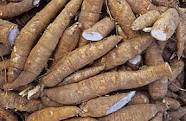
Cassava
Share
Facebook Twitter LinkedIn Pinterest Email

Cassava, rice, maize, and wheat account for 45 per cent of the calories consumed across Africa, highlighting the continent’s heavy reliance on just a few staple foods.

This finding is contained in a World Bank report titled “Food at a Crossroads: The Nexus Between Transport, Logistics, and Food Security in Africa.”

The report warns that such dependence leaves Africa vulnerable to supply disruptions, rising food prices, and climate-related shocks.

According to the World Bank, while these four staples dominate Africa’s diet, a large portion is imported from Europe, South Asia, and other regions.

Africa imports over 30 million tonnes of maize, more than 35 million tonnes of rice, and around 60 million tonnes of wheat every year.

“Just four key commodities account for 45 per cent of caloric intake across Africa — cassava, rice, maize, and wheat.

“A large portion of these commodities is imported from Europe, South Asia, and elsewhere, making transport a pivotal component in helping to address the challenges of food insecurity in Africa,” the report read in part.

After arriving on the continent, these staples face delays due to inadequate port infrastructure, inefficient logistics, and long inland journeys.

On average, food travels about 4,000 kilometres over 23 days in Africa — four times longer than in Europe — increasing the risk of spoilage, losses, and delayed delivery to households.

Seaports handle 14 per cent of Africa’s food imports, rising to 22 per cent for landlocked countries and 37 per cent for the lowest-income nations. However, many ports suffer from outdated systems, low capacity, and poor infrastructure, creating critical choke points in the food supply chain.

After clearance, imported staples must navigate weak road networks, congested borders, and poor rural connectivity. These transport challenges drive up costs, reduce food availability, and make staples less affordable for consumers.

The World Bank report noted that investments in port infrastructure, railways, and roads, along with streamlined logistics and simplified border procedures, could reduce delays, improve reliability, and support intra-African trade.

Even after transport, inadequate storage infrastructure exacerbates Africa’s food insecurity. The report noted that 20 per cent of cereals, 25 per cent of rice and maize, and up to 40 per cent of fruits and vegetables are lost before reaching consumers.

Losses of cassava, maize, rice, and wheat grew from 22.5 million tonnes in 2010 to 33.8 million tonnes in 2022 — equivalent to nearly 30 per cent of annual imports.

The report emphasised that investing in modern storage facilities, improving logistics, and applying proper handling techniques could significantly reduce these losses, ensuring more food reaches households safely and consistently.

On the Nigerian front, the country faces a looming food insecurity challenge. The United Nations Food and Agriculture Organization (FAO) projected that about 34.7 million Nigerians could experience severe food shortages during the 2026 lean season, from June to August.

The agency said the risk would persist if timely interventions were not implemented. Rising production costs, conflicts in key farming regions, economic shocks, and limited access to markets and credit were driving the threat.

A recent Nairametrics survey of farmers in the North-Central and North-West regions found that Nigeria faces a food crisis in 2026.

Farmers reported that soaring costs for fertiliser, fuel, and labour, combined with insecurity and limited government support, were making farming increasingly unprofitable.

Many had reduced cultivation or were considering abandoning their farms altogether. The survey also highlighted that the collapse of earlier support schemes, such as the Anchor Borrowers’ Programme, and poor rural infrastructure had further discouraged production.

Targeted support, including subsidised inputs, improved access to credit, mechanisation programmes, and enhanced rural security, is critical to avert severe food shortages in 2026.

Cassava Maize Rice Wheat World Bank
Share. Facebook Twitter Pinterest LinkedIn WhatsApp Reddit Tumblr Email
Abdallah el-Kurebe
  • Website
  • Facebook
  • Twitter
  • LinkedIn

Related Posts

Nigeria’s neem advantage: Unlocking a strategic bioeconomy industry for climate, agriculture and industrial growth, Dr Fakunle Aremu

June 22, 2026

AFAN predicts drop in food prices after fertiliser distribution

June 22, 2026

Northern Nigeria’s poultry economy: Unlocking a multi-billion dollar investment opportunity across the value chain, By Dr. Fakunle Aremu

June 19, 2026

Leave A Reply Cancel Reply

DRC Ebola outbreak surpasses 1,000 cases, spreads to 3rd camp

June 23, 2026

Lagos joins global under2 climate coalition

June 23, 2026

FAAN considers extending airport taxi upgrade deadline to October

June 23, 2026

RCCG freedom court parish holds community cleanup for 18th anniversary

June 23, 2026
About Us
About Us

ASHENEWS (AsheNewsDaily.com), published by PenPlus Online Media Publishers, is an independent online newspaper. We report development news, especially on Agriculture, Science, Health and Environment as they affect the under-reported rural and urban poor.

We also conduct investigations, especially in the areas of ASHE, as well as other general interests, including corruption, human rights, illicit financial flows, and politics.

Contact Info:
  • 1st floor, Dogon Daji House, No. 5, Maiduguri Road, Sokoto
  • +234(0)7031140009
  • ashenewsdaily@gmail.com
Facebook Twitter Instagram Pinterest
© 2026 All Rights Reserved. ASHENEWS Daily Designed & Managed By DeedsTech

Type above and press Enter to search. Press Esc to cancel.