

• Home
  • Agric
  • Sci & Tech
  • Health
  • Environment
  • Hausa News
  • More
    • Business/Banking & Finance
    • POLITICS
    • Entertainments & Sports
    • International
    • Investigation
    • Law & Human Rights
    • Africa
    • ACCOUNTABILITY/CORRUPTION
    • Hassan Gimba
    • Column
    • Prof. Jibrin Ibrahim
    • Prof. M.K. Othman
    • Defense/Security
    • Education
    • Energy/Electricity
    • Entertainment/Arts & Sports
    • Society and Lifestyle
    • Food & Agriculture
    • Health & Healthy Living
    • International News
    • Interviews
    • Investigation/Fact-Check
    • LAW & HUMAN RIGHTS
    • Oil & Gas/Mineral Resources
    • PRESS FREEDOM/JOURNALISM/PR
    • General News
    • Presidency
  • About Us
    • Contact Us
    • Board Of Advisory
    • Privacy Policy
    • Ethics Policy
    • Teamwork And Collaboration Policy
    • Fact-Checking Policy
    • Advertising
  • Media OutReach Newswire
    • Wire News
  • The Stories
Facebook Twitter Instagram
Trending
  • NUT calls for release of abducted teachers, pupils
  • Anambra stakeholders call for dismantling checkpoints to save roads
  • NNPC foundation urges youth to lead energy innovation
  • Sokoto police foil bandit attack, seize suspect, cattle
  • IOM returns 180 Nigerians from Libya
  • Kogi assembly passes bills on sanitation, free maternal care
  • Agrify, TCF launch AI farming tool in Zuma
  • LGAN president urges unity, mentorship in women’s golf
Facebook Twitter Instagram YouTube
AsheNewsAsheNews
  • Home
  • Agric

    Agrify, TCF launch AI farming tool in Zuma

    June 3, 2026

    Niger State and AGAN launch private extension initiative to tackle agricultural crisis

    June 2, 2026

    FCT farmers face rainfall, input cost challenges

    June 2, 2026

    Cross River boosts agriculture with project grow

    June 2, 2026

    Lomé Rotary plants mangroves to boost climate resilience

    May 31, 2026
  • Sci & Tech

    Association urges proper metrics to boost Africa’s innovation

    June 2, 2026

    Airtel Africa tops NGX gains

    June 2, 2026

    FG trains MDA IT administrators on data protection

    June 2, 2026

    Iran–US/Israel war and Nigeria’s education, energy, health, security, economy: Why STEM matters – Dr. Balarabe Shehu Kakale

    May 30, 2026

    Expert warns on poor personal data protection awareness in Nigeria

    May 27, 2026
  • Health

    Nigeria launches new rehabilitation standards

    June 2, 2026

    Enugu urges residents to report illness signs to prevent Ebola

    June 2, 2026

    CS-SUNN launches nutrition budgeting workshop in Kaduna

    June 2, 2026

    Anambra health calls for reports on medical malpractice

    June 2, 2026

    FG welcomes lancet report on global cancer workforce crisis

    June 1, 2026
  • Environment

    Nasarawa, DPI boost youth engagement on plastic waste

    June 2, 2026

    NEMA flags 178 communities at risk of flooding in Kano

    June 2, 2026

    NUT demands immediate release of abducted teachers, students

    June 2, 2026

    Association marks 10th anniversary with major progress in Ogoniland restoration

    June 2, 2026

    Lagos empowers 5,339 residents, graduates 5,310 in kills programme

    June 1, 2026
  • Hausa News

    Otti plans 250-room 5-star hotel in Umuahia

    April 11, 2026

    Anti-quackery task force seals 4 fake hospitals in Rivers

    August 29, 2025

    [BIDIYO] Yadda na lashe gasa ta duniya a fannin Ingilishi – Rukayya ‘yar shekara 17

    August 6, 2025

    A Saka Baki, A Sasanta Saɓani Tsakanin ‘Yanjarida Da Liman, Daga Muhammad Sajo

    May 21, 2025

    Dan majalisa ya raba kayan miliyoyi a Funtuwa da Dandume

    March 18, 2025
  • More
    1. Business/Banking & Finance
    2. POLITICS
    3. Entertainments & Sports
    4. International
    5. Investigation
    6. Law & Human Rights
    7. Africa
    8. ACCOUNTABILITY/CORRUPTION
    9. Hassan Gimba
    10. Column
    11. Prof. Jibrin Ibrahim
    12. Prof. M.K. Othman
    13. Defense/Security
    14. Education
    15. Energy/Electricity
    16. Entertainment/Arts & Sports
    17. Society and Lifestyle
    18. Food & Agriculture
    19. Health & Healthy Living
    20. International News
    21. Interviews
    22. Investigation/Fact-Check
    23. LAW & HUMAN RIGHTS
    24. Oil & Gas/Mineral Resources
    25. PRESS FREEDOM/JOURNALISM/PR
    26. General News
    27. Presidency
    Featured
    Recent

    NUT calls for release of abducted teachers, pupils

    June 3, 2026

    Anambra stakeholders call for dismantling checkpoints to save roads

    June 3, 2026

    NNPC foundation urges youth to lead energy innovation

    June 3, 2026
  • About Us
    1. Contact Us
    2. Board Of Advisory
    3. Privacy Policy
    4. Ethics Policy
    5. Teamwork And Collaboration Policy
    6. Fact-Checking Policy
    7. Advertising
    Featured
    Recent

    NUT calls for release of abducted teachers, pupils

    June 3, 2026

    Anambra stakeholders call for dismantling checkpoints to save roads

    June 3, 2026

    NNPC foundation urges youth to lead energy innovation

    June 3, 2026
  • Media OutReach Newswire
    • Wire News
  • The Stories
AsheNewsAsheNews
Home»Food & Agriculture»[VIEWPOINT] Food waivers: Abuja’s quick fix, northern farmers’ slow death
Food & Agriculture

[VIEWPOINT] Food waivers: Abuja’s quick fix, northern farmers’ slow death

By Baba El-Yakubu
EditorBy EditorSeptember 21, 2025Updated:October 27, 2025No Comments5 Mins Read
food prices
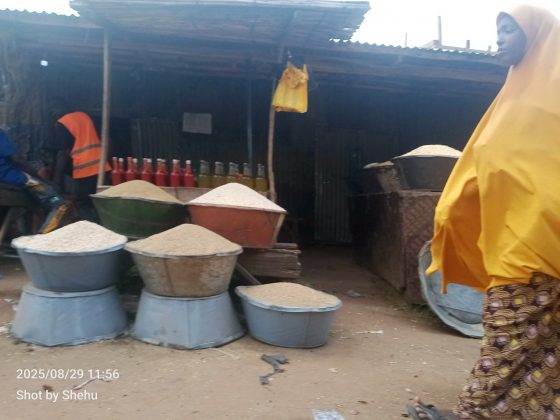
Some grains displayed for sale.
Share
Facebook Twitter LinkedIn Pinterest Email

Last week, I attended a seminar-like meeting that passionately debated the issue of the recent food import waiver — its meaning, implications, and ramifications.

Food is everybody’s business, and we must analyse the waiver objectively.

For more than a century, Nigeria’s agricultural value chain has been remarkably stable. Farmers in the North planted, harvested, sold part of their produce, and stored the rest. Middlemen bought, hoarded, and resold — sometimes making fortunes.

This was narrated in the early 19th century by Hugh Clapperton, a British naval officer turned explorer, who undertook a journey deep into the heart of what is today Northern Nigeria. He wrote admiringly of the agricultural potential he witnessed — fertile lands and an industrious population.

In Kano, he observed a bustling economy built on agriculture, processed products such as leatherwork and textiles, and trans-Saharan trade. This was not just trade; it was the lifeblood of Northern Nigeria’s economy.

From the days of Alhassan Dantata to modern grain traders in Kano, this system sustained families, built empires, and kept farming profitable. But in one stroke of policy, the Tinubu administration has torn up this balance.

Last year, facing skyrocketing food prices, the government decided not to help farmers by lowering the cost of fertilizer, fuel, or equipment. No. Instead, it opened the borders wide and granted ₦97 billion worth of duty waivers on imported food — rice, maize, wheat, and sorghum, according to the Nigeria Customs Service.

On the surface, it sounded like relief.

Prices of rice, pasta, and flour dropped. Billionaire Abdul Samad Rabiu, whose BUA Foods was reportedly among the beneficiaries, triumphantly declared that “food prices are coming down in Nigeria.” He even gloated that hoarders were “crying” with unsold stock.

But behind the smiles in Abuja and Lagos, the story in Zaria, Bichi, and Sokoto is one of despair.

Let’s call it what it is: this waiver is less about helping Nigerians and more about political appeasement.

The biggest cheerleaders of cheap maize imports are the Southwest’s poultry farmers, who want affordable feed. The biggest losers? Northern maize farmers, who now can’t sell their crops at profitable prices.

Tinubu’s government has effectively told northern farmers: “Thank you for feeding the nation for decades, but your sweat and toil mean nothing compared to political expediency.”

How do you explain to a farmer in Bichi who spent heavily on fertilizer, pesticide, and irrigation — at prices inflated by subsidy removal and naira devaluation — that his maize will rot in storage because Abuja decided cheap imports matter more than his survival?

This is not new. Nigeria has a long history of short-sighted policies that destroy local capacity. Let me cite three examples:

(i) The Structural Adjustment Programme of 1986 was supposed to revive the economy. Instead, it crippled local industries and entrenched import dependency.
(ii) The rice imports of the early 2000s nearly wiped out local rice farmers until tariffs were restored.
(iii) Petrol subsidies were meant to help the poor but only enriched smugglers and oil cabals.

Today’s food waiver is walking down the same path — a quick fix for urban applause, a long-term disaster for the nation’s food security.

Agricultural economics is not rocket science: if farmers can’t make profit, they will stop planting. When they stop planting, supply collapses. By not supporting poor farmers, the federal government is simply “killing the only goose that lays the golden eggs.”

And when supply collapses, Nigeria becomes permanently dependent on imports.

It is happening already. Middlemen, who once kept the market alive by buying and storing produce, are ruined by imports and unwilling to take the risk again. Farmers, seeing no reward for their effort, will scale back.

The so-called “cheap rice” of today is nothing but the seed of tomorrow’s famine.

And let’s not forget: food insecurity fuels poverty, and poverty fuels insecurity. Northern Nigeria is already battling banditry and unemployment. Add the collapse of farming livelihoods, and you are lighting a match over dry grass.

The federal government is celebrating lower prices in Lagos supermarkets while ignoring the misery in Kano’s grain markets. It is easy politics: urban consumers cheer, businessmen like BUA smile, and the government claims credit.

But this is false relief. Nigeria cannot import its way out of hunger. Every imported bag of rice is a nail in the coffin of a Northern farmer. Every duty waiver granted is a transfer of wealth from peasant producers in Katsina to billionaires in Lagos and Abuja.

As Mike Smart, an award-winning author and founder of Smart Farms LLC, beautifully argued, “the future of food isn’t in distant fields or corporate warehouses — it’s in every home, every garden, and every community that takes control of its own food security.”

By the current food waiver, the federal government is handing over our national food security to some distant land and corporate dealmakers. A poor farmer is just a cog in a machine that is run based on short-term political calculus rather than long-term stability and security of our nation.

If the government truly wanted to help, it should have:
(i) Reduced input costs by subsidizing fertilizer and easing fuel costs for irrigation.
(ii) Invested in rural roads, storage, and credit to cut post-harvest losses.
(iii) Protected local farmers with smart tariffs while boosting productivity.

Instead, it chose the lazy, politically expedient route — waivers that enrich a few and destroy millions of livelihoods.

Food waivers may win applause in Abuja, but they spell slow death for Northern farmers.

We are witnessing a repeat of Nigeria’s worst policy mistakes — short-term fixes with devastating long-term consequences.

The Tinubu administration must answer a hard question: Whose side is it on — the billionaires who import, or the farmers who feed us?

Because if Northern farmers abandon their fields, Nigeria will one day discover that cheap imports are the most expensive mistake it ever made.

El-Yakubu is a Professor of Chemical Engineering at Ahmadu Bello University, Zaria.
📧 byjibril@gmail.com

Food waivers Northern farmers
Share. Facebook Twitter Pinterest LinkedIn WhatsApp Reddit Tumblr Email
Editor
  • Website

Related Posts

Agrify, TCF launch AI farming tool in Zuma

June 3, 2026

Niger State and AGAN launch private extension initiative to tackle agricultural crisis

June 2, 2026

FCT farmers face rainfall, input cost challenges

June 2, 2026

Leave A Reply Cancel Reply

NUT calls for release of abducted teachers, pupils

June 3, 2026

Anambra stakeholders call for dismantling checkpoints to save roads

June 3, 2026

NNPC foundation urges youth to lead energy innovation

June 3, 2026

Sokoto police foil bandit attack, seize suspect, cattle

June 3, 2026
About Us
About Us

ASHENEWS (AsheNewsDaily.com), published by PenPlus Online Media Publishers, is an independent online newspaper. We report development news, especially on Agriculture, Science, Health and Environment as they affect the under-reported rural and urban poor.

We also conduct investigations, especially in the areas of ASHE, as well as other general interests, including corruption, human rights, illicit financial flows, and politics.

Contact Info:
  • 1st floor, Dogon Daji House, No. 5, Maiduguri Road, Sokoto
  • +234(0)7031140009
  • ashenewsdaily@gmail.com
Facebook Twitter Instagram Pinterest
© 2026 All Rights Reserved. ASHENEWS Daily Designed & Managed By DeedsTech

Type above and press Enter to search. Press Esc to cancel.