

• Home
  • Agric
  • Sci & Tech
  • Health
  • Environment
  • Hausa News
  • More
    • Business/Banking & Finance
    • Politics/Elections
    • Entertainments & Sports
    • International
    • Investigation
    • Law & Human Rights
    • Africa
    • ACCOUNTABILITY/CORRUPTION
    • Hassan Gimba
    • Column
    • Prof. Jibrin Ibrahim
    • Prof. M.K. Othman
    • Defense/Security
    • Education
    • Energy/Electricity
    • Entertainment/Arts & Sports
    • Society and Lifestyle
    • Food & Agriculture
    • Health & Healthy Living
    • International News
    • Interviews
    • Investigation/Fact-Check
    • Judiciary/Legislature/Law & Human Rights
    • Oil & Gas/Mineral Resources
    • Press Freedom/Media/PR/Journalism
    • General News
    • Presidency
  • About Us
    • Contact Us
    • Board Of Advisory
    • Privacy Policy
    • Ethics Policy
    • Teamwork And Collaboration Policy
    • Fact-Checking Policy
    • Advertising
  • Media OutReach Newswire
    • Wire News
  • The Stories
Facebook Twitter Instagram
Trending
  • NRS introduces unified tax ID system for all taxpayers in Nigeria
  • Togo scraps visa requirements for African passport holders
  • MPC meeting: Analysts expect CBN to hold rates amid inflation pressures, By Israel Ojoko
  • Five reasons CBN is likely to hold or raise the MPR this month – Research
  • Experts raise concerns over China’s zero-tariff policy on African minerals
  • WHO urges calm as Ebola outbreak declared PHEIC
  • Nigeria, UAE strengthen maritime security cooperation
  • Association expels 11, suspends 14 over disobedience
Facebook Twitter Instagram YouTube
AsheNewsAsheNews
  • Home
  • Agric

    Herders abandon cattle after farm invasion in Abia

    May 18, 2026

    Association warns against consuming fungus-infested tomatoes

    May 17, 2026

    LIFE-ND trains farmers in basic bookkeeping

    May 15, 2026

    Lagos to launch food security hub in 2026

    May 15, 2026

    FG to use microchips for nationwide livestock identification

    May 15, 2026
  • Sci & Tech

    Kaduna state trains 4,000 students in vocational skills

    May 18, 2026

    Association commits to bridging tech gap, strengthening STEM partnerships

    May 14, 2026

    Lagos to establish cybersecurity operations centre

    May 13, 2026

    ECOWAS pushes information integrity

    May 13, 2026

    NSE urges engineers to join politics

    May 13, 2026
  • Health

    WHO urges calm as Ebola outbreak declared PHEIC

    May 19, 2026

    NYSC mandates NERD certificates for mobilisation

    May 18, 2026

    WHO warns of growing pandemic threats, preparedness gaps

    May 18, 2026

    Hypertension: The silent killer affecting millions across Nigeria

    May 18, 2026

    Nigeria’s HIV fight hindered by stigma, funding gaps

    May 18, 2026
  • Environment

    University of Abuja student wins 2026 Amnesty international intervarsity debate

    May 19, 2026

    NEMA holds flood preparedness campaign in Katsina

    May 19, 2026

    Niger Delta experts call for urgent environmental clean-up

    May 19, 2026

    NESREA seals Kano rice mill over environmental violations

    May 19, 2026

    Lagos targets 2,000MW embedded power supply

    May 18, 2026
  • Hausa News

    Otti plans 250-room 5-star hotel in Umuahia

    April 11, 2026

    Anti-quackery task force seals 4 fake hospitals in Rivers

    August 29, 2025

    [BIDIYO] Yadda na lashe gasa ta duniya a fannin Ingilishi – Rukayya ‘yar shekara 17

    August 6, 2025

    A Saka Baki, A Sasanta Saɓani Tsakanin ‘Yanjarida Da Liman, Daga Muhammad Sajo

    May 21, 2025

    Dan majalisa ya raba kayan miliyoyi a Funtuwa da Dandume

    March 18, 2025
  • More
    1. Business/Banking & Finance
    2. Politics/Elections
    3. Entertainments & Sports
    4. International
    5. Investigation
    6. Law & Human Rights
    7. Africa
    8. ACCOUNTABILITY/CORRUPTION
    9. Hassan Gimba
    10. Column
    11. Prof. Jibrin Ibrahim
    12. Prof. M.K. Othman
    13. Defense/Security
    14. Education
    15. Energy/Electricity
    16. Entertainment/Arts & Sports
    17. Society and Lifestyle
    18. Food & Agriculture
    19. Health & Healthy Living
    20. International News
    21. Interviews
    22. Investigation/Fact-Check
    23. Judiciary/Legislature/Law & Human Rights
    24. Oil & Gas/Mineral Resources
    25. Press Freedom/Media/PR/Journalism
    26. General News
    27. Presidency
    Featured
    Recent

    NRS introduces unified tax ID system for all taxpayers in Nigeria

    May 19, 2026

    Togo scraps visa requirements for African passport holders

    May 19, 2026

    MPC meeting: Analysts expect CBN to hold rates amid inflation pressures, By Israel Ojoko

    May 19, 2026
  • About Us
    1. Contact Us
    2. Board Of Advisory
    3. Privacy Policy
    4. Ethics Policy
    5. Teamwork And Collaboration Policy
    6. Fact-Checking Policy
    7. Advertising
    Featured
    Recent

    NRS introduces unified tax ID system for all taxpayers in Nigeria

    May 19, 2026

    Togo scraps visa requirements for African passport holders

    May 19, 2026

    MPC meeting: Analysts expect CBN to hold rates amid inflation pressures, By Israel Ojoko

    May 19, 2026
  • Media OutReach Newswire
    • Wire News
  • The Stories
AsheNewsAsheNews
Home»Food & Agriculture»UNFAO: 5 tests to end hunger, slash gas emissions
Food & Agriculture

UNFAO: 5 tests to end hunger, slash gas emissions

UNFAO: 5 tests to end hunger, slash gas emissions
EditorBy EditorMarch 2, 2024Updated:March 2, 2024No Comments6 Mins Read
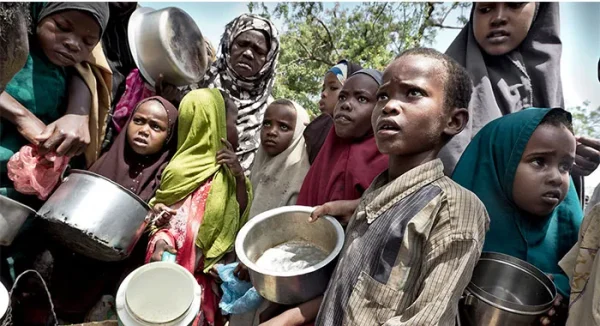
A photo of hunger-looking chimdren and women
Share
Facebook Twitter LinkedIn Pinterest Email

The UN is proposing a ‘roadmap’ for food and farming to end hunger and slash greenhouse gas emissions. While the goals are commendable, are the shifts suggested by the FAO the real deal – or just pie in the sky? Here are five tests.

By Emile Frison, expert with the International Panel of Experts on Sustainable Food Systems (IPES-Food) and Sophia Murphy, Executive Director of the Institute for Agriculture and Trade Policy (IATP)

Food systems were finally at the centre of international climate negotiations at COP28 in Dubai last December – after years of being ignored. Declarations were signed. A flurry of voluntary initiatives and funding programmes were announced. And the FAO published the first outline of a ‘roadmap for achieving SDG2 (zero hunger by 2030) without breaching the 1.5C threshold’.

A global plan that sets the direction of travel for food systems on hunger, climate, and biodiversity, with realistic way markers and options, is desperately needed. It has the potential to guide where scarce public resources should be invested, to steer governments and businesses, and hold them to account. Akin to the role played by the International Energy Agency’s Net Zero roadmap. The FAO plans to break down the global strategy into regional and national level recommendations in the next phase.

ALSO READ: FAO report says 590.3m people will suffer hunger by 2030

However, a reality check. We are very far from the FAO’s stated goals, and speeding in the wrong direction. Food security has been deteriorating since 2015. Meanwhile still today, no plan exists to tackle the third of global greenhouse gas emissions and 15% of fossil fuel use linked to global food chains. Without urgent action to transform the industrial food system, global climate and hunger goals cannot be met. Into this breach steps the FAO’s roadmap.

The FAO is expected to publish its full modelling in the coming days. What was published so far is scant on detail – a website and a ‘summary’ report, with no indication of how the maths adds up. Here are five tests to tell whether the full roadmap modelling is a real plan to illuminate the way.

  1. Deep and sustained emissions reductions

With food systems emitting 18 gigatonnes of CO2 equivalent – more than the annual emissions of USA and China combined – do the FAO’s emissions reduction proposals add up? Does the plan include the removal of fossil fuel use in food systems and fertilisers? Does it reduce damaging industrial meat production? – studies show transitioning to sustainable, healthy diets and halving global industrial meat production could mitigate up to 8% of annual global emissions, while improving health. An approach that only focuses on increasing agricultural efficiency is unlikely to get industrial food systems off their high pollution, high fossil fuel track.

  1. Zero hunger & equitable distribution of food

Food insecurity has now taken hold at catastrophically high levels. In 2022, over 735 million people (9 percent of the world population) faced hunger, and more than 3 billion were unable to access an adequate diet. Much will have to drastically change if we are to meet the 2030 sustainable development goal to end hunger. It is unclear so far how the roadmap recommendations will realistically reach that number. Many of the suggested nutritional actions are inherently sensible – like improving dietary guidelines, food labelling, and school feeding programmes. But how does this subtract to zero on the FAO’s optimistic graph? How to improve access to healthy diversified diets for all? Increasing agricultural productivity is unlikely to be enough. The FAO plan must identify what steps are needed in order to ensure food will actually reach the people who need it, rather than those with the greatest purchasing power – including steps to rebuild food security in the countries currently experiencing an explosion of hunger. What mechanisms will redistribute food and resources to people most in need?

  1. Space for biodiversity

The third global crisis intimately linked to our food chain, the catastrophic loss of biodiversity, has been quietly forgotten in the outline roadmap so far. 2022 saw a landmark global deal to protect nature, restore ecosystems and keep our planet liveable. It would be self-defeating to recommend actions that do not also protect biodiversity. How will the roadmap reinforce this historic deal, and address the role of industrial farming in driving biodiversity loss? The roadmap puts a big focus on raising ‘total factor productivity’ of farming in the global South – how will it ensure this means crop diversity and not ever-more intensive crop monocultures which drive destruction of agro-biodiversity and wild biodiversity? Fundamentally, the roadmap needs to quantify its impact on biodiversity: new modelling approaches can help (IDDRI just published an ‘agricultural boundaries for biodiversity’ model to effectively reconcile food production and biodiversity conservation). So far it is missing a clear signal to reorganise food systems around diversity, circularity and agroecology – which are key to reducing the reliance on chemical inputs and pesticides with their huge impacts on climate change and biodiversity.

  1. Power in agricultural value chains

There are structural reasons why greenhouse gas emissions are persistently high, and food insecurity is overlooked in today’s food systems. To turn the dial, the next iteration of the roadmap will need to address the power dynamics of the BigAg corporations who are squeezing farmers out of a living and funnelling crops into livestock feed, biofuels and ultra-processed foods instead of feeding those in hunger. How will the roadmap address the corporate concentration, market power and price volatility that stand in the way of its goals?

  1. Participation

So far, this roadmap has been drafted with little or no consultation with those most affected by its prescriptions – especially small-holder farmers, women, and Indigenous people. Does the pathway proposed offer opportunities for improved rural livelihoods for marginalised communities? How will participation be ensured in the next phase of elaborating national plans? Will the FAO consult with – and indeed commit to ongoing participation and evaluation of success – with people most affected? At heart, this will demonstrate whose interests are being served.

The FAO deserves praise for centreing the right to food and just transition in the debate on climate change and food systems. The next stages will need to go much further in proposing a real transformation of the status quo, by putting more emphasis on diversification, shorter supply chains and agroecology, and on tackling the massive power inequalities imposed by the handful of companies that define what we grow and eat.

Ruth Davis, Senior Associate at Smith School of Enterprise and Environment in Oxford

Emissions hunger IATP UNFAO
Share. Facebook Twitter Pinterest LinkedIn WhatsApp Reddit Tumblr Email
Editor
  • Website

Related Posts

Herders abandon cattle after farm invasion in Abia

May 18, 2026

Association warns against consuming fungus-infested tomatoes

May 17, 2026

Tinubu’s baffling Northern exclusion strategy, by Farooq A. Kperogi

May 16, 2026

Leave A Reply Cancel Reply

NRS introduces unified tax ID system for all taxpayers in Nigeria

May 19, 2026

Togo scraps visa requirements for African passport holders

May 19, 2026

MPC meeting: Analysts expect CBN to hold rates amid inflation pressures, By Israel Ojoko

May 19, 2026

Five reasons CBN is likely to hold or raise the MPR this month – Research

May 19, 2026
About Us
About Us

ASHENEWS (AsheNewsDaily.com), published by PenPlus Online Media Publishers, is an independent online newspaper. We report development news, especially on Agriculture, Science, Health and Environment as they affect the under-reported rural and urban poor.

We also conduct investigations, especially in the areas of ASHE, as well as other general interests, including corruption, human rights, illicit financial flows, and politics.

Contact Info:
  • 1st floor, Dogon Daji House, No. 5, Maiduguri Road, Sokoto
  • +234(0)7031140009
  • ashenewsdaily@gmail.com
Facebook Twitter Instagram Pinterest
© 2026 All Rights Reserved. ASHENEWS Daily Designed & Managed By DeedsTech

Type above and press Enter to search. Press Esc to cancel.