


The Minister of Livestock Development, Mukhtar Maiha, says strengthening animal welfare standards and adopting sustainable livestock production systems will boost Nigeria’s food security and economic growth.
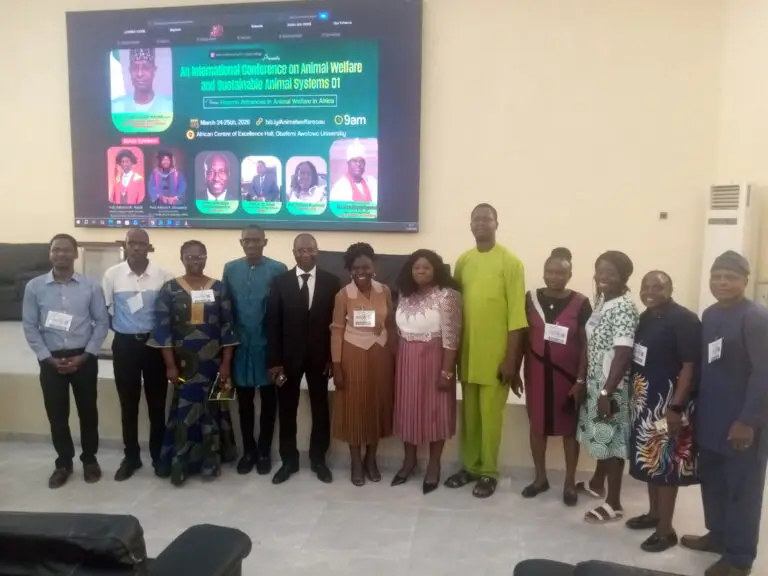
Maiha stated this at a conference on animal welfare and sustainable animal systems organised by the Animal Welfare Club Nigeria at Obafemi Awolowo University (OAU) on Tuesday in Ile-Ife, Osun State.
He said improving animal welfare is critical to enhancing productivity, ensuring public health, and meeting global best practices in livestock management.
According to him, Nigeria must align its livestock policies with modern, science-based approaches that promote humane treatment of animals while increasing efficiency across the value chain.
Maiha emphasised that animal welfare is not just an ethical obligation but also a strategic component of sustainable livestock development, requiring alignment with international standards while adapting to local realities.
He reaffirmed the Federal Government’s commitment to implementing progressive policies that support climate-resilient livestock systems, reduce environmental impact, and encourage responsible animal husbandry practices.
“Globally, evidence shows that humane treatment of animals improves productivity, reduces disease outbreaks, enhances food security, strengthens trade opportunities, and builds consumer confidence.
“In Nigeria, livestock contributes significantly to livelihoods, nutrition, employment, and the national GDP, sustaining millions of households from pastoral communities in the North to poultry, aquaculture, and small-ruminant enterprises across the country,” he said.
The minister identified key challenges facing the sector, including climate change, environmental degradation, market pressure, and international trade requirements.
Maiha underscored the importance of collaboration among government agencies, the private sector, and international organisations in driving reforms in the sector.
He noted that the future of Nigeria’s livestock sector depends on balancing economic growth with environmental stewardship and animal welfare.
Maiha assured that such efforts would contribute significantly to job creation, poverty reduction, and national development.
The guest lecturer, Prof. Adetola Ajadi of the College of Veterinary Medicine, Federal University of Agriculture, Abeokuta (FUNAAB), spoke on “Animal Welfare and Pain Mitigation.”
Ajadi stressed that livestock producers, traders, and transporters must recognise that animals have rights to be treated with respect and given maximum comfort.
He noted that 75 per cent of human pandemics originate from animals, citing Ebola, COVID-19, avian influenza, and swine flu.
“Animals that are well treated are healthier and more productive, which ultimately benefits farmers and consumers. People should ensure adequate care is given to them,” he said.
Also speaking, the Chairman of the Local Organising Committee, Prof. Bukola Oyebanji, said animals cannot protect themselves but deserve welfare and humane treatment.
It was reported that the Universities Federation for Animal Welfare (UFAW) was inaugurated, while the Ooni of Ife, Oba Adeyeye Ogunwusi, and Maiha were honoured with awards at the event.
