

• Home
  • Agric
  • Sci & Tech
  • Health
  • Environment
  • Hausa News
  • More
    • Business/Banking & Finance
    • POLITICS
    • Entertainments & Sports
    • International
    • Investigation
    • Law & Human Rights
    • Africa
    • ACCOUNTABILITY/CORRUPTION
    • Hassan Gimba
    • Column
    • Prof. Jibrin Ibrahim
    • Prof. M.K. Othman
    • Defense/Security
    • Education
    • Energy/Electricity
    • Entertainment/Arts & Sports
    • Society and Lifestyle
    • Food & Agriculture
    • Health & Healthy Living
    • International News
    • Interviews
    • Investigation/Fact-Check
    • LAW & HUMAN RIGHTS
    • Oil & Gas/Mineral Resources
    • PRESS FREEDOM/JOURNALISM/PR
    • General News
    • Presidency
  • About Us
    • Contact Us
    • Board Of Advisory
    • Privacy Policy
    • Ethics Policy
    • Teamwork And Collaboration Policy
    • Fact-Checking Policy
    • Advertising
  • Media OutReach Newswire
    • Wire News
  • The Stories
Facebook Twitter Instagram
Trending
  • N-HYPPADEC seeks tougher safety measures to curb boat mishaps
  • FairMoney bank stresses compliance, consumer protection
  • RHCC takes child-killer disease fight to Kebbi communities
  • NGO expands cancer awareness in Adamawa
  • NBMA warns against spreading false Ebola information
  • Tanzania’s vitamin A-rich bananas promise to prevent 33% of child blindness, protect pregnant mothers
  • Doctor migration threatens Nigeria’s healthcare, expert warns
  • Delta empowers 17,590 farmers through D-CARES
Facebook Twitter Instagram YouTube
AsheNewsAsheNews
  • Home
  • Agric

    Tanzania’s vitamin A-rich bananas promise to prevent 33% of child blindness, protect pregnant mothers

    October 21, 2026

    Delta empowers 17,590 farmers through D-CARES

    October 21, 2026

    Agric society seeks stronger partnerships to scale innovations

    October 21, 2026

    FG develops climate finance framework for smallholder farmers

    October 21, 2026

    IFAD-VCDP trains 50 youths in agrochemical spraying

    October 21, 2026
  • Sci & Tech

    FairMoney bank stresses compliance, consumer protection

    October 21, 2026

    FG launches digital literacy dashboard

    October 21, 2026

    Fuel crisis: Female drivers seek CNG support, inclusion in transport reform

    October 21, 2026

    UNESCO urges Nigeria to prioritise digital literacy

    October 21, 2026

    Nigeria achieves 5.54% of 2027 digital literacy target

    October 21, 2026
  • Health

    RHCC takes child-killer disease fight to Kebbi communities

    October 21, 2026

    NGO expands cancer awareness in Adamawa

    October 21, 2026

    Doctor migration threatens Nigeria’s healthcare, expert warns

    October 21, 2026

    Niger activates emergency centre over Ebola outbreak

    October 21, 2026

    Ogun intensifies Ebola surveillance

    October 21, 2026
  • Environment

    N-HYPPADEC seeks tougher safety measures to curb boat mishaps

    October 21, 2026

    NBMA warns against spreading false Ebola information

    October 21, 2026

    FAAN steps up vigilance over Ebola case

    October 21, 2026

    Uganda plans to relocate landslide-endangered communities amid El Niño and Mount Elgon threats

    October 20, 2026

    Experts urge responsible AI use to tackle vaccine misinformation

    October 19, 2026
  • Hausa News

    UNA signs MoU to launch air Bissau in Guinea-Bissau

    June 15, 2026

    Otti plans 250-room 5-star hotel in Umuahia

    April 11, 2026

    Anti-quackery task force seals 4 fake hospitals in Rivers

    August 29, 2025

    [BIDIYO] Yadda na lashe gasa ta duniya a fannin Ingilishi – Rukayya ‘yar shekara 17

    August 6, 2025

    A Saka Baki, A Sasanta Saɓani Tsakanin ‘Yanjarida Da Liman, Daga Muhammad Sajo

    May 21, 2025
  • More
    1. Business/Banking & Finance
    2. POLITICS
    3. Entertainments & Sports
    4. International
    5. Investigation
    6. Law & Human Rights
    7. Africa
    8. ACCOUNTABILITY/CORRUPTION
    9. Hassan Gimba
    10. Column
    11. Prof. Jibrin Ibrahim
    12. Prof. M.K. Othman
    13. Defense/Security
    14. Education
    15. Energy/Electricity
    16. Entertainment/Arts & Sports
    17. Society and Lifestyle
    18. Food & Agriculture
    19. Health & Healthy Living
    20. International News
    21. Interviews
    22. Investigation/Fact-Check
    23. LAW & HUMAN RIGHTS
    24. Oil & Gas/Mineral Resources
    25. PRESS FREEDOM/JOURNALISM/PR
    26. General News
    27. Presidency
    Featured
    Recent

    N-HYPPADEC seeks tougher safety measures to curb boat mishaps

    October 21, 2026

    FairMoney bank stresses compliance, consumer protection

    October 21, 2026

    RHCC takes child-killer disease fight to Kebbi communities

    October 21, 2026
  • About Us
    1. Contact Us
    2. Board Of Advisory
    3. Privacy Policy
    4. Ethics Policy
    5. Teamwork And Collaboration Policy
    6. Fact-Checking Policy
    7. Advertising
    Featured
    Recent

    N-HYPPADEC seeks tougher safety measures to curb boat mishaps

    October 21, 2026

    FairMoney bank stresses compliance, consumer protection

    October 21, 2026

    RHCC takes child-killer disease fight to Kebbi communities

    October 21, 2026
  • Media OutReach Newswire
    • Wire News
  • The Stories
AsheNewsAsheNews
Home»Food & Agriculture»Nigeria ranks 4th globally in rabbit population – FAO data show
Food & Agriculture

Nigeria ranks 4th globally in rabbit population – FAO data show

Abdallah el-KurebeBy Abdallah el-KurebeSeptember 28, 2026Updated:September 28, 2026No Comments3 Mins Read
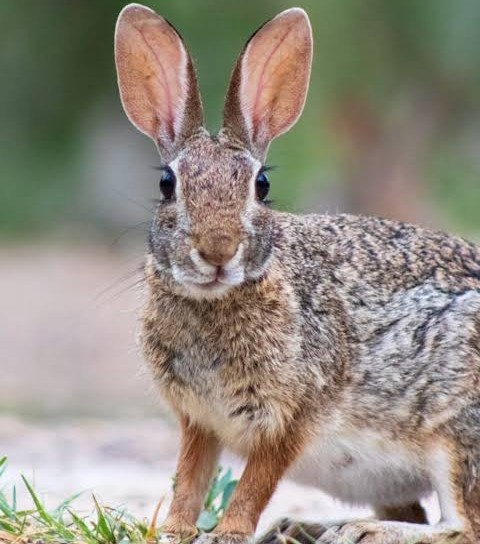
Rabbit
A photo of a rabbit courtesy the National Geographic
Share
Facebook Twitter LinkedIn Pinterest Email

Nigeria has the fourth-largest rabbit and hare population in the world, with an estimated 6.14 million head in 2024, according to FAOSTAT-based figures compiled by agriculture data analysts.

China leads by a wide margin with 114.91 million rabbits and hares, followed by North Korea (32.17 million) and Benin (15 million). Nigeria’s herd places it ahead of Egypt (5.05 million), Ukraine (3.87 million) and Russia (3.26 million) in terms of live animal stocks.

The data, drawn from the UN Food and Agriculture Organization’s statistical database (FAOSTAT), cover “rabbits and hares – live animals” and include official, estimated and imputed observations. Analysts caution that the global total of about 194.42 million head is the sum of available national reports and should not be read as a complete worldwide census.

Meat production still led by China

While the stock figures highlight Nigeria’s position in small-livestock numbers, rabbit-meat production remains heavily concentrated in Asia. In 2024, FAOSTAT-based tables show China produced about 445,128 tonnes of rabbit and hare meat, followed by North Korea (156,672 t) and Egypt (51,480 t).

ALSO READ Nigeria ranks 10th globally in estimated donkey population [LIST]

Benin, Algeria, Ukraine and Sierra Leone round out the top 10 meat producers, with outputs between roughly 8,000 and 15,000 tonnes.

Why rabbits matter for Nigerian agriculture

Rabbits are increasingly viewed as a strategic small-livestock option for Nigerian households and agribusinesses because they:

  • reproduce quickly and can supply meat and breeding stock within months,
  • require relatively small space compared with cattle, sheep or goats, and
  • can be fed on a range of locally available forages and farm by-products.

For smallholder farmers, especially in peri‑urban and rural areas, rabbitry offers a low-capital entry point into commercial livestock production and a source of high-quality protein for local markets.

Data limitations and policy implications

FAOSTAT notes that rabbit and hare statistics for many countries are based on surveys, expert estimates or imputation where official reports are missing or irregular. This means Nigeria’s 6.14 million-head figure is a best-available estimate rather than a precise headcount.

Agricultural planners and development partners can use these data to:

  • target extension services and breeding programmes to states with existing rabbit clusters,
  • integrate rabbitry into nutrition and livelihood schemes for youth and women, and
  • improve national data collection so future FAO submissions better reflect on‑ground realities.

As global demand for affordable animal protein rises and climate pressures intensify, Nigeria’s position among the world’s largest rabbit-population countries underscores the potential of cuniculture as a component of diversified, climate-resilient livestock systems.

Source: FAOSTAT

FAO Rabbit
Share. Facebook Twitter Pinterest LinkedIn WhatsApp Reddit Tumblr Email
Abdallah el-Kurebe
  • Website
  • Facebook
  • Twitter
  • LinkedIn

Related Posts

Tanzania’s vitamin A-rich bananas promise to prevent 33% of child blindness, protect pregnant mothers

October 21, 2026

Delta empowers 17,590 farmers through D-CARES

October 21, 2026

Agric society seeks stronger partnerships to scale innovations

October 21, 2026

Leave A Reply Cancel Reply

N-HYPPADEC seeks tougher safety measures to curb boat mishaps

October 21, 2026

FairMoney bank stresses compliance, consumer protection

October 21, 2026

RHCC takes child-killer disease fight to Kebbi communities

October 21, 2026

NGO expands cancer awareness in Adamawa

October 21, 2026
About Us
About Us

ASHENEWS (AsheNewsDaily.com), published by PenPlus Online Media Publishers, is an independent online newspaper. We report development news, especially on Agriculture, Science, Health and Environment as they affect the under-reported rural and urban poor.

We also conduct investigations, especially in the areas of ASHE, as well as other general interests, including corruption, human rights, illicit financial flows, and politics.

Contact Info:
  • 1st floor, Dogon Daji House, No. 5, Maiduguri Road, Sokoto
  • +234(0)7031140009
  • ashenewsdaily@gmail.com
Facebook Twitter Instagram Pinterest
© 2026 All Rights Reserved. ASHENEWS Daily Designed & Managed By DeedsTech

Type above and press Enter to search. Press Esc to cancel.